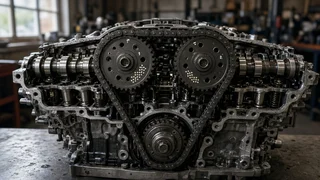
Chrysler 2.7 Timing Chain Marks

When a Chrysler 2.7L V6 runs poorly after timing work, the marks stamped into the chain, sprockets, and guides become the center of the diagnosis. This overhead-cam engine uses a chain-driven valve train where alignment depends on matching specific reference points during assembly. If those marks are off by even one tooth, cam timing shifts and the engine may misfire, idle roughly, or set diagnostic codes. Understanding how these marks relate to crankshaft position, tensioner condition, and valve events helps separate a simple indexing error from wear that changes chain length before any parts are replaced.
Essential answer
The Chrysler 2.7L timing chain marks identify the relationship between the crankshaft sprocket and each camshaft sprocket so the valves open and close at the correct point in the four-stroke cycle. Unlike a belt that is replaced on a fixed schedule, the chain is intended to last the life of the engine, but guide wear or tensioner problems can still affect alignment. When the colored links or stamped dots line up with their mating features during assembly, the engine is mechanically timed; when they do not, valve events shift.
Before assuming the marks are wrong, inspection should account for engine rotation, chain slack, and manufacturer-specific indexing procedures. Some V6 layouts require the crankshaft to be placed at a defined position before the cam sprocket marks are read, while others use a holding tool to prevent movement. Diagnostic codes and symptom conditions such as a rough idle after chain service often point toward this area, but a fault code is evidence to interpret, not proof that a specific part has failed. Service history helps show whether the concern appeared suddenly after work or developed gradually.