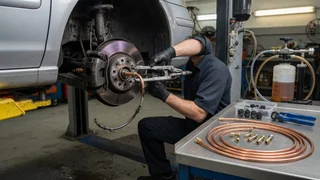
Install a 1968 Mustang brake line kit
A fresh set of hard lines and flexible hoses changes how a 1968 Mustang stops, but the job is more than threading fittings together. Owners often tackle this replacement after discovering a damp section of tubing, a spongy pedal, or rust near a wheel well, because old steel can weaken internally even when the outside looks serviceable. Understanding what a complete kit contains, how it interacts with the rest of the hydraulic system, and why routing matters helps you avoid repeated bleeding sessions and gives you a safer baseline for evaluating the rest of the brake components.
Essential answer
A 1968 Mustang brake line kit is a replacement set of tubing and hoses intended to restore the hydraulic paths between the master cylinder, distribution components, and wheel cylinders or calipers. Kits are typically sold as pre-bent steel or stainless lines matched to the car’s original routing, along with shorter rubber or braided flex hoses at the front wheels and rear axle. The essential scope is a plumbing refresh, not a complete brake job. Pads, rotors or drums, hardware, and fluid are usually separate, so the kit addresses fluid delivery rather than friction material or mechanical clamping force.
The practical value depends on the condition of the rest of the system. If the pedal is low but the metal lines are corroded or a flex hose is cracked, replacing the lines removes a variable that can cause slow fluid loss or air entry. However, a kit will not correct a failing master cylinder, a misadjusted pushrod, a stuck caliper piston, or worn friction material. For a mixed-intent buyer, the direct answer is that this kit supplies the fluid conduits and is best treated as one stage in a broader inspection of the braking system rather than a guaranteed cure for every stopping complaint.