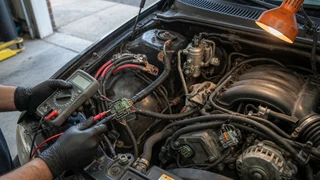
Trace diesel engine ignition switch wiring for no-start
A diesel that cranks but will not start often points beyond a dead battery. Tracing the ignition switch wiring is a structured way to separate a control-side failure from fuel or compression problems. The switch is not simply an on/off toggle; it routes low-current signals through several contacts. When those circuits drop out, the starter may still spin while the injection pump or engine computer never receives the authority to fuel. This diagnostic path helps a no-start investigation stay focused on repeatable electrical checks rather than guesswork.
Essential answer
Tracing diesel ignition switch wiring for a no-start means verifying that turning the key produces the intended signals at each terminal. A wiring diagram identifies the battery feed, crank signal, run feed, and any glow-plug or accessory outputs. The essential reason matters because a diesel may crank strongly on the start contact while a failed run contact prevents fuel delivery. Confirm the switch position, then check for voltage at the run and crank terminals during the correct key movement before condemning the starter circuit.
The scope changes with engine design. A mechanically injected diesel may use the ignition switch to energize a fuel shutoff solenoid and starter relay, while a common-rail engine also sends a crank request to the engine control module. The diagram shows which wires should be hot in start and run. Losing the run signal can allow cranking without injection, and losing the crank signal can leave the starter silent. Interpreting those paths explains why a wiring fault is often found only with a multimeter and the exact switch pinout.