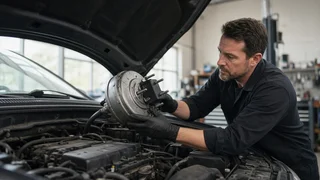
Replace a 1996 S10 brake booster
A hard pedal or poor stopping response in a 1996 S10 often points to a brake booster that is no longer multiplying pedal force. The booster uses engine vacuum to reduce the effort needed to press the master cylinder, so a leak, failed diaphragm, or bad check valve changes how the pedal feels and how quickly the truck slows. Understanding booster function, symptoms, and replacement reasoning helps an owner judge whether the part is actually at fault before spending time and money.
Essential answer
Replacing a 1996 S10 brake booster means removing the vacuum assist unit between the brake pedal and the master cylinder, then installing a working replacement and restoring a proper seal. The booster is not a wear item with a fixed interval, but age, engine heat, and vacuum exposure can crack its internal diaphragm or housing. A failed unit usually makes the brake pedal feel hard while stopping distances increase, because the driver must supply the force the booster can no longer provide.
Before replacing the booster, confirm that the symptom is not caused by a collapsed vacuum hose, a cracked check valve, or a low vacuum condition. A hard pedal combined with a hiss near the pedal area suggests a vacuum leak in the booster itself, while the same feel without any noise can also occur from a blocked supply hose. Since this is a vacuum-assisted system, testing the hose and checking valve is a reasonable first step, but once the booster is isolated as the problem, replacement restores assist only if the new unit is properly sealed to the firewall and master cylinder.