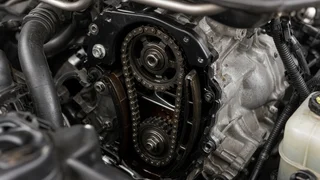
1GR-FE Timing Chain Marks
Owners following a service manual often search for engine timing 1GR-FE timing chain marks and still face uncertainty, because chain-driven Toyota V6 engines rarely show a single simple timing verification method. Worn guides, a stretched chain, VVT actuator movement, and oil pressure can all change how painted links and sprocket stamps appear after the engine has rotated. Reading the marks correctly therefore depends on confirming crankshaft position, camshaft orientation, and the engine configuration before concluding the valvetrain is out of time or a component is defective.
Essential answer
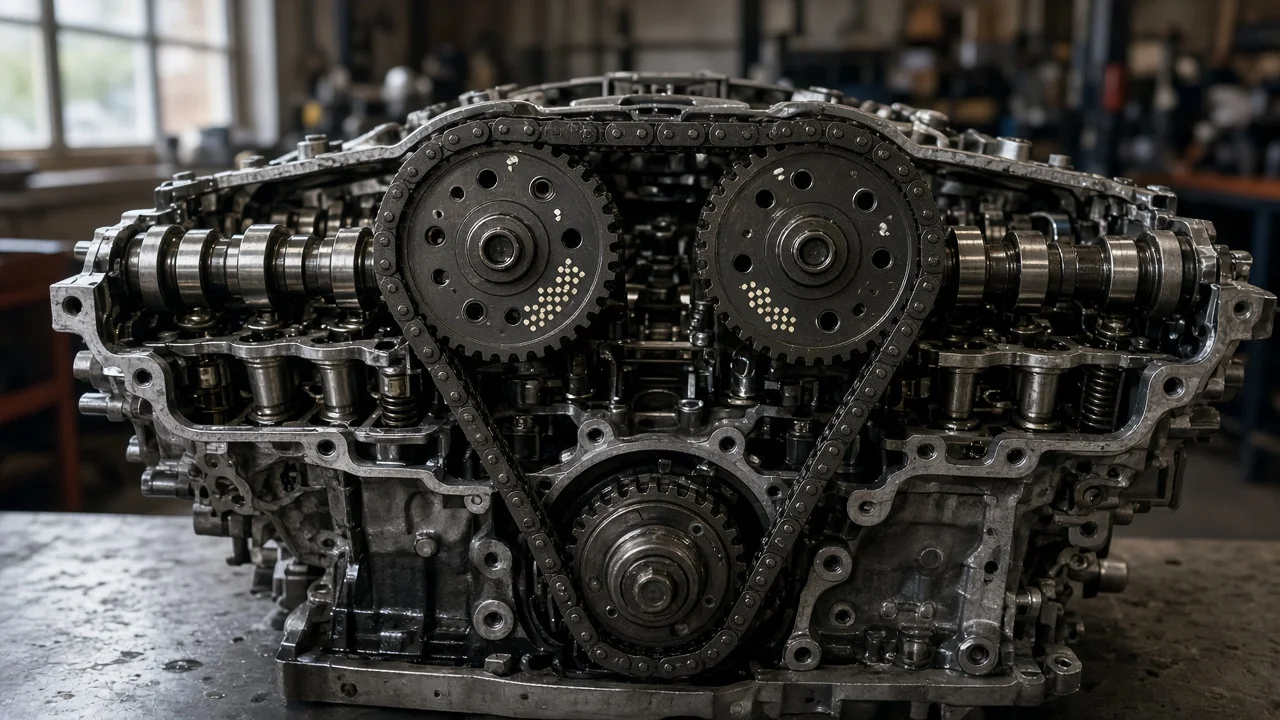
The 1GR-FE uses a timing chain rather than a belt, and its timing marks consist of plated or painted chain links, stamped dots or notches on the camshaft sprockets, and a reference point on the crankshaft sprocket. Exact chain link coloring and sprocket marking orientation can vary by production year and engine configuration, so manufacturer specifications are essential. The marks align only when the number one cylinder is at a known position, usually top dead center on the compression stroke, and only if the chain tensioner and guide system are in the installed condition.
An inspection should first establish whether the crankshaft and both camshafts can be brought to their specified reference positions without forcing rotation. If the painted chain links do not line up after several full engine cycles, that is not automatically proof of a jumped chain, because a timing chain typically has a long repetition interval before colored links return to the same physical location. A stretched chain, worn guide face, or VVT actuator that is not locked in its home position can also make otherwise valid marks appear offset by a small amount that affects diagnostic interpretation.