Trailer brake controller types: proportional vs time delay
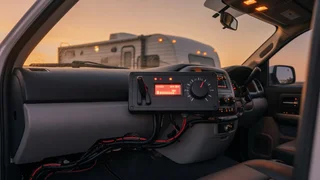
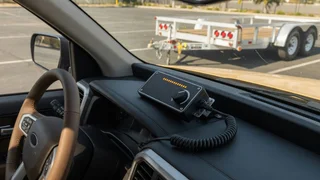
Choosing a trailer brake controller comes down to how braking force is applied. A proportional unit senses tow vehicle deceleration and sends a matching signal to the trailer brakes, while a time delay controller applies a preset amount after a short pause. The right choice depends on trailer weight, terrain, and how often you tow. Some vehicles include an integrated trailer brake controller, while aftermarket options range from simple dashboard modules to Bluetooth-connected devices and brake assist controllers.
Direct answer
A proportional trailer brake controller is the more refined option for most towing situations. It uses an internal sensor such as an accelerometer to measure how quickly the tow vehicle is slowing, then applies a corresponding amount of braking to the trailer. This makes trailer and tow vehicle slow together, reducing push-pull sensation and improving stability during moderate to hard stops. Because the output changes continuously with vehicle deceleration, the trailer feels integrated rather than being yanked or lagging behind.
A time delay controller applies braking in a simpler way. When the brake pedal is pressed, it waits a user-set delay and then ramps voltage to the trailer brakes at a fixed intensity. The main advantage is lower cost and easier installation, especially for occasional towing of lighter loads on level roads. The trade-off is less precise response. With changing loads or downhill grades, the set intensity may not match the actual stopping need, making it more suitable for predictable, lower-stress towing conditions.