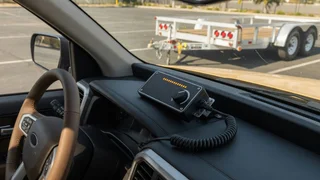
Proportional Trailer Brake Controllers
A proportional trailer brake controller translates tow vehicle deceleration into graduated trailer braking, so the trailer slows in step with the truck instead of grabbing or lagging. This matters when towing heavier campers, car haulers, and utility trailers where balanced stopping power helps keep the combination straight. Drivers searching for a proportional trailer brake controller or a proportional brake controller for trailer use are typically comparing time-delayed units with smoother inertia-sensing designs. Understanding how the controller reads braking force clarifies why installation setup, mounting angle, and adjustment affect real-world stops.
Essential answer
A proportional trailer brake controller applies trailer brakes at a rate that corresponds to the tow vehicle’s own deceleration. It does not simply switch the trailer brakes on after a delay. The control module monitors changes in vehicle motion, often through an internal sensor, and sends a variable output signal to the trailer brake assemblies. That output rises as the driver presses the brake pedal harder, helping the trailer contribute more stopping force during a firm stop and less during a gentle slowdown.
This behavior differs from older time-based controllers that ramp up output on a clock. In a proportional system, the trailer’s braking demand follows the actual rate at which the combination is slowing, which can reduce shoving from the trailer and make downhill or low-speed maneuvering feel more controlled. Brake pads, rotors, calipers, and friction material on the trailer still require sound mechanical condition and proper vehicle fitment. The controller only scales the electrical command; it cannot correct worn friction surfaces or contaminated brake fluid.