Best Aftermarket Trailer Brake Controllers: A Practical Selection Guide
How This List Is Defined and Ordered
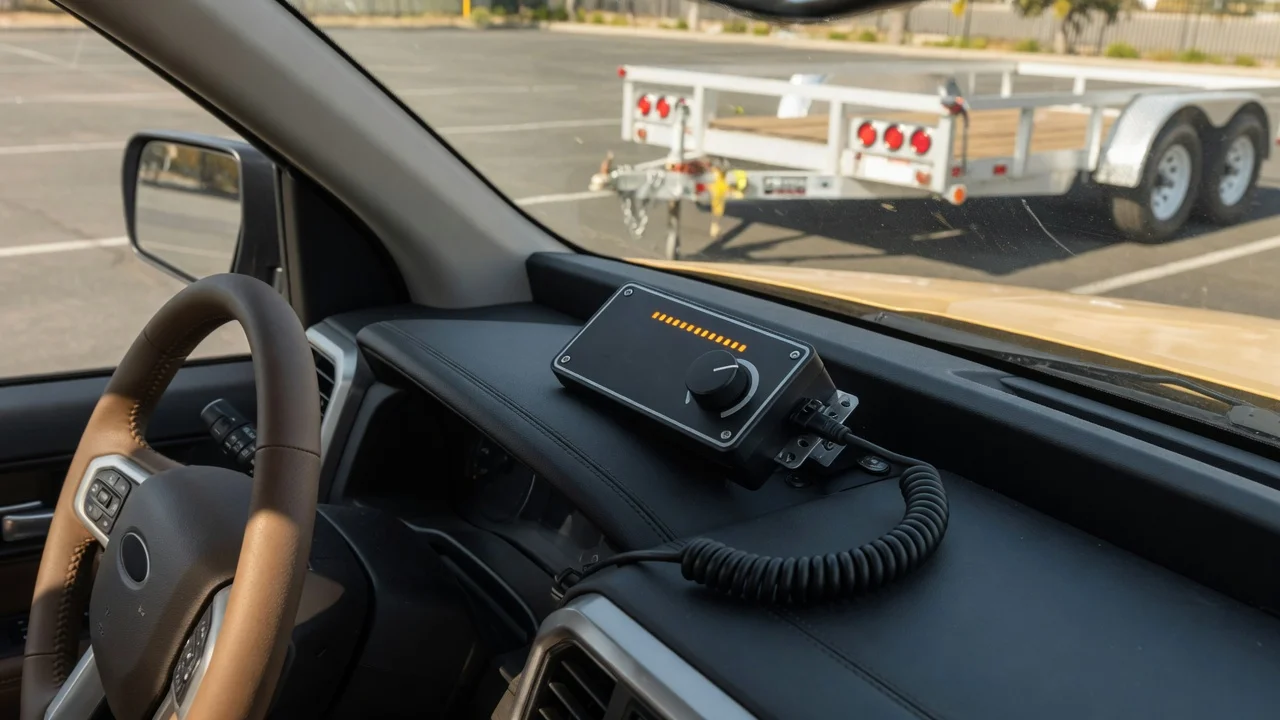
This is a selection of commonly used aftermarket trailer brake controller types and representative product families, not an exhaustive inventory of every device on the market. The ordering principle is based on braking feel and ease of installation: proportional controllers are listed before time-delayed units because they generally provide smoother, more predictable trailer braking. Within each category, entries are ordered roughly from more feature-rich or flexible models to simpler, more budget-oriented ones. The best choice for a specific setup depends on the tow vehicle, trailer weight, brake type, and how frequently towing occurs.
Proportional Controllers
Proportional controllers use an internal sensor to measure the tow vehicle's deceleration and apply trailer brakes in proportion to that stopping force. They are generally preferred when towing heavier loads, on steep grades, or in stop-and-go traffic because they reduce trailer surge and brake wear.
Tekonsha Prodigy P3
The Tekonsha Prodigy P3 is a widely referenced proportional brake controller known for its digital display and diagnostic readouts. It supports electric trailer brakes and can store multiple trailer settings, which is useful for drivers who tow more than one trailer. Installation commonly involves a vehicle-specific plug-in harness, but hardwiring is also possible. The P3 is often mounted under the dash, tilted within a specified range so the internal accelerometer works correctly.
Redarc Tow-Pro Liberty and Tow-Pro Elite
Redarc offers two proportional controllers that are often chosen for their compact, remote-mounted design. The main control knob can be installed in a dash blank or small panel, while the main unit is hidden behind the dashboard. The Tow-Pro Elite adds a selectable user-controlled mode in addition to proportional mode, allowing manual braking pressure without relying solely on deceleration sensing. These units are common in markets where off-road towing and clean interior packaging are priorities.
Curt Echo Mobile Brake Controller
The Curt Echo is a proportional controller that mounts on the trailer rather than inside the cab. It connects to a 7-pin connector and is controlled through a smartphone app via Bluetooth. Because there is no under-dash module to install, it can be a practical option when a tow vehicle is used occasionally or shared between vehicles. The phone must remain connected and powered during towing for brake adjustments.
Time-Delayed Controllers
Time-delayed controllers apply trailer brakes at a preset intensity after a short delay when the brake pedal is pressed. They do not vary braking force based on how hard the tow vehicle is stopping. They are generally simpler and less expensive than proportional units, but can feel less smooth, especially when stopping quickly or descending hills.
Tekonsha Voyager
The Tekonsha Voyager is a representative time-delayed controller. It uses a manual gain adjustment and a small indicator light to show brake output. This type is often installed with a 4-wire connection for vehicles without a factory brake controller harness, making it a common choice for older trucks or basic towing setups. Setup involves setting the gain high enough for firm braking without locking the trailer wheels.
Draw-Tite Activator II
The Draw-Tite Activator II is another time-delayed brake controller. It is typically positioned as a straightforward, low-cost option for trailers with electric brakes. The controller is mounted under the dash and connected to the vehicle's brake light circuit, ground, battery power, and trailer brake output. Because it lacks a deceleration sensor, it does not require careful leveling or angle adjustment.
Wiring and Connector Compatibility
Most modern installations rely on a 7-pin trailer connector at the rear of the tow vehicle and a plug-in wiring adapter behind the dash. A brake controller cannot be assumed to work with every vehicle simply because a 7-pin socket is present. Some vehicles, especially late-model trucks and SUVs, have a factory brake controller connector under the dash; others require a universal adapter or hardwiring. Before choosing a controller, verify the connector type, brake light signal location, and whether the vehicle has an integrated trailer brake controller that would make an aftermarket unit unnecessary.
4-Wire Installation vs. 7-Pin Trailers
A 4-wire connection refers to the controller's own wiring: 12-volt power from the battery through a circuit breaker, ground, brake light signal from the brake pedal switch, and output to the trailer brake circuit at the 7-pin connector. It is not the same as a 4-pin trailer light connector. A 4-pin trailer connector carries only lighting and does not support electric brakes. A trailer with electric brakes needs a 7-pin connector, which includes the brake output, auxiliary power, reverse light, and ground circuits.
Hydraulic-Over-Electric and Air Brake Trailers
Many electric brake controllers are not directly compatible with trailers that use hydraulic surge brakes or air brakes. Trailers with hydraulic-over-electric disc brakes require a controller that can output the correct electrical signal to the trailer's hydraulic actuator. Some proportional controllers support this, while others are designed only for standard electric drum brakes. Check the trailer brake type before purchase.
Where These Products Are Sold and What Names Mean
These controllers are available through online retailers, national auto parts chains, and specialty towing suppliers. The term "activator trailer brake controller" typically refers to the Draw-Tite Activator family or generically to any controller that activates trailer brakes from the brake pedal signal. "Amazon trailer brake controller" and "Advance Auto trailer brake controller" are search-based descriptors, not product names. No single retailer is required, and availability varies by region and vehicle application.
What to Check Before Buying
Trailer brake type: electric drum, electric-over-hydraulic disc, or surge; Tow vehicle wiring: factory brake controller connector, 7-pin socket, and circuit breaker rating; Mounting location and angle limits for proportional controllers; Number of trailers towed and whether saved profiles are useful; Manual override function for trailer sway control; Compatibility with the vehicle's trailer brake output if a factory controller is already present
Gaps in This Guide
This guide does not provide model-specific fitment for every tow vehicle, nor does it list current prices, which change frequently. Brake force specifications, maximum trailer weight ratings, and exact wiring pinouts are vehicle- and controller-specific and should be verified in the product instructions and the vehicle service manual before installation.