Why do I smell transmission fluid in my car
A transmission fluid odor inside the cabin is usually the first warning that fluid has escaped the sealed hydraulic system or has been overheated enough to produce fumes. The smell often resembles sweet or acrid oil, and it may appear before visible leaks or shifting complaints. Because transmission type, fluid specification, and service history affect where fluid can escape and how it reaches the ventilation intake, the odor should be treated as a diagnostic clue rather than a minor nuisance. The following sections explain the likely paths, observable checks, and conditions that call for stopping the vehicle.
Essential answer
The direct answer is that transmission fluid odor inside a car generally means fluid is leaking onto a hot surface, venting from an overheated unit, or entering the climate control intake. Automatic transmissions run at high temperatures, so even a small weep from a cooler line, pan gasket, or output seal can produce a noticeable smell. The scent often first appears when stopped because engine bay vapors are drawn into the fresh air intake at idle.
The scope of the problem depends on where the odor is strongest. Fluid can accumulate on a warm transmission case, drip onto an exhaust component, or be carried rearward by airflow. Shifter feel, fluid level, and diagnostic codes may be completely normal in the earliest stage, especially when the leak is small. The smell is therefore an early warning that should be located before the fluid level falls enough to change shift behavior.
How it works
Transmission fluid serves as a hydraulic medium, a lubricant, and a coolant. Pressurized fluid travels from the pump through valve body circuits, torque converter passages, and cooler lines while lubricating clutches, bands, bushings, and gears. Heat generated by torque converter slip and friction is transferred to the fluid and then rejected through a cooler or a section of the radiator.
Because the system operates under both pressure and heat, its seals and connections must contain expanding fluid across a wide temperature range. A loose cooler line fitting, a brittle pan gasket, an aged selector shaft seal, or a cracked vent hose can allow a small amount of hot fluid to escape. When that fluid contacts a hot converter housing or exhaust pipe, it produces the pungent vapor that enters the cabin through the cowl or fresh air intake.
Strengths, limitations and suitability
A transmission fluid odor is useful as an early indicator because the smell can appear before enough fluid is lost to create slipping, delayed engagement, or harsh shifts. Front-wheel-drive and rear-wheel-drive layouts differ in where leaks are likely to reach hot exhaust parts, which changes both odor intensity and fire risk. Vehicles with a transmission cooler inside the radiator can also present a coolant contamination problem if a cooler failure allows fluid to mix with antifreeze.
The main limitation of smell alone is that it does not identify the source. The odor can move through the engine bay, and different transmission fluids or contaminant levels may alter the scent. Drivers with a restricted ability to inspect beneath the vehicle will need a professional evaluation sooner because the leak can enlarge rapidly when a cooler line fails or a seal shifts under load. Never rely on smell to replace checking the fluid level and looking for wetness.
Procedure
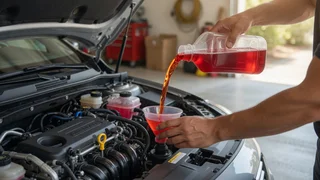
Begin on a level surface with the engine at operating temperature and the transmission in park or neutral according to the owner's manual. Set the parking brake, open the hood, and smell near the transmission dipstick area, cooler lines, and radiator without touching fans or belts. Then inspect the ground under the vehicle for red or brown drips. If the transmission has a dipstick, follow the manufacturer's procedure for checking the fluid level while the engine runs and the transmission is at the specified temperature.
If the odor is present but no wet spot is visible, leave the vehicle parked over clean cardboard overnight. Check the next morning for a small drip pattern that indicates the general source area. Do not attempt to seal a leak with aftermarket additives or continue driving at high load if the smell intensifies after highway use. That change usually indicates the leak only occurs under pressure or when the fluid is hot.
Diagnosing a problem
Start by separating an external leak from an overheated fluid or an internal cooler failure. A wet transmission pan, wet cooler lines, or drips near the bellhousing point to an external leak. If the underside is dry but the odor remains, a blocked cooler, low fluid level, slipping clutch, or heavy load may be overheating the fluid. Check whether the transmission dipstick fluid looks dark or smells burned, which supports a heat-related problem rather than a fresh leak.
A fault code should be read only as evidence to guide inspection, not as proof that a specific solenoid, sensor, or clutch has failed. Manufacturer-dependent codes require confirmation with the correct diagnostic procedure for the vehicle. Stop driving if the transmission slips, shifts harshly, or if smoke is visible from fluid on a hot exhaust surface. Those conditions indicate that continued operation can quickly damage the transmission or create a fire hazard.