Why Did Some Classic Cars Have Vent Windows?
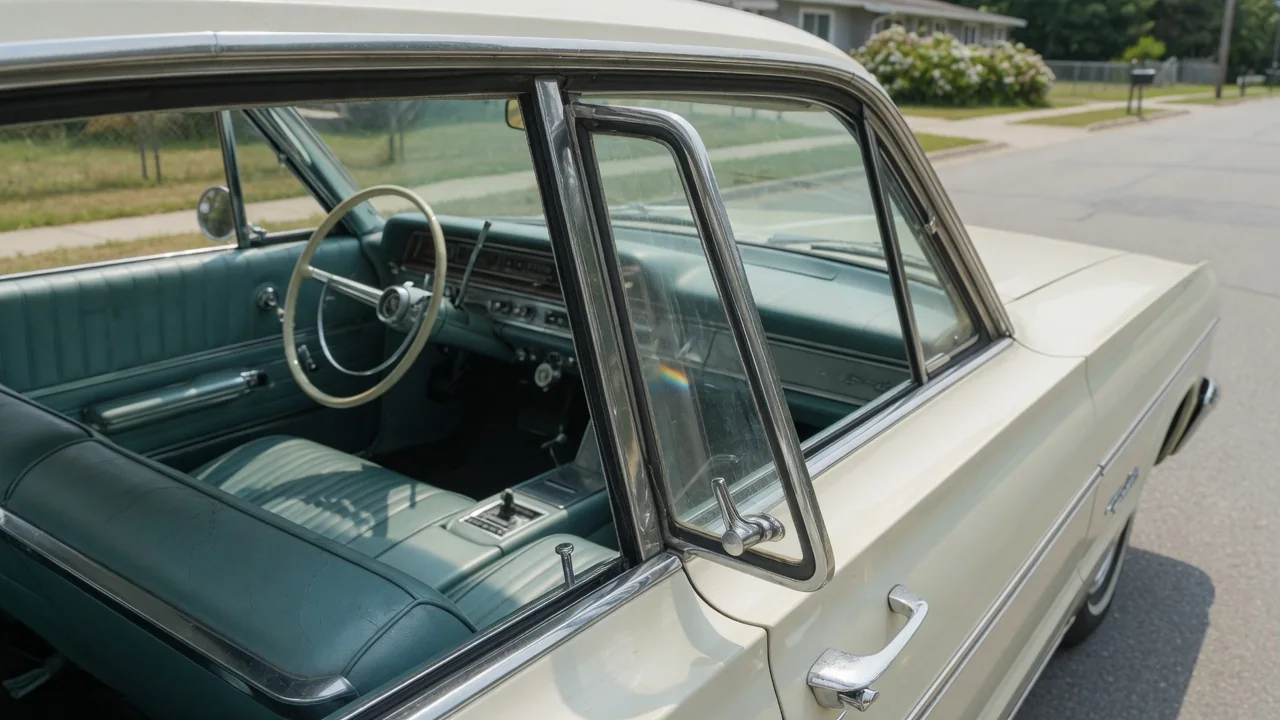
Before air conditioning became common, drivers relied on moving air to stay comfortable. That is the short answer to why did some classic cars have vent windows: the small pivoting triangles of glass ahead of the front door windows let occupants aim a stream of outside air into the cabin, clear smoke and humidity, and cool down without lowering the main glass.
Airflow function
A vent window, often called a wing window or quarter glass, pivots on a vertical axis so its trailing edge swings outward. Opened slightly, it creates a low-pressure zone that draws stale air out of the cabin without much draft. Swung past the halfway point, it acts as a scoop, catching the passing airstream and directing it toward the driver's face, chest, or hands. That two-way behavior gave occupants a simple control over both extraction and fresh-air intake using nothing but vehicle speed.
The effect depended on motion. At a standstill a vent window did little, but at road speed it moved a surprising volume of air, which mattered in cars with weak heater fans and no refrigerated cooling. It also helped keep the windshield and side glass from fogging in damp weather by exchanging humid cabin air. How strong the flow felt varied with body shape, windshield angle, and the size of the pane, so two cars of the same era could behave quite differently.
Window design
The typical layout placed a small triangular pane at the leading edge of the front door, separated from the main roll-down glass by a fixed vertical division bar. The pane sat in its own frame with pivots at the top and bottom, sealed by a rubber weatherstrip around its perimeter. A small latch handle locked it closed, and on some cars a friction mechanism held it at whatever angle the occupant selected, even against the wind pressure at highway speed.
Details varied widely among manufacturers and model years. Some vehicles used a simple push-open latch, while others had a small crank that swung the pane through a geared mechanism, and a few luxury models offered power operation. Certain sedans and wagons carried similar pivoting panes in the rear doors or rear quarter panels. Trucks kept them for a long time as well. Looking at the door of a particular classic, the hardware, frame finish, and seal profile reveal which approach its maker chose.
Why they declined
Several developments made the vent window less necessary. Flow-through ventilation systems began pulling fresh air through cowl intakes and dashboard outlets while exhausting it through hidden vents at the rear of the body, so the cabin could be refreshed with every window closed. As factory air conditioning spread from luxury cars into ordinary family models, opening any glass at speed worked against the system. The feature that once defined comfortable motoring gradually became redundant on most new designs.
Cost and refinement pushed in the same direction. A vent window added a frame, pivots, a latch, and extra seals to every door, all of which had to be manufactured, assembled, and kept watertight. The division bar and exposed edges generated wind noise and aerodynamic drag, and the latch offered thieves an easy point of entry. A single sheet of door glass was cleaner, quieter, and cheaper. The timing of the change differed by manufacturer and body style, with some trucks and vans retaining them longer.
Everyday Use and Observations
Owners of classic cars often describe the vent window as the most useful control in the cabin. Cracked open a small amount, it clears cigarette smoke or stuffy air with little noise. Turned fully around, it sends a strong stream across the seat on a hot day, which is welcome when vinyl upholstery has been sitting in the sun. Many drivers pair an open vent pane with a slightly lowered rear window to encourage air to travel through the whole interior.
Age shows up in predictable ways. A pane that will not stay put at speed suggests the friction pivot has loosened, while one that is stiff or frozen may have corrosion in the lower pivot. Whistling at highway speed or water trails on the door panel after rain point toward hardened, shrunken, or cracked weatherstripping. Pitted chrome on the frame and a loose latch handle are common cosmetic findings. These observations are clues to investigate, since the underlying cause differs from car to car.
Limits and Next Steps
Vent windows had real limitations. They offered no cooling in stopped traffic, could not filter dust, pollen, or exhaust fumes, and admitted rain if left open in a storm. Even well-kept examples tend to produce more wind noise than a modern sealed door. They also complicated security, because a forced latch gave access to the interior door handle. Anyone considering a classic for regular driving should expect a ventilation experience that is charming and effective on the move but less controlled than a modern climate system.
For a car with tired vent windows, the sensible starting point is a careful inspection of seals, pivots, and latches before buying anything. Replacement weatherstrips and hardware are reproduced for many popular classics, but shapes and mounting methods are specific to make, model, year, and sometimes body style, so parts should be matched to the exact vehicle. Removing the assembly usually involves door disassembly and glass handling, which makes a restoration shop or experienced glass specialist a reasonable choice for work beyond basic cleaning and lubrication.