Why Did Some Cars Have Column Shifters?
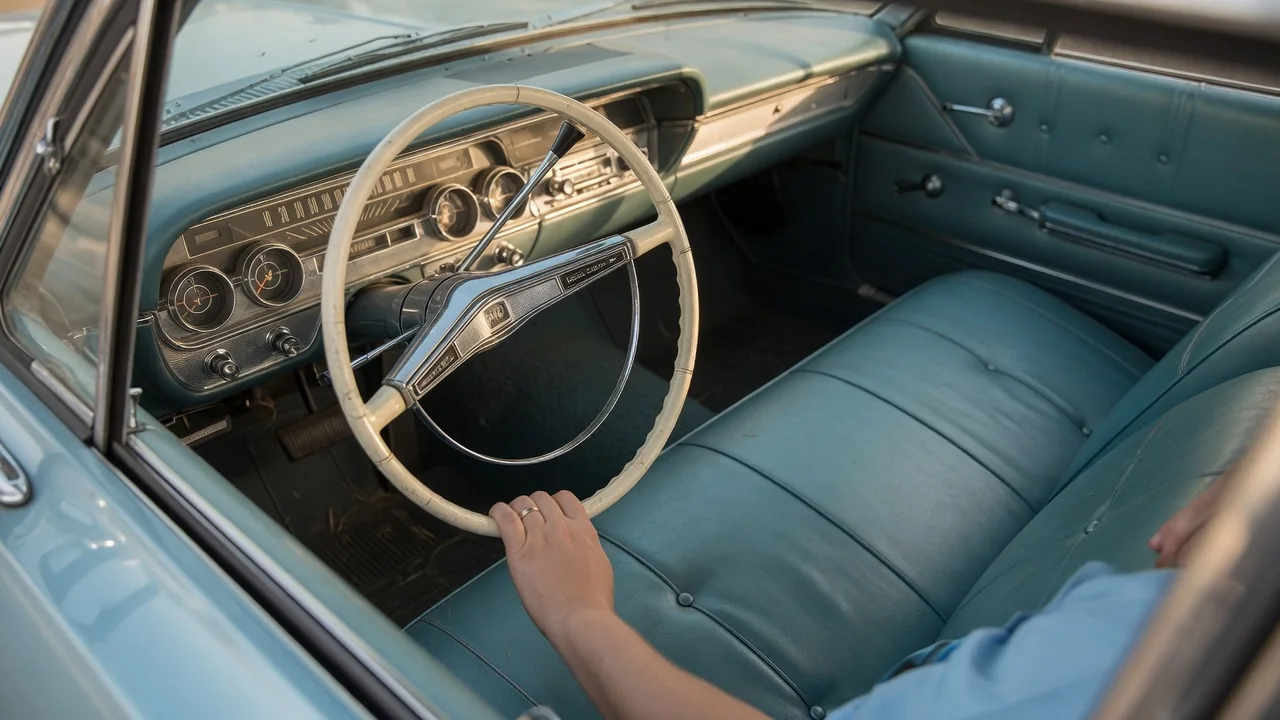
Anyone who has ridden in an older American sedan or a work truck may wonder why did some cars have column shifters instead of a lever between the seats. The answer comes down to cabin packaging: where the transmission sits, how many people need to fit across the front row, and how the driver reaches the controls without giving up floor space.
Lever placement
A column shifter mounts the gear selector on the steering column, usually on the right side in left-hand-drive vehicles, just behind the steering wheel. The lever connects to the transmission through a linkage or cable that runs down the column and along the firewall or frame. Placing it there keeps the driver's hand close to the wheel during a gear change and leaves the floor between the front seats free of any lever, boot, or console that would otherwise occupy that central space.
Floor shifters make mechanical sense when the transmission sits directly beneath the lever, as in many rear-wheel-drive sports cars where a short, direct linkage gives precise feel. A column lever trades some of that directness for packaging freedom, because the linkage can route around obstacles. On older manual versions, often nicknamed three-on-the-tree, drivers moved the lever through an H pattern turned on its side. Automatic versions typically sweep through park, reverse, neutral, and drive in a single arc, with an indicator near the instrument cluster.
Bench seats
The strongest reason for the column lever was the front bench seat. A full-width cushion allowed three people to sit across the front row, and a floor-mounted shifter would land right where the middle passenger's legs needed to go. Moving the selector up to the column cleared the floor, so family sedans, station wagons, and pickups could advertise six-passenger seating in two rows. The transmission tunnel remained on rear-wheel-drive layouts, but nothing protruded above it to crowd the center position.
Bench seating also changed how people used the cabin. A driver could slide across to exit on the passenger side when parked tightly against a wall or traffic, which is awkward with a console in the way. Work trucks benefited as well, since a crew of three could ride in a regular cab. Later split-bench designs kept the column lever while adding a fold-down center armrest with storage, a compromise readers can still see in many full-size trucks, though seat configurations vary by trim level.
Modern changes
Column shifters faded from most passenger cars as bucket seats and center consoles became the norm. Buyers came to associate a floor lever with a sportier driving feel, and consoles offered cup holders, storage bins, and a convenient place for climate and audio controls. Front-wheel-drive layouts also reduced the size of the central tunnel, which changed how designers used that space. Safety developments, including energy-absorbing steering columns and airbags, added further complexity to anything mounted on or around the column.
The idea never fully disappeared, and electronic shift-by-wire systems have revived it. Because the selector now sends an electrical signal rather than moving a mechanical linkage, it can be a slim stalk on the column, a rotary dial, or a row of buttons. Several electric vehicles and luxury models use a compact column stalk precisely to free the console for storage and charging pads. The operating logic differs between manufacturers, so the owner's manual remains the reliable guide for any particular vehicle.
Everyday Use and Observations
In daily driving, a traditional column automatic is operated by pulling the lever toward the driver and moving it down or up through the gear positions. Many drivers appreciate that their hand travels only a short distance from the wheel, which suits parking maneuvers and three-point turns involving repeated shifts between drive and reverse. The gear indicator usually appears in the instrument cluster or on a small display above the column, so checking the selected position requires only a glance downward.
There are trade-offs worth noticing. Older mechanical linkages can develop play as bushings wear, making the detents feel vague or the indicator sit slightly off the gear actually selected. Looseness of this kind is a clue to investigate rather than proof of a specific failed part, and the cause varies with the design. Drivers switching from a floor shifter may also reach for the wrong stalk at first, especially in vehicles where the wiper control sits on the same side of the column.
Limits and Next Steps
A column lever is not ideal for every purpose. Manual column linkages involved more joints than a floor shifter, so shift feel was generally less precise, which is one reason performance cars moved the lever to the floor. Manual gear selection for towing or descending grades is often handled by a button on the lever or separate controls rather than a dedicated gate. How these features work, and whether they are fitted at all, depends on the manufacturer, model year, and transmission.
For anyone evaluating a vehicle with this layout, a short test drive reveals most of what matters. Check that the lever moves cleanly into each position, that the indicator matches the selected gear, and that the vehicle starts only in park or neutral as intended. A lever that feels loose, binds, or fails to hold park deserves inspection by a qualified technician before further use. Beyond that, the choice largely comes down to whether an open front floor or a center console better suits how the cabin will be used.