Why Did Older Cars Have Bench Seats?
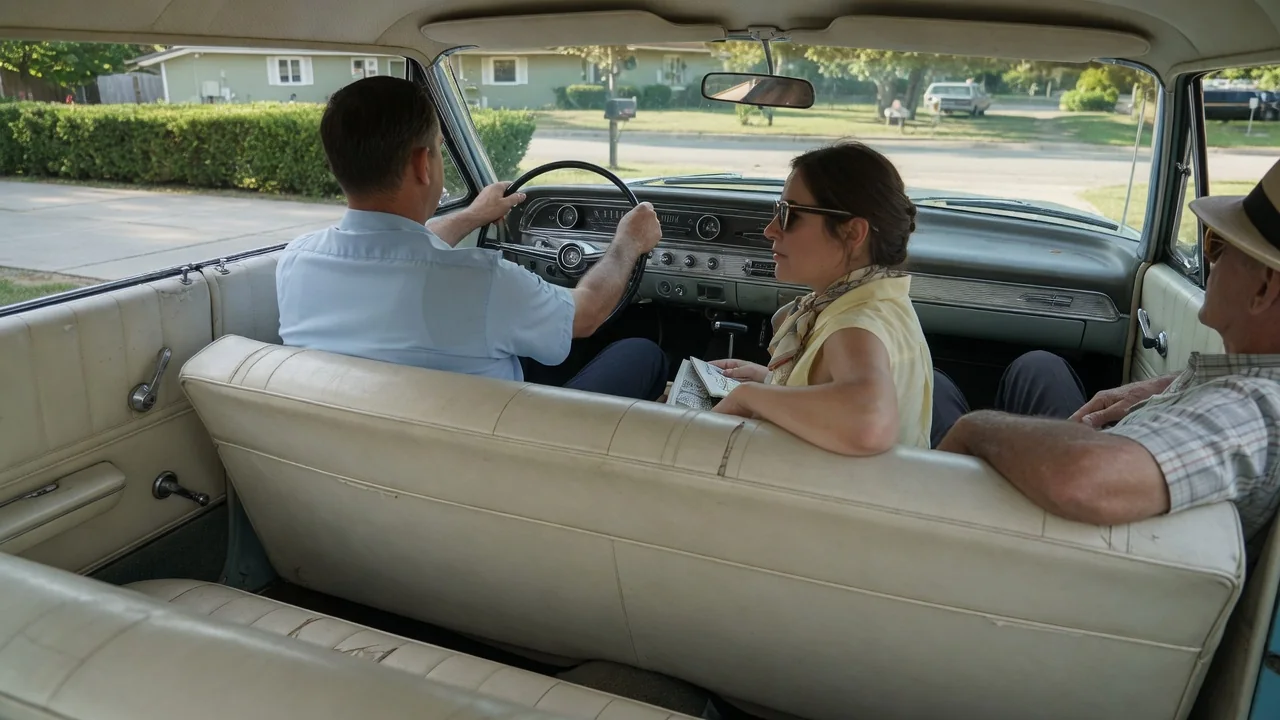
People who ask why did older cars have bench seats are usually noticing how different a classic sedan feels from a modern one. The answer lies in a mix of cabin packaging, control layout, manufacturing simplicity and the expectations of buyers at the time. A full-width front seat was a practical solution that fit the cars, roads and habits of its era.
Front cabin width
Many American sedans and wagons from the middle of the twentieth century were wide vehicles with a relatively flat front floor. Body-on-frame construction and rear-wheel drive did put a transmission tunnel down the center, but in a broad cabin that hump was low enough to rest a pair of feet on. Stretching one cushion from door to door let manufacturers advertise seating for three in front and six in the car overall, which mattered to families who had one vehicle for everything.
You can see this logic by looking across the front of a surviving classic. The dashboard typically runs in a straight horizontal line, the door panels are thin, and nothing rises from the floor between the driver and passenger. Narrower cars of the same period, including many European and Japanese imports and domestic sports models, often used individual seats because the middle position would have been too cramped to be useful. Width, not fashion alone, decided whether a third front occupant was realistic.
Shifter placement
A bench only works if the middle of the floor is clear, and the column-mounted shifter made that possible. With a manual gearbox, the familiar three-speed lever on the steering column moved the linkage up and out of the way. As automatic transmissions spread, the selector stayed on the column, and the parking brake was commonly a pedal or a pull handle under the dash rather than a lever between the seats. Each of those choices kept the center space open for a passenger's legs.
Cars with a floor-mounted shifter tell the opposite story. Performance models with four-speed manuals needed a lever sprouting from the tunnel, which naturally paired with bucket seats and, later, a center console. Some vehicles split the difference with a floor shifter poking up ahead of a bench, leaving the middle rider to straddle it. Pickup trucks kept column selectors and benches longer than most passenger cars, so the arrangement you find depends heavily on the body style, the drivetrain and the trim level.
Changing design
Several trends gradually pushed the bench aside. Buyers began to associate individual seats with sportiness and comfort, and automakers responded by offering buckets and consoles as upscale options before making them standard. Front-wheel-drive layouts and smaller exterior dimensions arrived as fuel economy became a priority, and the narrower cabins left less room for a usable middle position. A sculpted seat with side bolsters also holds a driver in place through corners far better than a flat, slippery cushion.
Safety engineering added further pressure. Early benches often had lap belts at most, and the center rider sat directly in front of the dashboard with little restraint. As three-point belts, head restraints and eventually airbags became expected, protecting a middle front occupant grew more complicated than protecting two outboard ones. Meanwhile the center console turned into valuable real estate for storage, cupholders, climate controls and later infotainment hardware. The split bench with a folding armrest served as a transitional design for a number of years.
Everyday Use and Observations
Living with a bench has a distinct character. Sliding across to exit on the curb side is easy, which was handy on busy streets, and a couple could sit close together on a drive. Three adults up front was possible but snug, and the person in the middle had the least legroom. Because one-piece benches usually move as a single unit, a short driver who pulls the seat forward brings a tall passenger along, and recline adjustment was often limited or absent.
On the road, the lack of lateral support becomes noticeable. Occupants tend to slide on vinyl upholstery during brisk turns, and drivers brace themselves with the steering wheel or door armrest. Long-distance comfort varies widely, since some benches were deeply padded with coil springs while others were thin and flat. Anyone inspecting a classic should look at the seat frame, the springs, the track mechanism and the upholstery seams, because sagging on the driver's side can reveal decades of use.
Limits and Next Steps
No single explanation covers every vehicle. Bench seats were more typical of full-size American cars and trucks than of compact imports, and the same model could often be ordered with either a bench or buckets depending on trim and options. Dates for when a particular manufacturer dropped the layout differ, and some large sedans and pickups kept a three-across front row long after it vanished elsewhere. Treat general history as background and confirm specifics from documentation for the exact year and body style.
For anyone buying, restoring or simply riding in an older car, the practical questions concern restraints and originality. Check which belts are fitted at each front position and whether they are in sound condition, since equipment varied by year and market. Changes to seating or belt anchorages affect crash protection and are best evaluated by a qualified restoration or upholstery specialist rather than improvised. Owner's literature, factory brochures and marque clubs are reliable ways to learn how a specific car was originally configured.