Why Do Some Cars Have Removable Rear Seats?
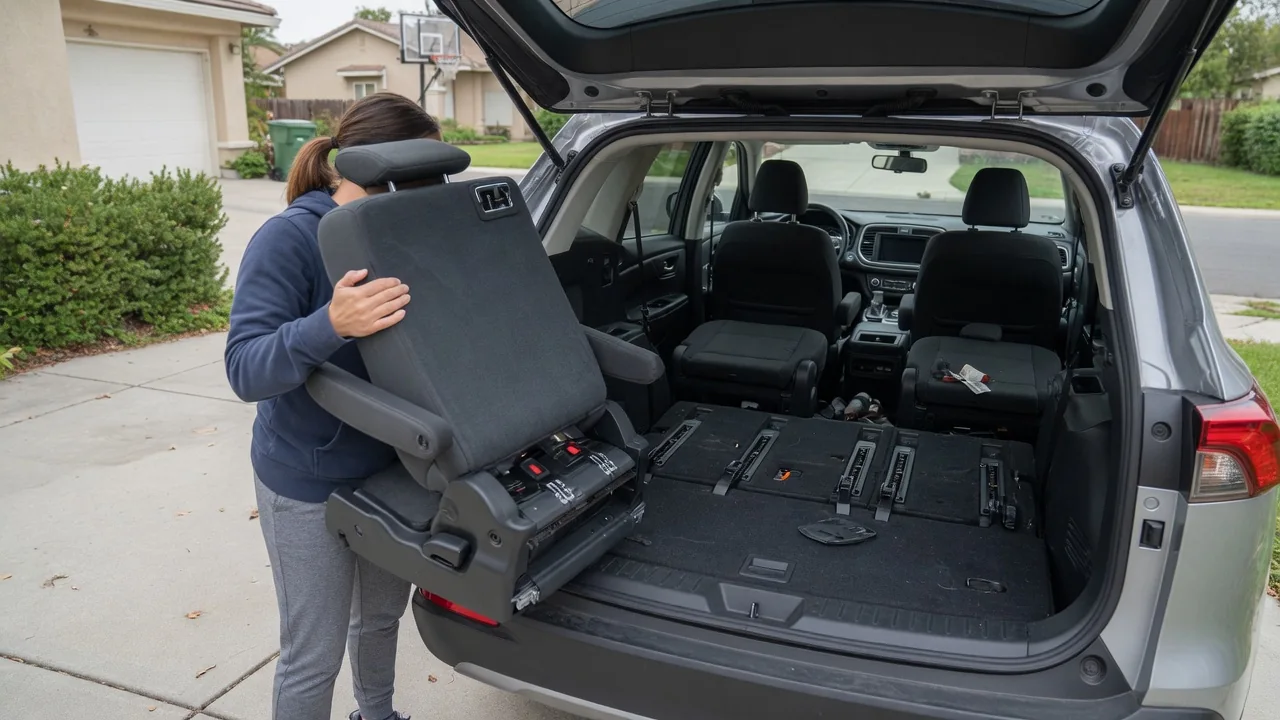
People often ask why do some cars have removable rear seats when folding seatbacks are so common. The short answer is space: taking a seat out entirely opens a taller, flatter load area than folding usually allows. That flexibility brings trade-offs in weight, handling, and safety, and understanding them helps owners use the feature confidently in minivans, vans, and some utility vehicles.
Seat attachment
Removable rear seats typically lock onto anchor points built into the floor, often called strikers, using spring-loaded latches at the base of the seat frame. A release lever or strap disengages the latches so the seat can tip forward and lift free. Some designs ride in floor tracks that also let the seat slide, while others sit in fixed pockets. Because these anchors must restrain an occupied seat in a collision, they are part of the body structure rather than simple trim hardware.
What you can observe varies by vehicle. Look for visible latch hooks, colored indicators that show whether a latch is fully engaged, and plastic covers over the floor anchors. Seat belts may be mounted on the seat itself or anchored to the body, which changes what must be unbuckled or stowed before removal. Seats containing airbags, heaters, or occupancy sensors may have electrical connectors underneath, and those designs are often not meant for casual removal. The owner's manual confirms which arrangement a particular model uses.
Storage
Once a seat is out of the vehicle, it needs a home. Individual seats and benches can be heavy and awkward, so many owners find lifting one a two-person job. Store it upright or on its base in a dry place, resting on cardboard or a blanket so the latches and upholstery do not sit directly on concrete. Moisture can corrode latch mechanisms, and dirt packed into the hooks can prevent them from closing fully when the seat goes back in.
Storage is also why some manufacturers moved toward seats that fold into the floor instead of lifting out. A stowable seat travels with the vehicle, so it is available when unexpected passengers appear, but the floor well it needs takes space that could hold a spare tire or other components. A fully removable seat usually leaves a lower, more open cargo bay, which suits tall furniture, bicycles, or building materials. Which compromise a vehicle offers depends on its floor design and intended purpose.
Reinstallation checks
Putting a seat back deserves more care than taking it out. Before lowering it, clear the floor anchors of gravel, coins, or debris from the cargo it replaced, since a small obstruction can stop a latch short of locking. Set the seat squarely over its anchors and listen for each latch to click. Then push, pull, and rock the seat firmly by the frame. Any lifting, rattling, or visible indicator showing an unlocked latch means it is not ready to carry a passenger.
Seat belts and electrical connections need the same attention. Confirm that belts are routed without twists, that buckles are accessible rather than trapped under the cushion, and that any detachable belt anchor is properly reconnected. If the seat has wiring, a connector left unplugged may trigger an airbag or restraint warning light on the dash. Such a warning is a prompt to investigate, not proof that a component has failed, and a persistent light warrants a professional scan rather than guesswork.
Everyday Use and Observations
In daily driving, the difference is noticeable. Removing rear seats takes weight out of the back, which may slightly change ride firmness and how the rear settles over bumps, and the empty cabin tends to be louder because upholstery absorbs road noise. Replace the seats with heavy cargo, and the picture reverses: braking distances grow, the vehicle leans more in corners, and a load stacked high raises the center of gravity. Keeping heavy items low and as far forward as practical helps stability.
A seat also acts as a barrier, so with it gone, loose cargo has a clear path toward the front occupants under hard braking. Tie-down rings, cargo nets, and straps matter far more in an open cabin. Owners commonly notice exposed floor anchors catching on boxes, rear climate vents blowing into empty space, and better visibility through the rear windows until cargo blocks it. Those small observations are useful reminders that the vehicle is configured differently and should be driven with a little extra margin.
Limits and Next Steps
The feature has firm limits. Extra floor space does not raise the payload rating, which is typically shown on a label in the driver's door opening and covers passengers and cargo together. Not every rear seat is designed to come out, either; bolted seats in most sedans and many SUVs are fixed installations with belt and airbag considerations, and removing them can affect safety systems. In some places, changing seating capacity may also carry inspection or insurance implications, so local rules are worth checking.
A sensible next step is to read the seating section of the owner's manual, which explains the approved removal method, lifting cautions, and any seats that must stay in place. Practice the process once in the driveway before a moving day forces the issue. If a latch will not lock, a belt is damaged, or a warning light stays on after reinstallation, leave that seat unoccupied and have a dealer or qualified technician inspect it. Used correctly, a removable seat gives one vehicle two distinct roles.