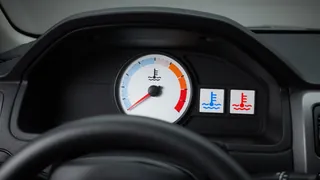
What to do when the engine coolant light comes on
A glowing engine coolant light means the cooling system is asking for immediate attention, not necessarily that the engine has already failed. In many US vehicles the warning appears as a blue or red symbol that can indicate low coolant level, excessive temperature, or both. The correct response depends on whether the light is steady, flashing, cold-start blue, or accompanied by a temperature gauge movement. Treat the warning as a signal to assess the cooling circuit safely before continuing to drive.
Essential answer
The essential answer is to stop evaluating the engine coolant light came on condition before the engine overheats. Pull over when safe, turn off the engine, and let the cooling system shed heat. A low coolant light may simply mean the reservoir has dropped below the sensor threshold, but the same warning can also appear from a hot engine, a failed pressure cap, or coolant loss through a leak.
The scope of the correct response changes with the warning behavior. A blue light at a cold start often means the engine has not reached operating temperature, while a red light typically signals high temperature or low coolant. If the engine coolant low light appears at idle but clears with added coolant, the cause may be evaporation or slow seepage. If it returns quickly, the vehicle needs further diagnosis.
How it works
The cooling circuit moves a mixture of water and antifreeze through the engine block, cylinder head, radiator, and heater core. The water pump circulates the liquid, the thermostat controls flow based on temperature, and the radiator rejects heat to outside air. A sensor in the reservoir or radiator reads coolant level or temperature and turns on the warning when the value leaves the normal band.
The coolant concentration also influences how the system behaves. Too much water lowers boiling protection and encourages corrosion, while too much antifreeze can reduce heat transfer. Air pockets trapped after a refill can fool a level sensor or create hot spots near the cylinder head. The pressure cap sets the system's boiling point by holding pressure, so a weak cap can allow coolant to escape as steam even without a visible hose leak.
Strengths, limitations and suitability
The warning light is useful because it catches low volume or rising temperature before the driver notices steam or a rising gauge. The main limitation is that it does not identify the cause. A low reservoir can come from a leaking radiator, a seeping water pump, a failing heater core, or a worn pressure cap. For this reason the light suits early detection but not precise diagnosis.
This early warning is most helpful for owners who check the reservoir promptly and understand coolant specification. A driver who ignores the light may not see the connection between repeated top-offs and a hidden leak. The system also suits long-distance highway use because airflow through the radiator usually stabilizes temperature, but stop-and-go traffic can push a marginal cooling circuit into the warning zone more quickly.
Procedure
Begin by parking on level ground and allowing the engine to cool enough that the upper radiator hose is not hard and the reservoir cap can be opened without releasing pressure. Check the reservoir markings for the cold-fill line and compare the liquid color with the recommended coolant specification. Add a premixed or correctly diluted coolant only to the indicated range, because concentrated antifreeze alone can create an overly rich coolant concentration.
After refilling, start the engine with the heater on and watch the gauge and warning light while the system warms. This can reveal whether the coolant level sensor resets and whether heat reaches the cabin. If the level drops again or the light returns, do not repeatedly top off and continue driving. A pressure test or cooling system inspection should be performed to locate external leaks or air pockets that refilling alone will not correct.
Diagnosing a problem
When the engine coolant light came on after a recent service, suspect air pockets or a loose hose clamp before condemning the sensor. Look for white or green crust around the radiator side tanks, water pump weep hole, heater core connections, and the pressure cap area. A sweet odor near the engine or wet carpet near the dashboard can point to coolant escaping outside or inside the cabin.
If the light appears mainly during warm weather and the temperature gauge climbs in traffic, the cooling fan, thermostat, or radiator airflow may be involved. If the warning appears at highway speed despite full coolant, the thermostat may be sticking closed or the radiator may be blocked. A red warning combined with steam or a rising gauge calls for stopping the engine immediately, because continued operation can cause severe engine damage.