Find coolant leak at the back of the engine
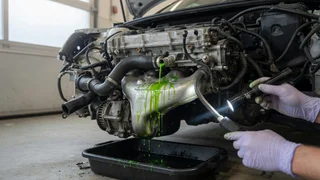
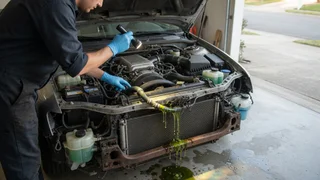
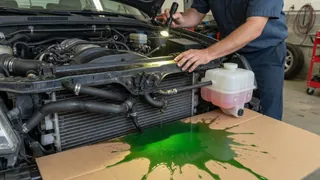
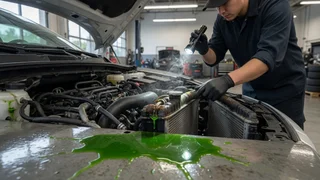
A coolant leak at the back of the engine often appears as a faint sweet odor, small puddle between the firewall and block, or slow drop in the reservoir before any overheating occurs. Because this area hides heater hoses, core connections, intake manifold passages, and occasionally core plugs, the visible wet spot may be distant from the actual loss point. Interpreting the drip location, coolant concentration, and system pressure behavior narrows the search without guessing.
Direct answer
Directly locating a coolant leak at the back of the engine requires first identifying the highest wet point, not the largest puddle. Coolant can run along the block, transmission bellhousing, or subframe before dripping, so the original escape point may be above and forward of the stain. Pressure testing the cooling circuit while the engine is warm can make a slow seep more visible because the pressure cap normally raises the boiling point and keeps the system above atmospheric pressure.
Several rear-mounted components deserve attention. Heater hoses and the heater core connections at the firewall are common because heat cycling, vibration, and old hose clamps can create seepage near the bulkhead. Intake manifold gaskets and throttle body heater passages can also release coolant at the rear of the engine, especially on engines where coolant crosses through the manifold. Core plugs at the back of the block may leak after corrosion or a loss of coolant concentration protection, though access often requires a mirror and bright light.
Identification and location
Look down between the engine and firewall with a bright inspection light while the engine is cool enough to avoid contact with hot surfaces. The rear face of the cylinder head, the intake manifold seam, and the two heater hose fittings are useful physical reference points. A small telescoping mirror can reveal wet trails hidden behind the block, and a clean paper towel held against a suspect hose or gasket edge will show whether coolant is actively wicking from that area.
Do not confuse dried coolant residue with oil seepage or condensation from the air conditioning evaporator drain. Coolant often leaves a chalky white, green, pink, or orange crust depending on the coolant specification, while plain water from the HVAC case is usually clear and odorless. If the leak leaves a sweet smell and slowly lowers the reservoir level only after the engine reaches operating temperature, the thermostat and radiator must be working well enough to build pressure, meaning the loss may be a heat-expanded crack or hose that closes when cold.