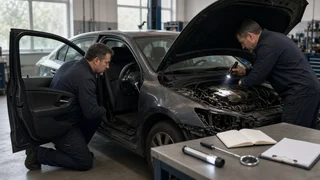
Vehicle fire damage
Vehicle fire damage involves more than charred body panels and melted trim. It affects wiring, fuel and fluid systems, structural metal, glass, and interior materials, often in ways that are not visible from outside. A car or truck that has been exposed to flame, intense heat, or heavy smoke may look repairable while carrying hidden electrical and safety defects. Understanding how heat travels through a vehicle helps an owner, buyer, or insurer ask better questions about whether the damage is cosmetic, repairable, or severe enough to require a total loss decision.
Essential answer
Vehicle fire damage is the harm caused to a car or truck when an ignition source meets combustible material inside or near the vehicle. Common combustible materials include fuel, engine oil, transmission fluid, brake fluid, wiring insulation, upholstery, plastic trim, and rubber seals. The damage may be confined to one area, such as an engine bay or interior, or it may spread through the body structure. Because modern vehicles combine fuel, high-current electrical systems, plastics, and enclosed passenger compartments, a small fire can quickly affect components that are far from the original flames.
The essential difference between a burned vehicle and one with ordinary collision or water damage is the way heat changes material properties and hides failures. Heat can soften body adhesive, anneal metal, corrode connectors, and leave soot inside modules that were never directly touched by flame. Safe evacuation and a call to emergency services are the immediate priorities during an active fire. Afterward, electrical isolation matters because a partly burned vehicle may still have stored energy in the battery, airbag capacitors, or damaged high-voltage cables if it is a hybrid or electric model.