Car Wheel Arch Rust Repair
Rust in a car wheel arch is more than a cosmetic blemish; it signals a breakdown in corrosion protection at one of the most debris-battered areas of the body. Water, salt, and road grit collect along the folded inner and outer panel edges, where paint chips and factory sealant wear away. Once moisture reaches bare surface material behind the liner or trim, the metal oxidizes and expands. Understanding car wheel arch rust repair means recognizing the stages of damage, the difference between surface staining and structural loss, and the practical limits of driveway work versus body-shop replacement.
Essential answer
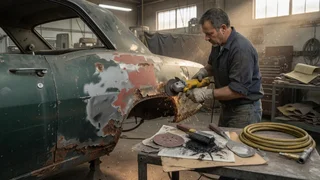
Car wheel arch rust repair is the process of removing corroded steel around the fender lip and restoring the contour with new metal, filler, or a bonded repair section, followed by sealing and refinishing. The scope changes with the depth of attack. Light discoloration under chipped paint may need only mechanical cleaning, rust converter, primer, and topcoat, while blistered or flaking steel indicates that oxidation has reached the substrate. Once holes appear, a patch or replacement arch is usually required because the load-bearing and mounting point geometry has been compromised.
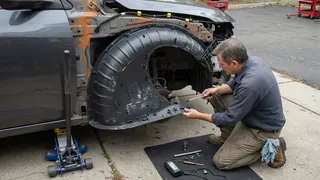
The repair succeeds only when both faces of the arch are addressed. Water often enters from the back side through seam sealer separation or missing inner splash shields, so treating only the visible surface leaves active rust behind the panel. Product compatibility also matters because solvent-based paints, epoxy primers, and body adhesives must suit bare steel or galvanized coatings. Although exact prices and model procedures vary widely, the durable approach is to cut back to clean metal, rebuild the folded lip with proper clearance to the tire, and restore the factory corrosion protection layers.
Diagnosing a problem
The first observable check is whether the arch lip shows bubbles, flaking scale, or dark pinholes. Bubbles with intact paint usually mean rust is spreading inside the folded seam, where trapped moisture attacks the untreated edge. Light brown staining that wipes away but returns indicates water is seeping behind the liner or molding. A mechanic or owner can also press carefully around the lip with a blunt tool; solid metal with surface roughness is a repair candidate, while crumbling or flexing steel means the arch has lost enough thickness to affect the surrounding body strength.
Look next for the moisture path. A cracked inner splash shield, missing fender liner fastener, or split seam sealer at the strut tower or dogleg can direct spray into the arch cavity. If rust is concentrated near the bumper bracket or rocker junction, the damage may extend behind adjacent panels that share the water channel. Visible holes near load-bearing mounting points, or severe rust on a structural inner wheelhouse, warrant stopping use of temporary fillers and seeking professional evaluation because the repair may involve sectioning a structural panel rather than simple cosmetic restoration.