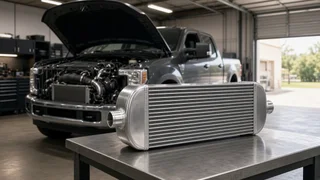
6.7 Powerstroke Turbo Intercooler Pipe
Choosing a replacement 6.7 Powerstroke turbo intercooler pipe means evaluating how the duct carries pressurized intake air between the compressor outlet and the intercooler. Leaks, splits, or loose hose connections can reduce boost pressure, raise charge-air temperature at the intake, and create noticeable driveability faults. Oil contamination inside the plumbing is common on turbocharged diesels and should be considered alongside visible damage. The commercial question is therefore not only which part fits, but whether the selected pipe restores reliable sealing, resists pressure loss, and works with the existing clamps and boots.
The direct answer
The immediate answer is to select a pipe designed for the 6.7 Powerstroke application and inspect the complete charge-air path before purchase. A replacement should restore the sealed connection from the turbocharger compressor outlet toward the intercooler, allowing boost pressure to reach the intake without escaping at a cracked duct, swollen boot, or loose clamp. Material choice matters because the part must tolerate heat, vibration, and oil residue without softening or splitting. If the old pipe is damaged, confirming whether the failure is isolated or accompanied by hardware wear helps avoid buying a new pipe that cannot seal properly.
One condition that changes the decision is oil contamination. A light oil film inside the intercooler pipe can be normal crankcase ventilation residue, but heavier pooling may point to a turbocharger seal concern. In that case the pipe replacement may be necessary while the underlying source still needs evaluation. Another condition is fitment: aftermarket pipes may alter routing or connection diameter slightly, so the buyer should match the supplied boots and clamps to the existing intercooler inlet and turbo outlet. The correct next step is to purchase a replacement that addresses the observed damage rather than assuming the pipe alone resolves every low-boost symptom.