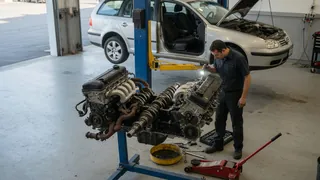
Boxer engine oil consumption
A boxer engine can consume oil for reasons that differ from an inline or V engine, and the diagnosis often begins at the dipstick. In this layout, the cylinders lie flat and the pistons move toward each other, which changes how oil drains, pools, and reaches seals. The question “boxer engine oil consumption” is not a single defect but an observation that should be read against the engine family, boost level, mileage, and driving pattern. Oil use is acceptable only when monitored against a repeatable level check and the vehicle manufacturer’s published criteria, not a fixed universal number.
Essential answer
The essential answer is that elevated oil consumption in a flat engine is usually a symptom, not a specification. It can point to normal combustion byproducts, piston ring behavior, crankcase pressure, turbocharger seals, or oil entering the intake through the breather system. Because horizontally opposed cylinders spread oil differently than upright ones, consumption can appear suddenly on one bank or after heat cycling. A confirmed drop on the dipstick is the starting point, not proof of a failed part.
The scope of the problem depends on the fill quantity, the lubricant specification, and the service interval being observed. Engines with a small sump capacity make the same physical oil loss look larger in proportion. A boxer engine that uses an approved viscosity and still loses oil may be responding to load, short trips, or aging seals. Manufacturer approval matters here because an oil that meets the wrong performance standard can increase volatility and consumption while still reading full on the dipstick.