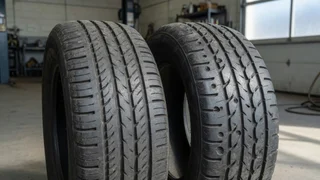
Can Tire Shaving (Truing) Fix Cupping
Tire shaving, also called truing, removes a thin layer of tread rubber on a specialized machine to make a tire rotate more uniformly. When a tire develops cupping—the scalloped high and low spots that produce rhythmic road noise and vibration—the practical question is whether shaving can restore smooth operation. The answer depends on the tread depth remaining, the cause of the wear pattern, and the condition of suspension components. This overview explains what truing can address and where its limits appear.
Essential answer
Tire shaving can reduce or eliminate the vibration and noise from cupping by cutting away the raised ridges until the tread circumference becomes round again. That may extend the useful life of a tire that otherwise has adequate rubber, but it does not repair the root cause. If the irregular wear came from worn dampers, loose steering parts, or persistent imbalance, the new surface can develop the same pattern again.
The procedure is most applicable when cupping is shallow and the tire still holds enough tread depth for safe wet-weather performance. Deep scallops cannot be shaved without removing too much rubber, reducing the tire's ability to channel water and meet its original load index and speed rating intent. A shop must measure the remaining tread before approving truing on any tire.
Diagnosing a problem
Cupping is not a tire-only fault. Before shaving a scalloped tire, a driver should inspect the suspension for movement that allowed the wheel to bounce or scrub. Worn shock absorbers or struts, weak bushings, bent wheels, and chronic imbalance can all create the uneven loading that produces cupped tread blocks. Repairing those issues first prevents the same wear from returning quickly on the freshly trued surface.
Tire-related checks also matter. Compare tread depth across each rib and across the axle; uneven depth may point to alignment or to a tire that has been run at incorrect inflation pressure for its load. Loose wheel bearings or a tire that is out of round can mimic cupping symptoms. A fault code from a stability control system is not proof that a tire is bad; it only shows the vehicle detected a speed variation between wheels, so the mechanical condition still needs confirmation.