What Is a Boxer Engine Layout? Opposed Cylinders, Height, and Service
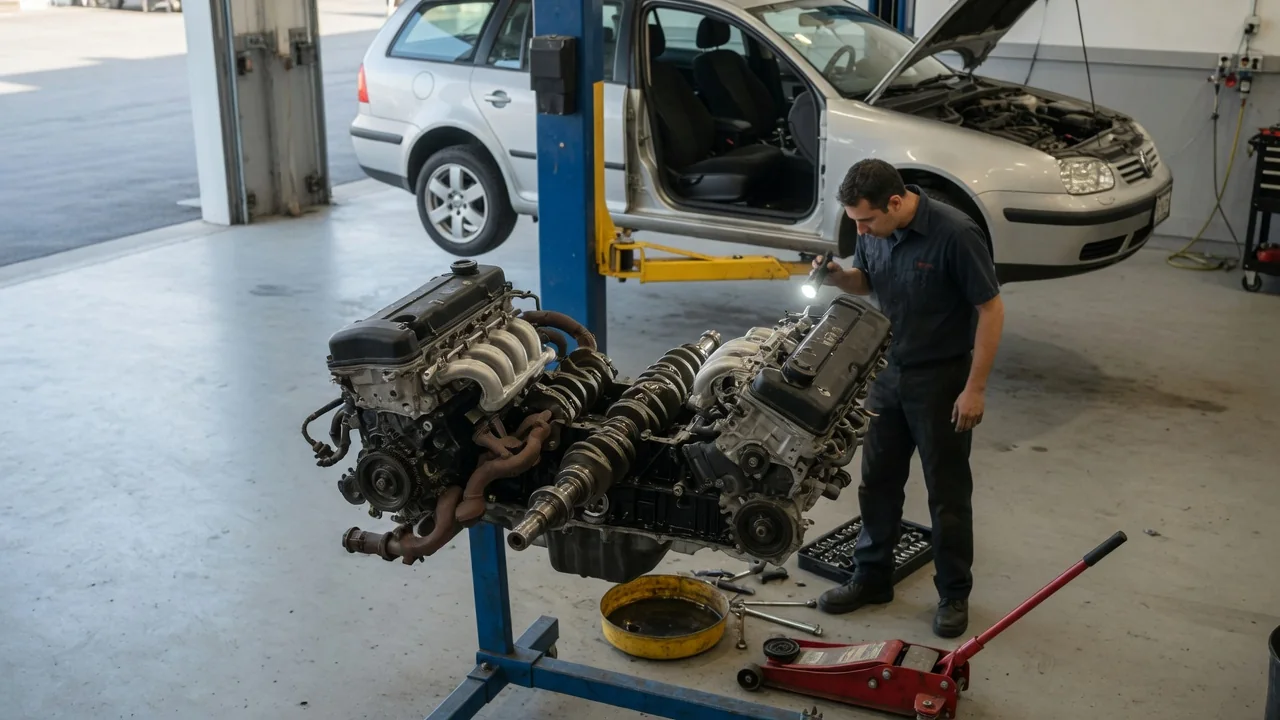
A boxer engine layout places the cylinders flat, in two banks that face each other on opposite sides of the crankshaft. The name comes from the way paired pistons move outward and inward at the same time, much like two boxers trading punches. Understanding this flat boxer engine design helps explain how it balances its moving parts, why it sits low in the engine bay, and why some maintenance jobs differ from those on inline or V engines.
Opposed Cylinders and How They Move
In a boxer engine, the cylinders are arranged horizontally, 180 degrees apart, with the crankshaft running down the middle. Half of the cylinders sit on the left side and half on the right, and each side has its own cylinder head, valvetrain, and set of gaskets. Most boxer engines used in cars have four or six cylinders, although other counts exist. Because the cylinders lie flat rather than standing upright or leaning in a V, the engine is short from top to bottom and comparatively wide from side to side.
The defining feature is how the pistons move. In each opposed pair, both pistons reach the outer end of their stroke at the same moment and then travel back toward the crankshaft together. Their motions mirror each other, so the shaking forces each piston creates largely cancel out the forces of its partner. This gives the layout good inherent balance compared with an inline four, which typically needs extra measures to control vibration. The cancellation is not perfect, though. Opposed pistons cannot sit exactly across from each other, because each connecting rod needs its own space along the crankshaft. That small offset creates a slight rocking tendency, which engine mounts and design details are meant to manage.
Not every flat engine is a true boxer. A boxer gives each piston its own crankpin, which is what allows opposed pistons to move in mirror image. Some flat engines instead let two opposing connecting rods share one crankpin, so the paired pistons move in the same direction. That arrangement is usually described as a 180-degree V engine. The two can look nearly identical from outside, but their internal motion and balance characteristics differ.
Why Engine Height Is Lower
Laying the cylinders flat removes the tall stack of cylinder block and head found on an upright engine. The result is a low, squat engine whose heaviest parts, including the crankshaft, pistons, and cylinder heads, sit closer to the ground. Lowering this mass can contribute to a lower vehicle center of gravity, which designers may use to support stable handling, and the reduced height can also allow a lower hood line. It is worth keeping this in perspective: a vehicle's overall center of gravity depends on its body, suspension, battery, fuel tank, ride height, and load, so the engine layout is only one factor among many.
The trade-off for low height is width. With cylinder heads reaching out on both sides, a boxer engine needs a broad engine bay, and it must share space with the wheel wells, frame rails, steering components, and suspension. Exhaust pipes leave from the underside or outer ends of each head and must be routed beneath the engine, while intake runners have to reach both banks. The oil pan still sits below the crankshaft, so the engine is not as flat as the cylinder arrangement alone suggests. Some performance-oriented designs use a dry-sump oil system to reduce this depth further, but that is a design choice rather than a feature of every boxer.
Service Considerations for a Flat Engine
Because the cylinder heads point sideways, components that sit on top of an upright engine end up near the outer edges of the engine bay. Spark plugs, ignition coils, and valve covers are often tucked close to the frame rails or wheel wells, so access can be tighter than on an inline engine. Depending on the vehicle, a technician may need to remove air intake parts, the battery, or other components, work from below, or approach from the wheel well. On some vehicles, larger jobs can require lowering or removing the engine. How much extra work is involved varies widely by vehicle, so the service manual for the specific model is the reliable guide.
Having two cylinder heads also doubles some parts. There are two head gaskets, two valve cover gaskets, and separate camshafts for each bank, which means an overhead-cam boxer has more camshafts to time than an inline engine with the same cylinder count. The timing belt or chain must wrap around both banks, and setting cam timing correctly on each side matters during any timing service. Leaks from valve covers or other gaskets can drip onto nearby components, so finding the true source of an oil leak sometimes requires careful inspection rather than assuming the lowest wet spot is the origin.
Horizontal cylinders also affect how oil behaves when the engine is off. Some oil can settle on the lower side of the cylinder walls, and in some engines this may produce a brief puff of smoke at startup. That alone does not prove a fault, but persistent smoke or noticeable oil loss deserves diagnosis. Checking the oil level at the interval recommended in the owner's manual, with the vehicle on level ground, is a sensible habit for any engine and especially useful for spotting gradual consumption early.
Practical Implications and Limits
Knowing that a vehicle has a boxer engine tells you about its geometry, not its overall quality. Power output, fuel economy, durability, and refinement depend on many decisions beyond cylinder arrangement, including materials, bore and stroke, cooling, fuel delivery, forced induction, and manufacturing tolerances. Two boxer engines can differ as much as two inline engines do. Treat the layout as one useful piece of information when reading about a vehicle, and rely on that vehicle's documentation for anything specific, such as maintenance schedules, fluid capacities, or known issues.
For owners, the most practical effect usually shows up in maintenance planning. Labor estimates for jobs such as spark plug replacement, gasket work, or timing service may differ from what you would expect on a similar-sized engine of another layout, simply because of access. A shop that regularly works on flat engines may already have the tools and procedures for that vehicle. The distinctive exhaust sound some boxer engines produce is also not a guaranteed trait; it comes largely from exhaust manifold design, and many boxer engines sound much like any other. Expect the layout to shape packaging and service access, while recognizing that individual vehicles vary.