Car Wheel Gap: How to Measure Wheel Arch Clearance
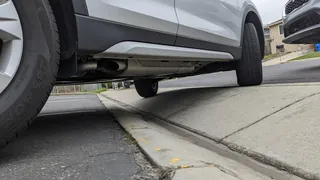
Wheel gap, often called fender gap, is the visible space between the top of a tire and the edge of the wheel arch above it. It affects how a car looks, and it also shows how much room the wheel has to move up into the arch before the tire contacts the bodywork. Measuring it is simple. Getting a number you can compare over time, or between corners, depends on measuring the same way every time.
The Short Answer
There is no single correct wheel gap. The factory gap depends on the vehicle's model, generation, trim, suspension package and wheel and tire size, and the front and rear figures often differ on the same car. What you can measure reliably is your own car's gap at each corner, under controlled conditions. Those numbers let you compare left with right, check for changes after suspension or wheel work, and judge clearance before fitting larger tires or lowering the car.
How Wheel Gap Differs From Related Measurements
Several dimensions get mixed up in discussions of clearance. Each one measures something different:
Measurement | What it describes | Typical use; Wheel gap (fender gap) | Space between the tire tread and the fender lip directly above it | Appearance, quick suspension comparison, rubbing risk; Ride height | Distance from a reference point, such as the hub center or a chassis point, to the fender lip or the ground | Suspension setup, alignment, comparing before and after modifications; Ground clearance | Distance from the lowest point of the underbody to the ground | Ramps, speed bumps, off-road capability; Wheel arch clearance | Room around the whole tire inside the arch, including the inner liner and suspension parts | Fitting tires and wheels, avoiding rub at full steering lock or compression
Tire size affects wheel gap directly. A taller tire shrinks the gap even when the suspension has not changed. Because of this, many enthusiasts and shops measure from the center of the wheel hub to the fender lip. A hub-to-fender figure reflects suspension height regardless of the tire, while a tire-to-fender figure reflects how the car actually looks.
Setting Up for a Consistent Measurement
Small changes in conditions can shift the reading, so control these factors before you measure:
Park on a flat, level surface. A sloped driveway skews the readings between front and rear and from side to side. Set tire pressures to the values on the door-jamb placard. Remove unusual cargo and note the fuel level. A full tank and an empty trunk give a repeatable baseline. Point the front wheels straight ahead. Settle the suspension after jacking or lifting. Roll the car forward and back a short distance, or bounce each corner, so the springs and bushings return to their normal resting position. Measure all four corners in the same session.
How to Measure Wheel Gap
You need a tape measure or a steel rule. A straightedge helps on arches with a rolled or flared lip.
Find the highest point of the arch directly above the wheel center. On most cars this sits vertically above the hub. For tire-to-fender gap, measure vertically from the top of the tire tread to the underside of the fender lip at that point. For hub-to-fender height, measure vertically from the center of the wheel hub or center cap to the fender lip at the same point. Keep the tape vertical. An angled tape gives a larger reading. Record each corner separately, labeled front left, front right, rear left and rear right. Repeat the measurements, and use the average if the readings vary slightly.
Some people measure gap informally by stacking fingers between the tire and the fender. This works for a quick visual comparison, but it is not precise enough to track changes or diagnose a problem.
Reading the Results
Compare your measurements side to side first. A small left-to-right difference is common. It can come from manufacturing tolerances, the driver's weight, or components such as the battery or fuel tank sitting on one side. A larger difference at one corner suggests that something has changed, especially if it was not there before. Possible causes include:
A sagging, weak or broken coil spring; Worn or leaking shocks, struts or air-suspension components; Mismatched tire sizes or uneven tire pressures; Bent suspension parts or chassis damage from an impact; Aftermarket springs or coilovers set to different heights
If one corner sits noticeably lower and the car also pulls, leans, or wears its tires unevenly, have a suspension shop inspect it. Some manufacturers publish ride-height specifications and measurement points, which technicians use during alignment work. Those figures are specific to the model and market, so check the service information for your exact vehicle rather than relying on general numbers.
Why Wheel Gap Matters When Modifying a Car
Lowering springs, coilovers, lift kits, and new wheels or tires all change wheel gap and arch clearance. A few principles apply to any vehicle:
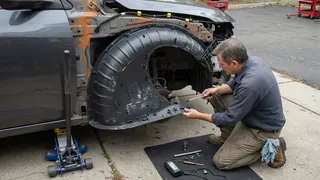
Static gap is only part of the picture. When the suspension compresses over bumps or under load, the tire moves up into the arch, and at full steering lock it also sweeps sideways. Wheel offset and width change where the tire sits relative to the fender lip and the inner liner. A tire can clear vertically and still rub on the edge of the arch. Lowering a car changes its suspension geometry, including camber and toe. An alignment is normally recommended after any ride-height change. On some vehicles, ride height affects headlight aim, and on vehicles with height-based sensors it may affect driver-assistance calibration. Recheck both after significant changes.
Before buying parts, record baseline measurements at each corner. These give you a reference for judging how much a modification actually changed the car and for spotting suspension settling in the weeks afterward.
Key Takeaways
Wheel gap is the space between the tire and the fender lip, and the correct figure varies by vehicle. Measure on level ground, with correct tire pressures and the suspension settled, at all four corners, using the same reference points each time. Hub-to-fender measurements isolate suspension height from tire size. Tire-to-fender measurements show the visual gap. Compare corners against each other and against your own earlier readings, and look at clearance through the full range of suspension travel and steering before making changes.