What Is Ground Clearance?
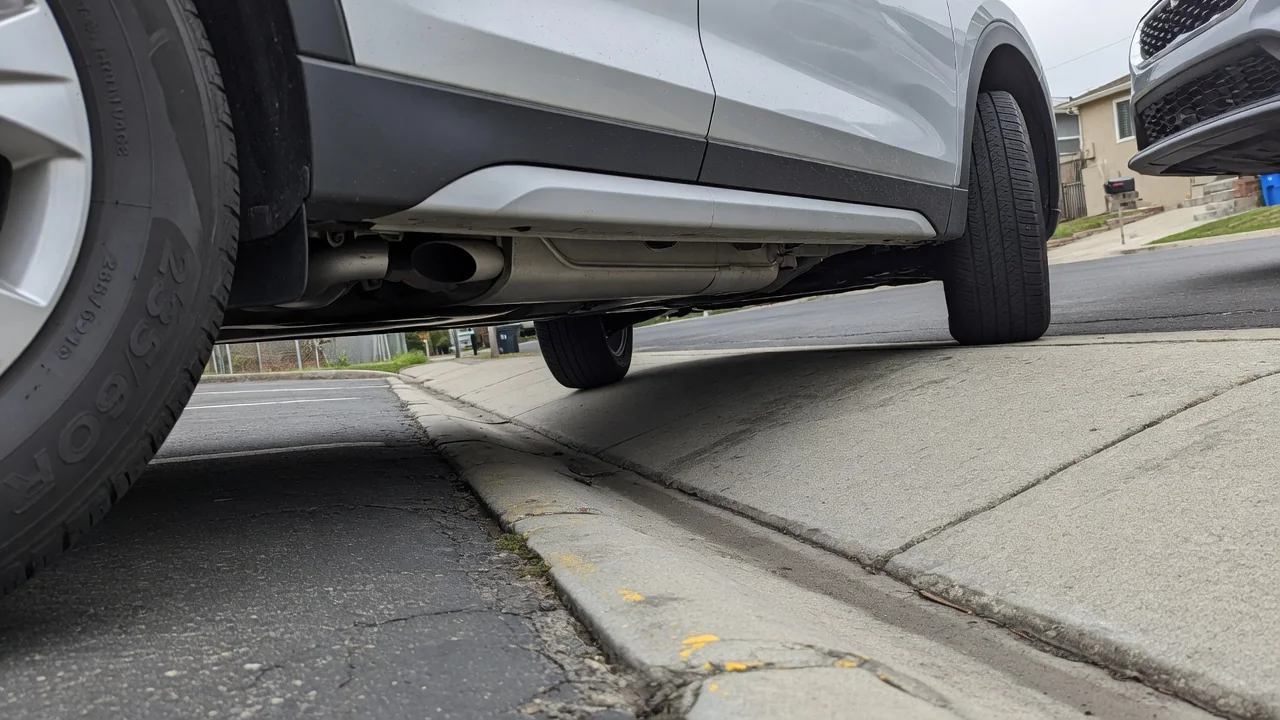
What is ground clearance? It is the vertical distance between a level surface and the lowest fixed point on a vehicle's underside. That single figure hints at how easily a car or truck passes over uneven terrain, but it describes one point under one set of conditions, so understanding its limits matters as much as the number itself.
Measurement variability
Published ground clearance figures are not always measured the same way. Some manufacturers quote the figure with the vehicle empty, others with a specified load on board, and the reference point may be a differential housing, an exhaust component, a suspension arm, or a front crossmember. Two vehicles with the same listed number can therefore behave differently, because one may have its lowest point at a rugged axle near a wheel while the other has it at a more exposed part in the middle of the floor.
Variation also appears within a single model line. Larger or smaller tire options change the height of the axles and everything attached to them, while sport suspensions, off-road packages, and adjustable air suspension alter how high the body sits. Front air dams and flexible aero strips often hang lower than the quoted figure because they are designed to deflect rather than support weight. Checking the documentation for the exact trim, and looking underneath to see what actually sits lowest, gives a more reliable picture than a brochure number alone.
Obstacles
Clearance determines what can pass beneath a vehicle without contact, such as a rock in a rutted trail, a raised manhole cover, a chunk of tire tread on the highway, or the hard center ridge left between two deep wheel tracks. Where the lowest point sits matters as much as how low it is. A solid rear axle keeps its differential at a fixed height near the wheels, while an independent suspension may leave the central underbody higher but allow it to drop as the springs compress over a bump.
Many obstacles are governed by geometry rather than the lowest-point figure. Approach and departure angles describe how steep a ramp or ledge the front and rear overhangs can meet without scraping, and breakover angle describes whether the middle of the vehicle will clear a crest between the axles. A long wheelbase can ground out on a sharp driveway hump or a railroad crossing despite generous clearance, while a short vehicle with modest clearance may pass cleanly. Deep snow, standing water, and soft sand add their own limits beyond simple height.
Loaded-vehicle change
Ground clearance shrinks as weight is added. Passengers, cargo, a full fuel tank, and trailer tongue weight all compress the springs, lowering the body and anything mounted to it. The effect is usually strongest at the rear, where luggage and hitch loads sit, so a vehicle that clears a driveway apron when empty may drag its exhaust or hitch receiver when packed for a trip. Components carried on a solid axle are the exception, since their height depends on tire size and inflation rather than spring compression.
Motion makes the loaded condition more demanding. Braking pitches the nose downward, dips and speed bumps compress the suspension further, and a heavily laden vehicle has less remaining travel before it reaches its bump stops. Worn or sagging springs reduce height permanently, and underinflated tires lower everything slightly. Some vehicles use self-leveling or air suspension to restore ride height under load, but how much they compensate depends on the specific system. Staying within the payload and towing limits listed for the vehicle helps keep the underside where the designers intended.
Everyday Use and Observations
In daily driving, clearance shows itself in small moments. Steep driveway entrances, parking garage ramps, tall speed bumps, and concrete parking stops are the most common places where a low front bumper or air dam makes contact. Lower vehicles tend to offer easier entry, a lower center of gravity, and less airflow under the body, which can help stability and efficiency. Taller vehicles give more margin over rough pavement and unplowed streets but usually sit higher to climb into and may lean more in corners.
Drivers can learn a lot by observing their own vehicle. Fresh scrape marks on the underside of the front bumper, a bent exhaust hanger, or scuffed plastic shields show where contact is happening. Parking on level ground and looking beneath the car reveals which component hangs lowest and how far it sits from the surface. Approaching steep transitions slowly and at an angle lets one wheel climb at a time, which often prevents the nose or the middle of the vehicle from touching down.
Limits and Next Steps
A ground clearance figure is a static measurement on a flat surface, and it cannot predict every situation. It says nothing about how well the underside is protected, how much traction the tires provide, or how the suspension articulates over uneven ground. Skid plates can guard vulnerable parts such as an oil pan, fuel tank, or battery enclosure, but they do not raise the vehicle. Likewise, a high-riding crossover without suitable tires or drive hardware may still struggle where a lower but better-equipped vehicle continues.
Anyone comparing vehicles should read clearance alongside approach, departure, and breakover angles, and confirm whether the figures apply to the trim, tire size, and suspension being considered. Owners who want more height through larger tires or a lift should recognize that such changes can affect handling, speedometer accuracy, driveline angles, and warranty coverage, so vehicle-specific guidance from the manufacturer or a qualified shop is worthwhile. After a hard underbody strike, an inspection for fluid leaks, damaged lines, or loosened shields is a sensible precaution before driving on.