What Does Ground Clearance Under Load Mean?
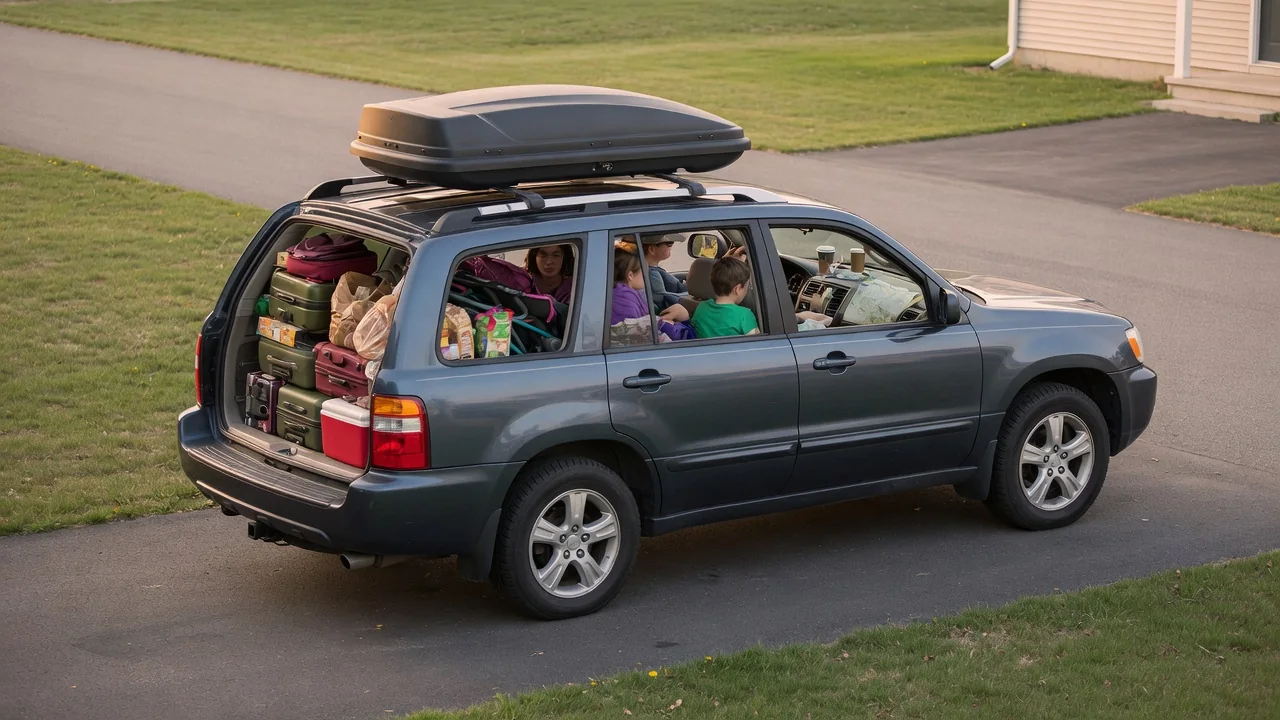
Ground clearance is usually quoted for an empty vehicle, yet few trips happen that way. Anyone asking what does ground clearance under load mean is really asking how much space remains between the lowest underbody point and the road once passengers, luggage, or a trailer are added. That loaded figure, not the brochure number, decides what the vehicle can pass over.
Suspension compression
Every spring supports the vehicle by compressing until its resistance equals the weight resting on it. Add passengers or cargo, and the springs compress further, lowering the body, the exhaust, the fuel tank, and everything else attached to the sprung structure toward the road. The amount of drop depends on spring stiffness: a softly sprung family sedan settles noticeably with four adults aboard, while a heavy-duty pickup designed for payload may barely move with the same weight.
Where the weight sits matters as much as how much there is. Luggage in a trunk or cargo bed loads mainly the rear axle, so the tail squats and the nose may rise slightly, while front-seat occupants spread their weight more evenly. Vehicles with solid axles behave differently from those with independent suspension, because the differential housing under a solid axle moves with the wheels and keeps its height, whereas body-mounted components still sink. Self-leveling air or hydraulic systems, where fitted, can restore much of the lost height.
Obstacles
Reduced clearance changes which obstacles a vehicle can cross without contact. A speed bump, a steep driveway apron, a parking curb stop, or a rutted gravel road that an empty car handles cleanly may scrape once the cabin and trunk are full. The parts at risk are whatever hangs lowest: front air dams, exhaust pipes, crossmembers, trailer hitch receivers, and on some electric vehicles the protective casing beneath the battery pack.
Load also alters the geometry that governs slopes. Rear squat shrinks the departure angle, so the back bumper or a hitch can drag when leaving a ramp, and a lower midsection reduces the breakover angle over crests. Motion makes matters worse, because a loaded suspension has less travel left before reaching its bump stops; a dip taken at speed compresses the springs beyond their resting position, briefly removing clearance that seemed adequate when the vehicle was parked.
Measuring
Published clearance figures are not all taken the same way. Some manufacturers quote the measurement at curb weight with no occupants, while others state it at a specified loaded condition, and the documentation does not always make the distinction obvious. Comparing two vehicles fairly therefore requires knowing which condition each number represents. The owner's manual or the manufacturer's technical data is the place to confirm this for a particular model.
A practical comparison can be made at home on level pavement. With tires at the recommended pressure, the distance from the ground to the lowest fixed point under the vehicle is noted when empty, then again with the usual passengers and cargo aboard. Measuring from the wheel center to the fender lip at each corner shows how much each end has settled without the need to reach underneath. The difference between the two readings is the clearance actually given up to the load.
Everyday Use and Observations
Most drivers notice loaded clearance through small signs rather than measurements. A vacation trip with a full trunk may bring a scrape at a driveway the car normally clears, headlights that aim higher because the rear sits low, or a floatier, slower-to-settle ride over undulations. Looking at the vehicle from the side before departure is revealing: a smaller gap between tire and wheel arch at the rear shows how much the suspension has already compressed.
Towing adds a similar effect, since the trailer's tongue weight presses on the hitch behind the rear axle and levers the tail downward. Roof boxes and bike racks contribute their own weight along with their contents. Driving habits can compensate to a degree: approaching speed bumps slowly, crossing steep entrances at an angle, and placing heavy items low and as far forward in the cargo area as practical all help preserve the remaining space under the vehicle.
Limits and Next Steps
Clearance is only one boundary; payload capacity is another. The tire and loading placard, typically found on the driver's door jamb, lists the maximum combined weight of occupants and cargo, and the gross vehicle weight rating sets the overall ceiling. Exceeding those limits does more than lower the body, because it strains tires, lengthens braking distances, and affects handling. A vehicle that sits very low with a legal load is behaving normally only if the drop matches how it sat when new.
Excessive sag with modest weight, a corner that sits lower than the others, or frequent bottoming over ordinary bumps suggests worn springs, tired shock absorbers, or a leak in an air suspension, and deserves inspection by a qualified technician. Owners who regularly haul heavy loads sometimes consider upgraded springs or helper systems, but suitability depends on the specific vehicle, and such parts do not raise its rated payload. Checking the manufacturer's guidance before modifying anything keeps both clearance and safety margins intact.