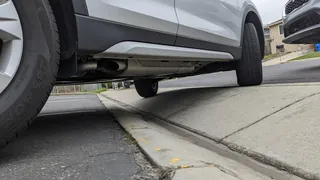
Minimum Vehicle Ground Clearance
Minimum vehicle ground clearance describes the vertical space between the lowest relevant point of a vehicle and a flat road surface. This dimension matters when a driver crosses speed bumps, enters steep driveways, or travels rutted roads. A vehicle’s ground clearance interacts with its overall dimensions, wheelbase, and track width, because a long wheelbase can make a modest clearance figure less forgiving over a sharp crest. For anyone asking about minimum vehicle clearance, the useful answer is not a single universal number. It depends on what the vehicle must clear and which component hangs lowest.
Essential answer
Minimum vehicle ground clearance is the smallest measured distance between the ground and a specified low point on the vehicle when the vehicle is at its normal ride height and typical load. The relevant low point is usually part of the suspension, engine underbody, exhaust, or differential housing, depending on vehicle configuration. Because a vehicle has many underside surfaces, the minimum value is found where the body or mechanical component sits closest to the pavement. This means the figure is not simply the height of the rocker panel or front bumper.
Clearance should be considered together with wheelbase, track width, and overall dimensions. A short-wheelbase vehicle with modest clearance may still handle a sharp ramp better than a long-wheelbase vehicle with slightly higher clearance, because the long distance between axles increases the chance of scraping at the center. Ground clearance is also changed by load, passengers, suspension wear, tire size, and optional equipment. Therefore a published specification is a useful starting point, but the practical clearance for a specific trip depends on the vehicle’s actual condition and configuration.