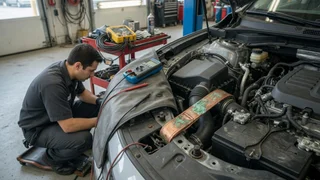
Diagnose a bad engine ground strap
A weak engine block ground can create confusing electrical behavior because the engine and chassis must share a stable return path for current. When that connection corrodes or loosens, starting, charging, and sensor operation may become erratic. Learning how to recognize engine ground strap symptoms helps distinguish a simple connection fault from a failing battery, starter, or alternator. Basic inspection of the strap, mounting points, and cable condition often reveals whether resistance in the return side explains the trouble.
Essential answer
The engine block ground is the heavy cable or braided strap linking the engine assembly to the vehicle body or battery negative terminal. Its job is to carry starter current, alternator output, and ignition or sensor return current through a predictable low-resistance path. Rubber or fluid-filled engine mounts insulate much of the drivetrain, so a dedicated ground connection is needed. When that connection degrades, current seeks alternate routes through throttle cables, shift linkages, or small body grounds, which can cause odd failures that appear unrelated.
A failing ground strap typically produces symptoms that change with engine movement, temperature, or electrical load. Slow cranking, dim or pulsing lights, intermittent gauge readings, and a starter that clicks without rotating are common. Because the return path is shared, one weak connection can affect several systems at once. Unless the strap is fully broken, the engine may still run while causing unpredictable electronic behavior. For this reason, the ground circuit should be checked before replacing expensive electrical components.
Diagnosing a problem
Diagnosis begins with a careful visual inspection of the engine block ground strap and its terminals. Look for green or white corrosion, frayed braid, cracked insulation, loose bolts, or a strap that is stretched tight from engine movement. The connection points on the block and body should be clean and secure. A cable that feels stiff or shows heat discoloration may have internal resistance. If diagnostic codes for multiple sensors or modules appear together, that pattern can point toward a shared power or ground concern rather than several failed parts.
A voltage drop test is a practical way to identify excessive resistance in the ground side. With the engine off, measure voltage between the battery negative post and a clean metal point on the engine while a helper briefly cranks the starter. A reading above a few tenths of a volt during that load indicates a poor connection or undersized cable. The test should be repeated with the engine running and major loads switched on. Any confirmed high voltage drop calls for cleaning and tightening the ground path or replacing a damaged strap.