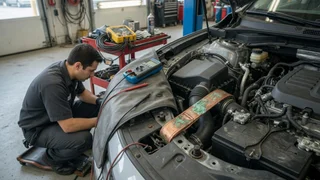
Engine Ground Strap Location
When an engine ground strap loses connection, electrical behavior turns confusing: slow cranking, flickering lights, or odd sensor readings often appear together. Finding the engine ground strap location is the first diagnostic step, because this braided cable ties the block to the chassis and completes the return path that the battery, starter, and control modules share. A missing or corroded strap mimics several expensive faults at once, so checking its mounting points before replacing parts can save time and money.
Essential answer
The engine ground strap is typically found between the engine block or cylinder head and the vehicle body or frame. In most front-engine cars and light trucks, one end bolts near a motor mount or transmission housing, while the other end attaches to an inner fender, firewall, or subframe rail. Its job is not only starting current return but also providing a stable zero-volt reference for sensors, ignition components, and the alternator.
Because the exact mounting point varies with body style, drivetrain layout, and model year, the location should be confirmed on the specific vehicle. A transverse four-cylinder often uses a short strap near the passenger-side mount, while a longitudinal V8 may route a longer braid from the back of the head to the cowl. The common identifier remains the same: a flexible woven metal conductor with terminal eyes at each end.
Identification and location
To recognize the strap, open the hood and trace from the battery negative terminal. One heavy cable runs to the body; a separate or shared flexible braid continues to the engine. It may look like a flat tinned-copper mesh, a round insulated cable with a braided section, or a black-jacketed lead with ring terminals. Unlike rigid block fasteners, the strap has slack that allows the engine to move on its mounts without stressing the connection.
If the visual path is hidden by the air cleaner, battery tray, or underbody shield, using a service manual diagram is the most reliable route. Search for the vehicle configuration rather than a universal picture, because manufacturer-dependent codes and option packages can shift the mount point. Inspect both terminal ends for green corrosion, heat discoloration, or pulled strands; resistance at one attachment can create the same symptoms as a large battery or alternator failure.