How Does Ride Height Change Airflow Under a Car?
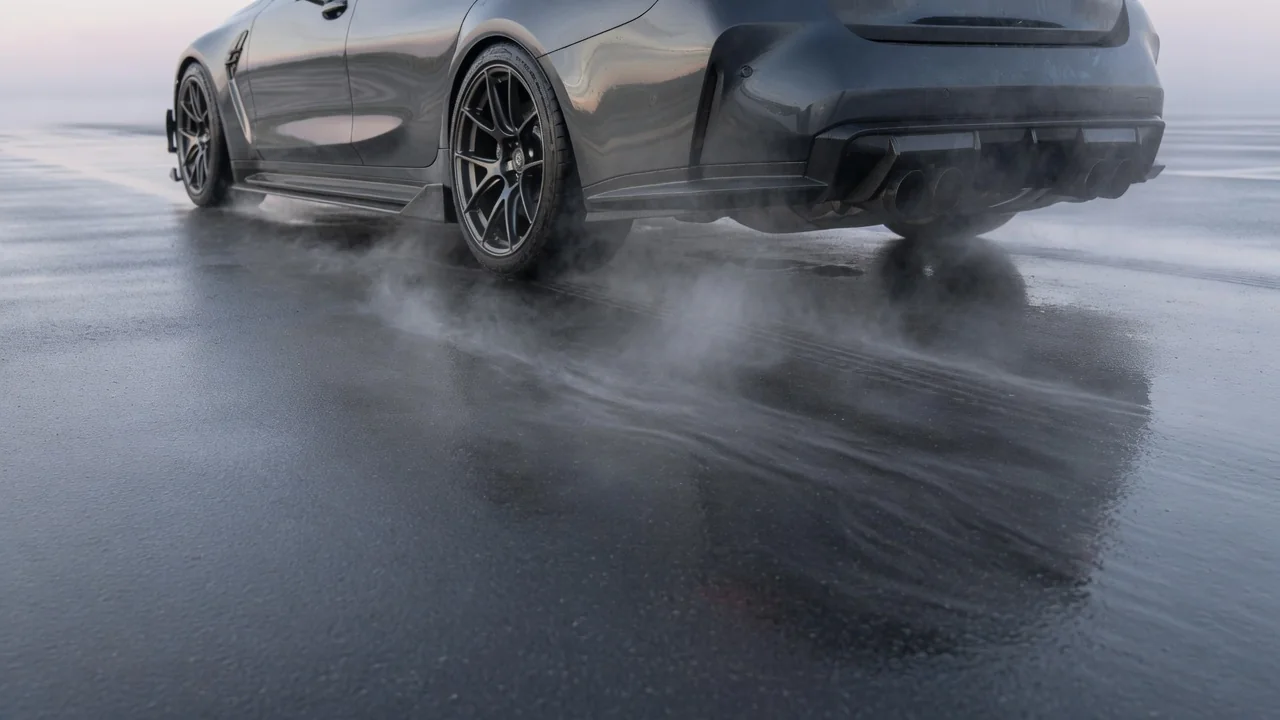
Ride height sets the size of the gap between a car's floor and the road. That gap controls how much air passes beneath the vehicle, how fast it travels and what pressure it creates. This is why the ride height aerodynamic effect reaches lift, drag, stability and even cooling. This guide explains how changing the gap alters underbody airflow and how speed and load move a car within its height range. It also explains why designers cannot simply set a car as low as possible.
Underbody gap
As a car moves, the air ahead of it divides. Most of it flows over and around the body, but some is forced into the space between the floor and the road. That space behaves like a channel formed by two surfaces. When the channel narrows, the air entering it has to speed up to get through, and faster-moving air generally has lower static pressure. With lower pressure beneath the car than above it, the body experiences less lift. With a carefully shaped floor, it can even experience a net downward force. This is the basic answer to how ride height changes airflow under a car: the gap governs flow speed, and flow speed governs underbody pressure.
Raising the car works the other way. A larger gap admits more air. On a typical road car, that air meets suspension arms, the exhaust system, the fuel tank, drivetrain housings and other irregular shapes. Each one disturbs the flow, creating turbulence and taking energy from the air, which shows up as added drag. Pressure under the car can climb back toward the surrounding level, so lift tends to increase. A taller stance also exposes more of the wheels and tires to the oncoming air. Spinning wheels in open wheel wells are already a significant source of disturbed flow.
Lower is not better without limit, because the relationship between gap and underbody pressure is not linear. As the gap shrinks, the slow-moving layer of air clinging to the floor takes up a larger share of the available space. Friction losses grow and less air makes it through. Air also leaks in from the sides, forming vortices along the edges of the floor. Past a certain point the low-pressure effect weakens. On floors designed for strong ground effect, it can drop off sharply rather than gradually. Where that point falls depends entirely on the shape of the particular underbody.
Speed and load
Aerodynamic forces grow roughly with the square of speed, so doubling speed produces about four times the force from the same pressure pattern. At parking-lot and city speeds, the airflow under a car has little practical influence on how it behaves. At highway speeds, the same mechanisms produce forces large enough to matter for stability, steering feel and fuel use. Those forces also act on the suspension. Underbody suction or added downforce compresses the springs, while lift lets them extend. As a result, the height a car runs at speed can differ from its height at rest. Spring rates and damping determine how large that difference becomes.
Load changes the starting point. Passengers, cargo, a full fuel tank or a trailer tongue lower the body. An uneven load also changes rake, the front-to-rear angle of the floor. A heavy load in the rear raises the nose relative to the tail, which can send more air under the front and shift the balance of lift between the axles. Driving inputs add short-lived changes on top. Braking lowers the nose, hard acceleration settles the rear, cornering rolls the body so the gap differs from side to side, and bumps make the height fluctuate continuously. Underbody airflow follows all of these movements. That is why engineers care about how sensitive a design is to height changes, not only how it performs at one setting.
Design bounds
Several requirements set the lowest practical ride height. The car must clear driveways, speed bumps, potholes, curbs and, in many regions, snow. It needs adequate approach, departure and breakover angles, room for full suspension travel and tire deflection, and protection for the components underneath. Heat matters too, since exhaust parts and other hot components need space and airflow around them. Applicable regulations and ride comfort add further limits. Raising the car eases these concerns but brings the drag and lift penalties described earlier, so the chosen height is always a compromise.
Within that range, designers use parts that manage underbody flow at an expected height. Front air dams and spoilers limit how much air enters beneath the car. Flat floor panels and smooth undertrays cover rough components. Small deflectors ahead of the tires steer air away from the wheels. A rear diffuser lets underbody air expand gradually so its pressure recovers before it rejoins the wake. Each part works best within an intended height band, and moving far outside that band reduces its benefit. Some vehicles use adjustable suspension that lowers the body at sustained speed and raises it for rough surfaces. This lets engineers target a different height for each condition rather than settling on one fixed compromise.
Practical implications and limits
For owners, the main implication is that ride height and underbody parts belong together. Lowering springs, lift kits, different wheel and tire diameters, and sagging worn springs all move the car away from the height its underbody was developed around. Lowering may reduce drag and lift if the floor parts still work as intended. However, it can also bring an air dam close enough to scrape or change the front-to-rear balance. Lifting generally adds frontal area and exposes more underbody hardware to the airflow. That tends to raise drag and can become noticeable in highway fuel use. The exact outcome for a given vehicle cannot be predicted from general principles alone.
Condition matters as much as height. Missing or damaged undertrays, splash shields and air deflectors change underbody flow and can undo some of the benefit the manufacturer designed in. It is worth replacing them after repairs or off-road use. Staying within the load limits in the owner's manual helps the car run closer to its intended stance. So does using any ride height modes as the manual describes.
A general explanation has clear limits. The direction of these effects is well established, but their size varies widely with body shape, floor design, tires and suspension. At low speeds, other factors such as mass and tire grip dominate. Only measurement of a specific vehicle shows how much its airflow and behavior actually change with ride height. That measurement can come from wind tunnel testing, computer simulation or controlled road testing.