What Is a Ride-Height Sensor?
Anyone asking what is a ride height sensor is really asking how a vehicle knows where its body sits relative to its wheels. The sensor measures suspension position at one or more corners and reports it to control modules, which use that input to level headlights, adjust air springs, or tune adaptive dampers as load and road conditions change.
Linkage
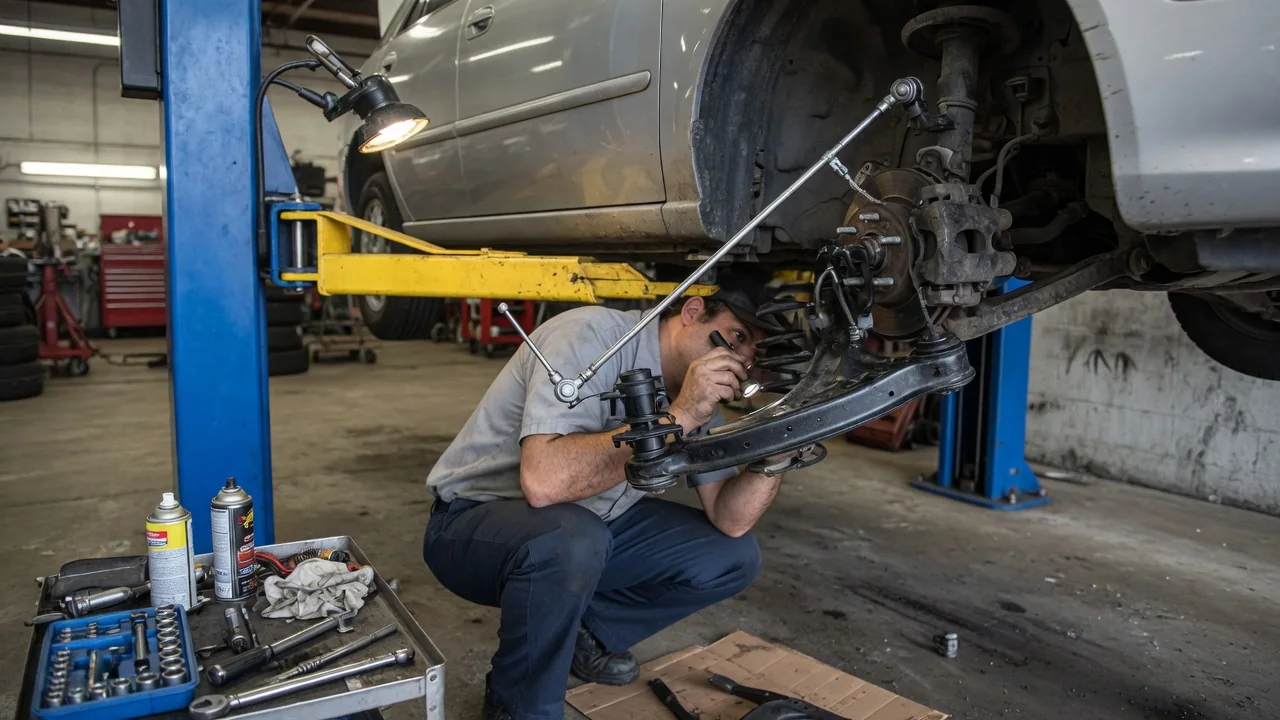
Most ride-height sensors do not measure distance to the ground directly. Instead, a small sensor body is bolted to the frame or subframe, and a short arm with a link rod connects it to a moving suspension part such as a control arm or axle. As the wheel travels up and down, the link swings the arm, and the sensor converts that rotation into an electrical signal. The module then interprets the angle as suspension position, having been taught what signal corresponds to normal height.
The linkage is often the most vulnerable part of the assembly. It is typically a slim rod with small ball sockets or rubber bushings at each end, exposed to road spray, salt, and debris. Looking behind a wheel, a reader may spot it as a thin arm running between the chassis and the suspension. Its length and mounting geometry matter, because a bent rod or a link installed in the wrong position changes the reading even when the sensor itself works properly. Layout and sensor count vary by vehicle.
Lighting or suspension
On many vehicles the sensor exists mainly for headlight leveling. When passengers or cargo weigh down the rear, the nose rises and the low beams tilt upward toward oncoming drivers. A level sensor on the rear axle, sometimes paired with one at the front, lets the lighting module tip the beams back down through small motors in the headlamp housings. This is common on vehicles with brighter lamp technologies, where glare control matters most, though whether a given car has automatic leveling depends on its equipment and market.
Other vehicles use the same kind of input for the suspension itself. Air suspension systems rely on height readings at each corner to decide when to add or release air, keeping the body level under load or lowering it at highway speed. Adaptive damping systems may watch how quickly the height changes to judge body motion and firm up the shock absorbers accordingly. Some vehicles share one set of sensors between lighting and chassis functions, while others use separate units, so the purpose of a particular sensor needs vehicle-specific confirmation.
Fault signs
A problem with suspension-position input usually shows up in whichever system depends on it. With leveling headlights, the beams may aim noticeably low or high, or a warning message about the lighting system may appear. With air suspension, one corner might sit visibly lower or higher than the others, the vehicle may lean, or the compressor may run more often than expected. A suspension warning light and a ride that feels unusually stiff are also possible, since some systems switch to a fixed default setting when a signal looks implausible.
These symptoms overlap with other faults, so they point toward an area rather than a single part. A sagging corner could reflect a leaking air spring instead of a bad reading, and a stored fault code naming a height sensor circuit is evidence to interpret, not proof the sensor has failed. Corroded connectors, chafed wiring, a seized or disconnected link rod, and a module that needs calibration can all produce similar results. Code meanings also differ between manufacturers, so the description should be checked against information for the specific vehicle.
Everyday Use and Observations
In normal driving the sensor works unnoticed. Owners may see its effects when starting the car, as headlights on some models sweep up and down in a brief self-check, or when an air-suspended vehicle rises slightly after doors close and the engine starts. Loading a trunk heavily or hitching a trailer offers another demonstration: the rear may settle and then recover to its usual stance, or the beam pattern on a garage wall may stay at about the same height despite the added weight.
Simple observations can be useful before any workshop visit. Parking on level ground and comparing the gap between each tire and its wheel arch shows whether one corner sits differently. Noting when a warning appears, such as after rough roads, in cold or wet weather, or only with a full load, helps narrow down intermittent faults. Recent work matters too, because suspension repairs, lowering springs, or a different wheel and tire size can leave the sensor reporting a height that no longer matches what the module expects.
Limits and Next Steps
A ride-height sensor only reports the position of the point where its link attaches. It does not weigh the vehicle, read the road ahead, or detect worn springs and dampers by itself, and the modules can only act as well as their calibration allows. After a sensor, link, or related suspension component is replaced, many vehicles need a calibration routine performed with suitable diagnostic equipment so the stored reference height matches reality. Skipping that step can leave headlights misaimed or the body sitting unevenly despite new parts.
When symptoms persist, a professional diagnosis is the sensible next step. A technician can read live data to compare each sensor's output against measured body height, inspect the linkage and wiring, and review fault codes in context. Mentioning any modifications, accident repairs, or recent alignment work speeds that process. Owners should be cautious around air suspension, which can move without warning when the vehicle is lifted or a door is opened, and should follow the manufacturer's service information rather than improvising adjustments to the link or sensor mounting.