What Is a Car's Automatic Headlight Sensor?
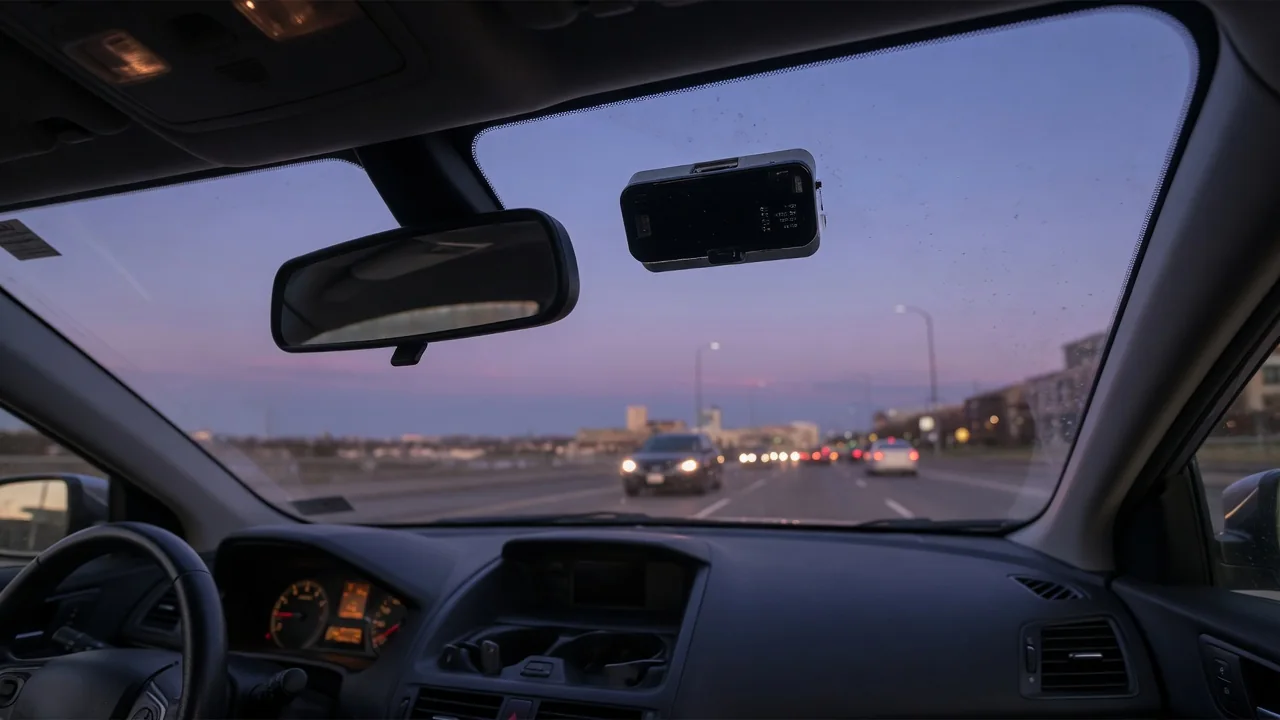
Anyone asking what is a car's automatic headlight sensor is really asking how a vehicle decides when it is dark enough to need lights. The answer is a small ambient-light sensor that measures brightness outside the cabin and reports it to a control module, which switches the headlights on or off after a short, deliberate delay. Here is how that process works in everyday driving.
Sensor placement
On many vehicles the ambient-light sensor sits on top of the dashboard near the base of the windshield, under a small dome or flat lens about the size of a coin. Others mount it behind the glass near the rearview mirror, often sharing a housing with the rain sensor. In either position the component is a photodiode or similar light-sensitive element aimed upward and forward, so it samples daylight coming through the windshield rather than the light inside the cabin.
Placement matters because anything covering that lens changes what the system believes about the sky. A parking pass, phone mount, dash mat, or stack of papers resting over the dome can convince the module that dusk has arrived, leaving the headlights on at noon. Some vehicles also use a second sensor for climate control sun load, which looks similar. The owner's manual usually identifies which dashboard lens serves the lighting system, and locations vary by manufacturer and model year.
Tunnel behavior
A tunnel is the clearest demonstration of how the ambient-light input and delay work together. As the car enters, brightness at the sensor drops sharply, and the module turns the headlights on after a brief pause, commonly noticeable as a second or two of lag. Some designs react faster to sudden darkness than to gradual dusk, and a few add a forward-facing sensing element specifically to recognize a tunnel entrance sooner. Exact timing depends on the vehicle's calibration.
Leaving the tunnel shows the other half of the logic. The lights typically stay on for a longer period after daylight returns, because the module waits to confirm the brightness is sustained. This hysteresis prevents flickering on and off under bridges, tree-lined roads, and parking structure ramps, where light levels change rapidly. A driver can watch the instrument cluster indicator or dashboard illumination dim and brighten to see the transitions, and the pattern will differ between a short overpass and a long underground section.
Override
Automatic control never removes the driver's authority over the lights. The headlight switch, whether a rotary dial on the dash or a twist collar on the turn-signal stalk, usually offers an auto position alongside manual settings for parking lights and low beams. Turning the switch to the on position bypasses the sensor entirely, which is useful in rain, fog, or snow, when the sky may be bright enough to keep the automatic system off despite poor visibility.
Many vehicles also let owners adjust how the system behaves rather than simply overriding it. Sensitivity settings in the infotainment or instrument cluster menu can make the lights come on earlier or later in fading light, and an exit delay setting may keep them lit briefly after the ignition is switched off. Some models link the headlights to wiper operation as well. Whether an off position exists at all varies, since certain markets and manufacturers default back to auto on each start.
Everyday Use and Observations
In daily driving, the system is most visible at dawn and dusk, when light hovers near the switching threshold. The headlights may come on a few minutes before a driver would have reached for the switch, and the instrument panel and screen backlighting often dim at the same moment because they share the sensor's signal. Pulling into a garage, driving beneath heavy tree cover, or passing through a thunderstorm can trigger the same response during the middle of the day.
Small habits keep those observations consistent. A clean windshield and an unobstructed sensor lens give the module an accurate reading, while aftermarket window tint strips or a dusty dashboard dome can shift the switching point slightly. Drivers should also remember that daytime running lights are not the same as headlights; on many cars they leave the tail lamps dark. A quick glance at the cluster's headlight indicator confirms whether the full lighting set is actually on rather than just the front running lamps.
Limits and Next Steps
The sensor measures brightness, not visibility. Daytime fog, heavy spray, falling snow, and smoke can all reduce how far other drivers can see without lowering ambient light enough to trigger the lamps, so manual control remains the driver's responsibility in those conditions. The built-in delay also means a brief moment of darkness when entering a tunnel or garage. Automatic high-beam systems are a separate feature, typically relying on a forward camera rather than the dashboard light sensor.
When the lights stay on in full sun, refuse to come on at night, or switch erratically, start with the simple checks: confirm the switch is in the auto position, clear anything covering the sensor, and review the sensitivity setting. If the behavior continues, a scan of the body control module can reveal stored fault codes, though a code points toward a circuit to investigate rather than proving the sensor itself has failed. Wiring, connectors, and vehicle-specific software all deserve confirmation by a qualified technician.