What Is a Steering Angle Sensor?
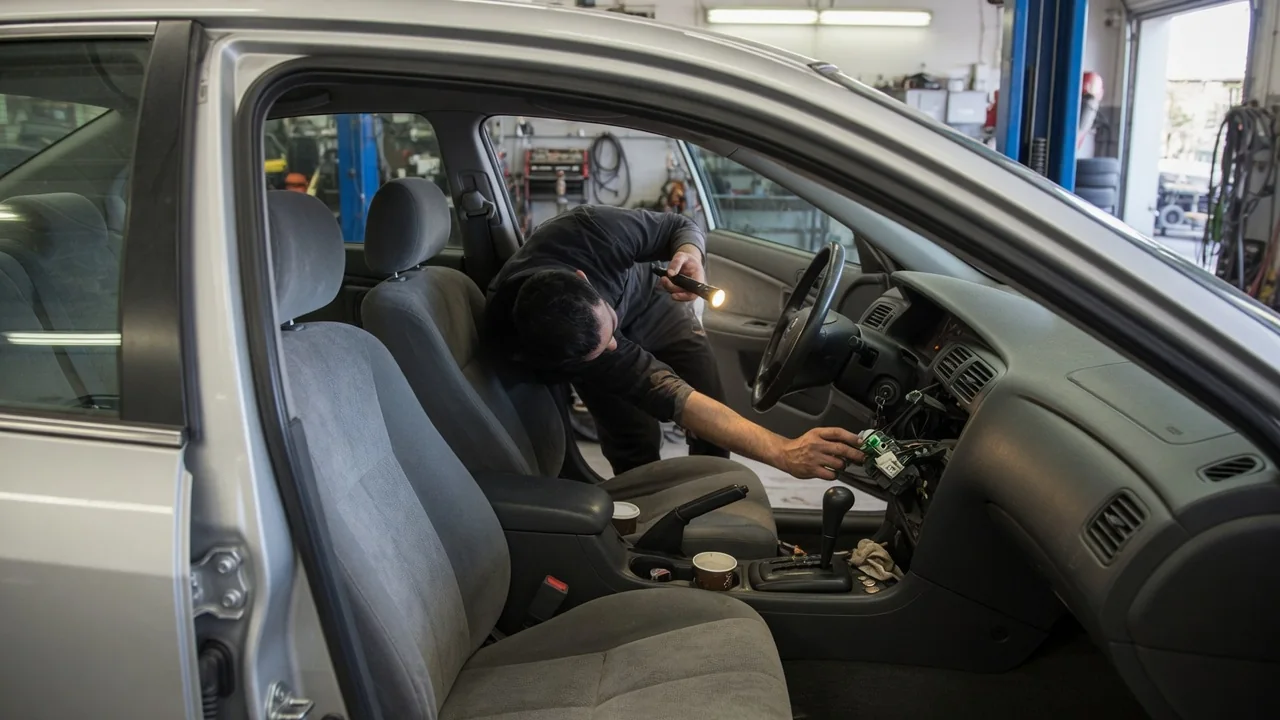
If you have ever wondered what is a steering angle sensor, the short answer is that it tells the car's computers where the steering wheel is pointed and how quickly it is being turned. That single piece of information feeds stability control, power steering assist, and many driver assistance features, which makes this small component far more influential than its size suggests.
Position measurement
A steering angle sensor measures the rotational position of the steering wheel or column, usually reporting how many degrees the wheel has turned left or right of center. Many designs also report the rate of rotation, so a control module can tell a gentle lane change from a sudden swerve. The sensor is commonly located in the steering column behind the wheel, often packaged with the clock spring assembly, although some vehicles place it lower on the column or inside the electric steering gear.
Sensing methods differ by design. Some units shine light through a slotted disc and count the interruptions, while others use magnets and magnetoresistive or Hall effect elements to track rotation without contact. Because a steering wheel turns more than one full revolution from lock to lock, many sensors use geared wheels or stored counts to keep track of which turn they are on. The signal usually travels over the vehicle data network, so it can only be viewed as a live reading on a scan tool.
System use
Electronic stability control is the best-known user of this input. The module compares where the driver is steering with what the car is actually doing, as reported by the yaw rate sensor, lateral acceleration sensor, and wheel speed sensors. If the wheel is turned for a corner but the vehicle is rotating too little or too much, the system reads that mismatch as understeer or oversteer and can brake individual wheels or reduce engine torque to bring the car back in line.
Other systems borrow the same signal. Electric power steering may use it to shape assist and to help the wheel return to center after a turn. Lane keeping, parking assistance, and adaptive cruise features depend on it to judge the intended path. Depending on the vehicle, it can also guide adaptive headlights that swivel into corners, cancel the turn signals, draw the bending guide lines on a backup camera display, or inform all-wheel drive and adaptive suspension strategies. Which features use the signal varies by make, model, and equipment level.
Calibration context
For the reading to be useful, the sensor's idea of zero must match the point where the front wheels actually point straight ahead. Calibration, sometimes called a reset or zero-point learn, teaches the module that reference. It is commonly needed after a wheel alignment, replacement of steering or suspension components, removal of the steering column or clock spring, or installation of a new sensor. On some vehicles, a disconnected battery or module replacement can also erase the learned value.
The procedure depends heavily on the manufacturer. Some vehicles relearn center on their own after being driven straight for a short distance or after the wheel is turned from lock to lock, while others require a scan tool routine performed with the wheels straight and the vehicle level. A few also call for calibrating related sensors, such as yaw rate, at the same time. This is why alignment shops often include a sensor reset as part of the job, and why service information for the specific vehicle should guide the process.
Everyday Use and Observations
In normal driving, a healthy sensor is invisible. Drivers notice it only indirectly: stability control stays quiet through ordinary corners, the steering feels consistent, the lane keeping system holds a steady line, and the backup camera guide lines bend in step with the wheel. A technician can confirm proper operation by watching live data, where the angle should read near zero with the wheels straight and change smoothly, without jumps or dropouts, as the wheel is turned in either direction.
When the signal is missing, erratic, or offset, the symptoms tend to show up as warning lights first. A stability control, traction control, or power steering indicator may illuminate, and related features such as lane keeping or adaptive cruise may switch off. Some drivers notice stability control intervening on a gentle curve, steering assist that feels uneven, or a wheel that sits off center after recent alignment work. These signs overlap with other faults, including wheel speed sensor, wiring, and alignment problems, so they point toward a diagnosis rather than deliver one.
Limits and Next Steps
A stored fault code that mentions the steering angle signal is evidence to interpret, not proof that the sensor has failed. Codes can be set by a missing calibration, low battery voltage, a damaged clock spring, connector or wiring faults, network communication problems, or an alignment that leaves the wheel off center. Many codes in this area are manufacturer-specific, so their meaning should be confirmed against information for the exact vehicle before any part is replaced.
A sensible next step is a scan with a tool capable of reading the chassis and steering modules, since basic engine code readers often cannot see them. Comparing the live angle reading with the actual wheel position, and reviewing any recent alignment, steering, or battery work, usually narrows the cause quickly. Because the sensor shares the column with the airbag circuit on many vehicles and because stability control is a safety system, replacement and calibration are best left to a qualified technician with the right equipment.