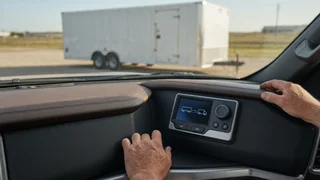
Built-In (Integrated) Trailer Brake Controller
A built-in trailer brake controller integrates the trailer's electric or electro-hydraulic brakes into the tow vehicle's braking system from the factory, eliminating the need for a separate aftermarket box mounted under the dash. The controller reads braking demand through the vehicle's data network and adjusts trailer brake output accordingly. For owners comparing integrated systems with add-on modules, the key distinction is how braking effort is communicated, displayed, and coordinated with stability control. Understanding that basic operating principle helps clarify what an integrated unit offers without inventing specifications for any particular model.
Essential answer
A built-in trailer brake controller is a factory-installed electronic module that modulates the trailer's electric brakes in proportion to the driver's brake pedal input. Instead of relying on a standalone timer or inertia-sensing box wired into the dash, the integrated controller receives braking signals from the vehicle's brake pressure sensor or network. That lets the tow vehicle and trailer slow together more smoothly. The controller usually includes a manual activation lever or button on the dash, a gain adjustment for trailer load, and a display that reports output level or trailer connection faults.
The integrated approach matters because trailer brake response should track the tow vehicle's actual deceleration rather than a fixed timer. When a controller is built into the vehicle platform, the brake system, anti-lock brake module, and trailer brake output can be coordinated through shared data. This can reduce trailer push during hard stops and allow the stability control system to apply trailer braking selectively. The exact behavior varies by manufacturer and trailer configuration, so an integrated controller should be assessed by its control feel, adjustment range, and how clearly it communicates trailer status to the driver.