Why Does a Car Vent Whistle?
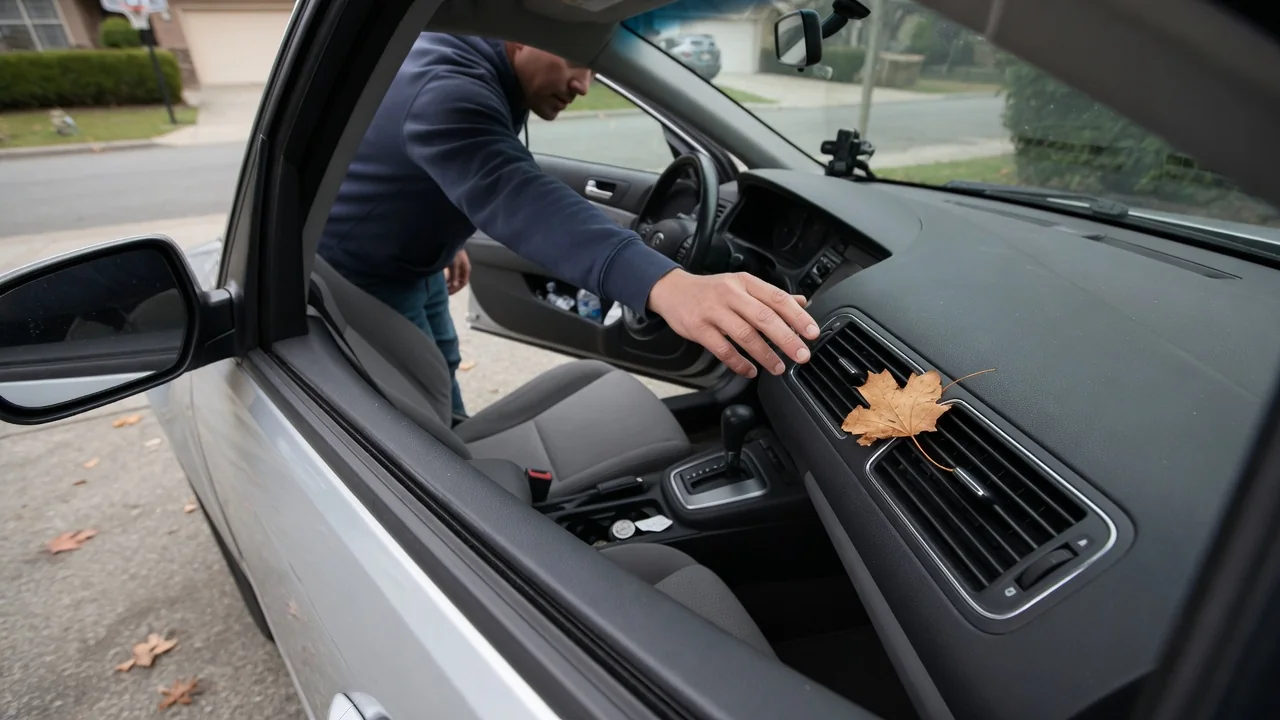
Anyone asking why does a car vent whistle is usually hearing air squeezed through a gap that is too small for the volume the blower is pushing. Fast air passing a narrow slot, a sharp louver edge, or a partly blocked duct sets up a steady tone, much like blowing across a bottle. The pitch and timing reveal where the restriction sits.
Change fan speed
Fan speed is the simplest test because the whistle depends on air velocity. Step the blower up one setting at a time and listen for the point where the tone begins. A noise that appears only on the top settings and climbs in pitch as the fan spins faster points to air being forced through a restriction somewhere in the ducting or at the outlet. A sound that stays the same at every speed is less likely to be airflow related and deserves a different line of investigation.
Switching modes while the fan runs adds more information. Moving from dash vents to floor or defrost routes the same air through different ducts and doors, so a whistle that follows one mode narrows the search to that path. Toggling between fresh air and recirculation changes where the blower draws from, which can expose a restricted intake under the cowl. Vehicles with automatic climate control may adjust fan speed on their own, so setting the system to manual makes the comparison far easier to hear.
Check filter and vents
A cabin air filter loaded with dust, leaves, or debris reduces the open area the blower can pull through. The fan then works against higher resistance, and air may squeal past the filter edges or through a housing door that is not fully seated. A filter installed crooked or in the wrong orientation can leave a thin gap that acts like a reed. Location varies widely, with some filters behind the glovebox and others under the hood near the cowl, so the owner's manual is the best guide.
The vents themselves shape the sound. Louvers angled nearly shut leave a narrow slot, and air accelerating through that slot often produces a clear, high note that disappears once the vanes are opened. Closing several outlets pushes more air through the remaining ones, raising velocity and noise there. A coin, wrapper, or broken vane lodged inside a register can do the same thing. Moving each vent through its range and opening or closing the thumbwheel while listening usually shows whether the outlet is the source.
Service
When simple checks do not quiet the noise, a shop can look deeper into the housing. Technicians commonly inspect the blower motor and its wheel for debris, since a leaf caught in the fan cage may tick or whine in a way easily mistaken for a whistle. They may also check that duct joints behind the dash are fully connected and that foam seals on the mode and blend doors have not deteriorated, because old seals can let air leak through small gaps under pressure.
Describing the conditions accurately helps the diagnosis more than any single part guess. Noting the fan setting, the selected mode, whether the air conditioning was on, and whether recirculation changed the sound gives the technician a path to follow. Some climate systems store fault codes for door actuators, and those codes are manufacturer dependent, so they need to be read against the specific vehicle's information. A code is a clue about a circuit or position, not confirmation that a component has failed.
Everyday Use and Observations
Not every whistle heard near the dash comes from the ventilation system. A noise that rises with road speed rather than fan speed, and continues with the blower off, more often relates to wind passing a door seal, mirror housing, windshield trim, or a slightly open window. Turning the fan off completely at highway speed is a quick way to separate the two. If the sound vanishes with the blower stopped, the air path inside the cabin system is the place to keep looking.
Seasonal patterns are worth noticing too. Whistling that starts in autumn may follow leaves collecting at the cowl intake at the base of the windshield, while a noise that appears after a filter change may suggest the new element is not seated or differs in fit. Temperature can matter because plastic ducts and foam seals shift slightly as they warm and cool. Weak airflow from the vents alongside the noise is a useful pairing, since it supports the idea of a restriction rather than a loose trim piece.
Limits and Next Steps
Listening tests have limits. Sound travels through hollow ducts, so a whistle that seems to come from the center vent may originate well upstream in the housing. Much of the system sits behind the instrument panel, where airbags, wiring, and delicate clips make exploratory disassembly a poor idea for most owners. Checks that stay within normal controls, visible vents, and an accessible filter are reasonable, while anything requiring dash removal is better left to someone with the vehicle's service information.
A faint whistle at maximum fan with vents nearly closed is often just the nature of fast air meeting a small opening, and it may not indicate any fault. Attention is warranted when the noise is new, growing louder, or joined by reduced airflow, poor defrosting, musty odor, or a blower that changes speed erratically. Clear windows depend on good airflow, so a weakening defroster should not be ignored. Recording when the sound occurs and sharing that with a qualified technician is the sensible next step.