What Is a Cabin Air Vent Direction Control?
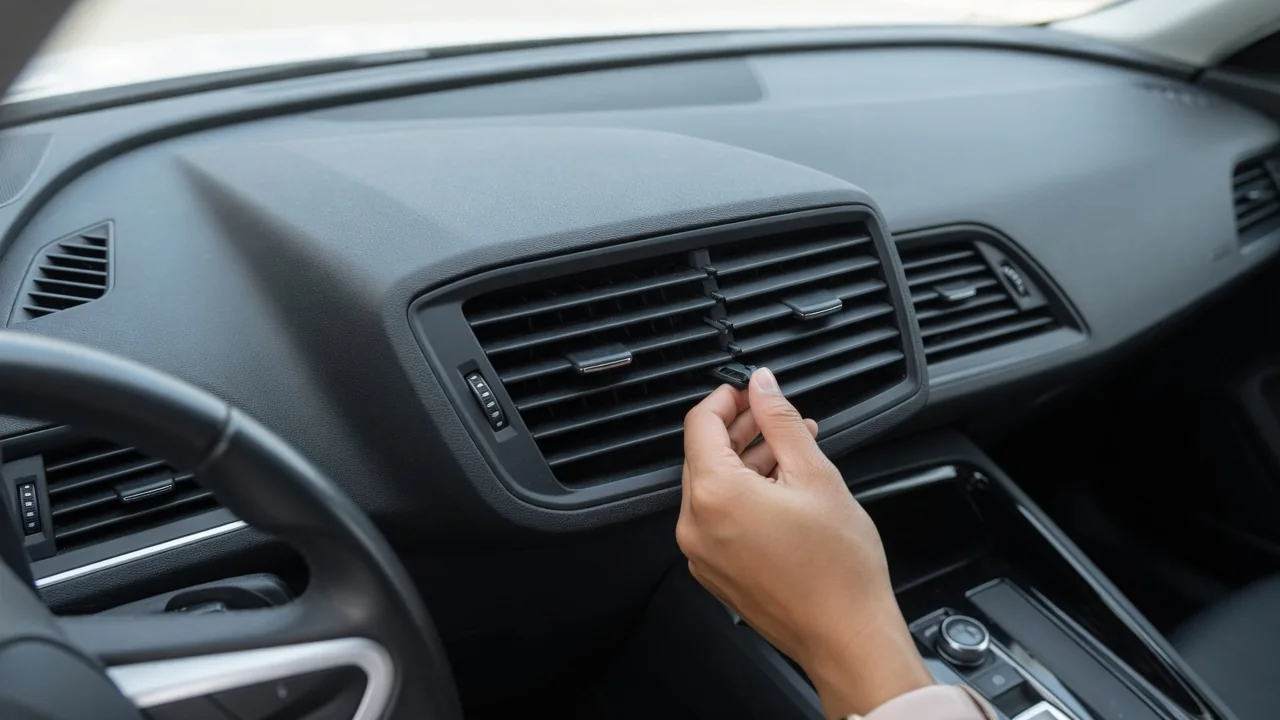
Anyone asking what is a cabin air vent direction control is really asking how a vehicle decides where its heated or cooled air goes. It is the knob, button set or touchscreen menu that sends airflow to the face, the feet, the windshield or a blend of these, and it works through hidden doors inside the dashboard.
Mode doors
Behind the dashboard sits a molded plastic housing that holds the blower, the heater core and the air conditioning evaporator. After air passes through those components, it reaches a set of hinged flaps called mode doors. Each door opens or closes a passage leading to a particular group of outlets: the dash panel vents aimed at the upper body, the floor ducts near the footwells, and the defroster slots at the base of the windshield. The direction control is simply the driver's way of commanding those doors.
How the doors move depends on the vehicle's age and design. Older and simpler systems often use a cable or engine vacuum to pull the doors into position, so the knob may feel mechanical and slightly stiff. Many newer vehicles use small electric motors, usually called actuators, that respond to a control module. From the driver's seat the difference shows up as feel and sound: a cable gives direct resistance, while an electric system may produce a faint whir behind the dash a moment after a button is pressed.
Comfort choices
The face setting, often shown as an arrow pointing at a seated figure's head, suits cooling because chilled air reaches the upper body quickly and the panel vents can be aimed by hand. The floor setting suits heating, since warm air rises from the footwells and gradually warms the whole cabin without blowing dry heat at the eyes. That pairing of cool air high and warm air low explains why many drivers change modes with the seasons rather than leaving one position year round.
Blended positions fill the gaps between those extremes. A bi-level setting splits air between panel and floor outlets, which helps on mild days when sun warms the upper body but feet stay cold. Some vehicles let each mode be selected independently, while others offer only fixed combinations on a rotary dial. Vehicles with rear outlets or multiple climate zones may give passengers their own direction choices, so the available options are worth checking in the owner's manual rather than assuming every cabin behaves alike.
Defogging priorities
The windshield position exists for visibility rather than comfort, and that changes how it should be treated. Fog forms when moist cabin air meets cold glass, so directing a strong stream of dry air across the inside of the windshield clears it. In many vehicles, choosing the defrost mode also engages the air conditioning compressor and switches to outside air, because the evaporator removes moisture and fresh air is usually drier than recirculated cabin air. The exact automatic behavior varies by manufacturer.
A combined floor and windshield setting is useful in cold, damp weather, keeping feet warm while a steady flow holds the glass clear. Many vehicles also include a separate maximum defrost button that overrides other settings and raises fan speed. Side window demisters often receive a small share of air in these modes, which is why the outlets near the door pillars may still blow when panel vents are closed. When glass begins to mist, clearing it takes priority over whichever setting feels most comfortable.
Everyday Use and Observations
In daily driving, the control's effect is easy to confirm by hand. After selecting a mode, a palm held near the panel vents, the footwell and the base of the windshield shows where the air is actually going. A brief delay or a soft movement sound during a change is normal on electrically operated systems. In automatic climate control, the vehicle may choose the outlets itself based on cabin temperature and sunlight, changing direction without any input until the driver selects a mode manually.
The individual vent louvers and thumbwheels on the dashboard are a separate layer of adjustment. The direction control decides which group of outlets receives air, while the louvers aim that air and, on many vehicles, allow a single vent to be shut. This distinction clears up a common confusion: a closed dash vent with the mode set to face does not mean the system has failed. Checking that the louvers are open is a sensible first look before suspecting anything deeper.
Limits and Next Steps
The direction control cannot make up for problems elsewhere in the system. Weak airflow from every outlet often points toward a restricted cabin air filter or a blower concern rather than the mode doors. Air that reaches the right vents at the wrong temperature involves a different door, usually called the blend door, or the heating and cooling components themselves. The telltale sign of a direction fault is specific: air keeps coming from one location regardless of the setting, or it shifts unexpectedly.
Clicking or tapping behind the dash during mode changes, or a system that defaults to the windshield, deserves professional attention. Some vacuum-operated designs fall back to defrost when vacuum is lost, but that behavior is not universal and needs vehicle-specific confirmation. A scan tool may show climate control codes, yet a code is evidence to interpret, not proof that an actuator has failed; linkage, wiring and calibration are also possibilities. Because access often requires dashboard disassembly, a qualified technician with the correct service information is the right next step.