Why Did Cars Have Ventilation Louvers in Windows?
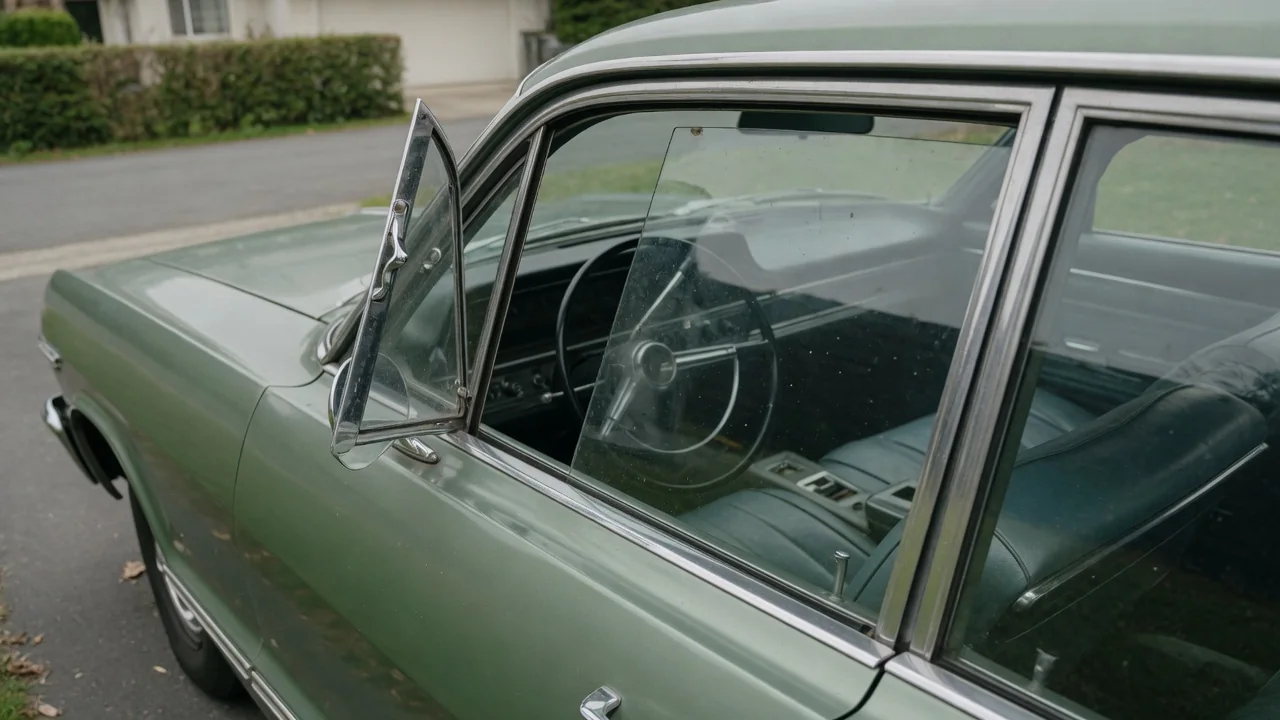
Before air conditioning became a common feature, a car's cabin depended on moving outside air to stay tolerable. That is the short answer to why did cars have ventilation louvers in windows: slatted openings, pivoting vent panes and louvered covers let drivers pull in a breeze, push out stale air and shade the glass without leaving a window wide open to rain and road noise.
Fresh-air path
Air only moves through a cabin when it has both a way in and a way out. Older cars usually gathered fresh air through a cowl intake at the base of the windshield, through small kick-panel doors near the footwells, or through the side glass itself. Louvers and pivoting vent panes in the window area gave that incoming air a controlled opening, so the driver could meter the flow instead of choosing between a sealed cabin and a fully lowered window.
The exit side mattered just as much. A moving car body develops zones of higher and lower pressure, and designers placed slatted outlets near the rear side glass or roof pillars where lower pressure tends to draw cabin air outward. On many older vehicles you can still see these as small grilles or angled slats behind the rear doors. Their exact position, and whether they sit in the glass, the pillar, or the bodywork, varies considerably between makes and body styles.
Cabin comfort
Comfort in a car without refrigeration comes mostly from air movement across skin and from keeping sun-heated glass from turning the interior into a greenhouse. An angled vent pane could scoop outside air and aim it at the driver's hands, face or lap, which feels far cooler than still air at the same temperature. Tilted the other way, the same pane created suction that pulled warm air and cigarette smoke out, a use many owners of the period valued.
Slats over or within a window added a second benefit: shade. Louvers mounted over a sloping rear window block high summer sun while still allowing the driver to see between the blades, which lowers heat soaking into seats and trim. Angled slats also shed rain, so an opening could stay cracked during a shower to keep windows from fogging. Moisture control was a real concern, because early heaters and defrosters moved limited air and damp cabins misted quickly.
Design evolution
The idea evolved in recognizable stages. Early closed cars relied on windshields that tilted outward and cowl vents that opened by lever. Pivoting triangular panes in the front doors then became widespread through the middle decades of the twentieth century, and some vans, campers and utility vehicles used jalousie-style windows built from several overlapping glass slats that cranked open together. Each approach tried to solve the same problem: admitting air at speed without drafts, water or excessive wind roar.
Later designs moved the airflow out of the glass. Flow-through ventilation fed air from the cowl to dashboard outlets with a blower and released it through hidden extractors, so the side glass could be a single clean pane. That change reduced wind noise, removed a common theft entry point, simplified door sealing and helped aerodynamics. As air conditioning spread, opening vent panes faded from most passenger cars, while rear window louvers survived mainly as a styling and sun-shading accessory.
Everyday Use and Observations
In daily driving, these features rewarded a little experimentation. Owners of classic cars often find that a slightly opened vent pane on one side and a cracked rear window on the other sets up a steady cross-flow with less buffeting than one fully lowered window. At low speeds the effect is weak, because there is little pressure difference to drive it, so slow traffic on a hot day remains uncomfortable regardless of how the openings are arranged.
Anyone inspecting an older vehicle can learn a lot by looking closely. Check whether the vent pane pivots smoothly and latches firmly, whether its rubber seal is cracked or shrunken, and whether slatted outlets are clear of leaves, paint overspray or old sealant. Whistling at highway speed, water trails on the door panel or a musty smell after rain usually point toward tired seals or blocked drains rather than a flaw in the original concept. Hardware differs widely, so compare with documentation for that specific car.
Limits and Next Steps
Window louvers and vent panes had genuine limits. They cannot cool air below the outside temperature, they do little in humid stop-and-go conditions, and they admit dust, insects, pollen and exhaust smell along with the breeze. Rear louvers can narrow the view through the mirror and make cleaning the glass awkward, and add-on versions may rattle or trap debris. Any open or poorly sealed pane also raises noise, which becomes tiring on long highway drives.
For an owner today, the sensible next step is to treat the system as a set of passages that must stay open and sealed in the right places. Keeping intakes and outlets unobstructed, replacing perished weatherstripping with parts confirmed for that vehicle, and having a specialist assess stiff pivots or leaking frames will restore most of the original function. Where aftermarket louvers are being considered, fitment, visibility and local equipment rules should be verified for the specific model before buying.