Why Do Car Windows Look Hazy From the Inside?
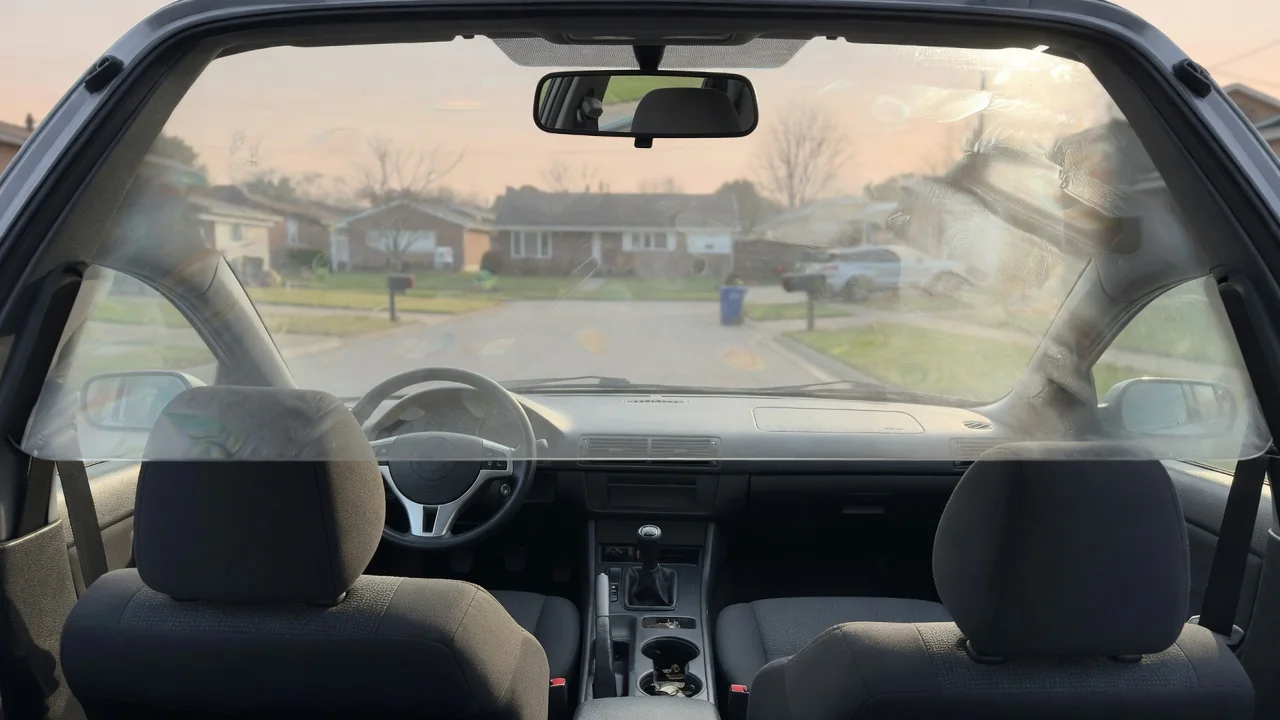
Drivers often ask why do car windows look hazy from the inside even when the exterior glass is spotless. The answer usually involves a thin film of deposits building up on the cabin side of the glass, combined with how air and moisture move through the ventilation system. Understanding both helps explain why the haze appears, why it returns, and when it deserves closer attention.
Film sources
The most common source of interior haze is outgassing from cabin materials. Dashboards, door panels, seat foams, adhesives and vinyl trim contain plasticizers and other volatile compounds that slowly evaporate, especially when a parked car heats up in the sun. Those vapors rise, meet the cooler glass and condense into a faint oily layer. The windshield usually collects the most because it sits directly above the largest plastic surface in the cabin and receives the strongest solar heating.
Other contributors add to that base layer. Tobacco smoke and vaping aerosol leave a sticky residue that tends to look yellowish or greasy. Breath moisture, skin oils from fingertips, dressing sprays applied to the dash, and dust drawn in through the vents all bond to the film. A sweet-smelling, greasy fog that appears mainly when the heater runs is a different case, since it can point toward coolant vapor entering the cabin, which varies by vehicle design and needs proper inspection.
Cleaning method
Because the film is partly oily, simply wiping it with a dry cloth or a damp paper towel tends to smear it rather than lift it. A clean microfiber towel paired with an automotive glass cleaner works better, since these products are formulated to cut greasy residue without leaving streaks. Ammonia-free cleaners are generally the safer choice on tinted glass, because aftermarket tint film sits on the inner surface and can be affected by harsh chemicals. Checking the tint or vehicle documentation settles any doubt.
Technique matters as much as product. Spraying the cleaner onto the towel rather than the glass keeps overspray off the dashboard and electronics. Working in the shade prevents the cleaner from drying before the residue is removed, and a second dry towel for the final buff removes what the first one loosened. The lower edge of the windshield is awkward to reach on steeply raked glass, so wiping in one direction inside and another outside makes it easy to see which side any remaining streak is on.
Recurrence
Haze returns because its sources keep working after the glass is cleaned. Interior plastics continue releasing vapor for years, though the rate is typically highest in newer vehicles and in hot climates. A car that sits in direct sun every day will usually redevelop a film faster than one kept in a garage. Glossy interior dressings can accelerate the cycle, since some formulations evaporate from a hot dashboard and settle directly on the windshield above it.
Ventilation habits also influence how quickly the film rebuilds. Running the system on recirculation for long periods traps moisture and airborne compounds inside the cabin, giving them more opportunity to settle on glass. Drawing in fresh air periodically helps carry them out. A clogged cabin air filter restricts airflow and can let more dust reach the vents, so its condition is worth checking against the schedule in the owner's manual, since filter location and replacement guidance differ between vehicles.
Everyday Use and Observations
The film often goes unnoticed in ordinary daylight and becomes obvious only in certain conditions. Low sun at dawn or dusk scatters across the residue and turns the windshield milky, while oncoming headlights at night produce glare, halos and starbursts. Dragging a clean fingertip across the glass is a simple check: a clear streak or a greasy feel confirms a deposit on the inner surface rather than a problem with the outside or with the glass itself.
A filmed window also fogs more readily. Moisture condenses more easily on a dirty surface because the residue gives water droplets something to cling to, so the glass mists up faster on damp mornings and takes longer to clear. Using the defrost setting with the air conditioning engaged dries the air and speeds clearing on most vehicles, though control layouts and automatic climate behavior vary. Wet floor mats, damp carpets or soaked items left in the cabin keep humidity high and make the fogging pattern worse.
Limits and Next Steps
Cleaning cannot fix every kind of cloudiness. If the haze sits between the layers of laminated glass, appears as a milky patch spreading from an edge, or lies under bubbling tint film, no amount of wiping from inside will remove it. Those conditions involve the glass or film itself and call for assessment by a glass or tint specialist. Fine scratches from abrasive pads can likewise mimic haze and will not respond to cleaner.
Certain patterns suggest a mechanical cause worth having checked. Persistent fogging with a sweet odor, a greasy film that reappears within days, or a dropping coolant level may indicate a heater core leak, but these signs are evidence to interpret, and confirmation requires vehicle-specific diagnosis by a technician. Chronic dampness, musty smells or water under the carpets may point to blocked drains or failed seals. When ordinary film is the only issue, regular cleaning and sensible ventilation use are usually enough to keep visibility clear.