Why Do Car Side Windows Sometimes Look Green?
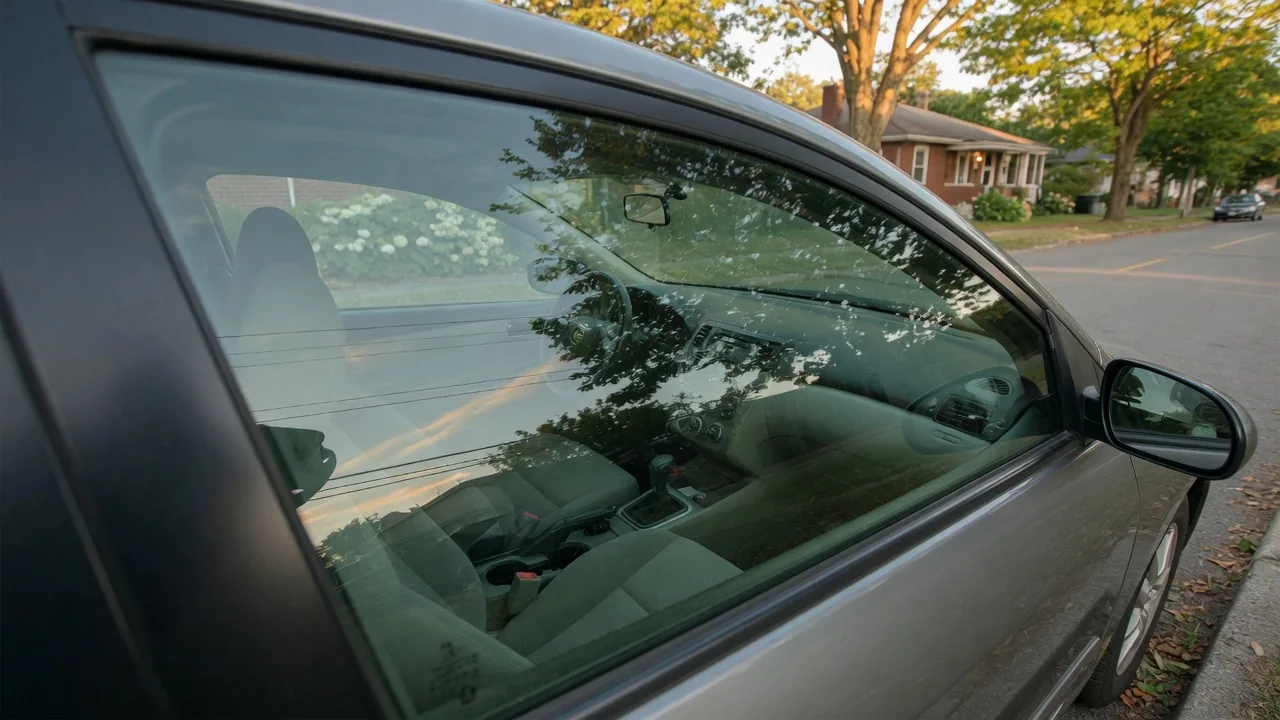
Anyone who has glanced at a rolled-down window edge or seen a parked car in bright sun may have wondered why car side windows sometimes look green. The answer lies mostly in the glass itself rather than in any coating or defect. Small amounts of iron in the glass recipe, combined with light and viewing angle, produce that familiar faint tint.
Glass color
Ordinary automotive glass is a soda-lime-silica product made from sand, soda ash and limestone. The sand and other raw materials naturally carry traces of iron, and iron oxide dissolved in the glass absorbs some red and near-infrared light. With those wavelengths reduced, the light that passes through leans slightly toward green. Through a single pane viewed straight on the effect is subtle, which is why the glass usually reads as clear until something makes the tint more visible.
Many automakers go a step further and specify glass with deliberately adjusted iron content, often described as solar or heat-absorbing glass. The added absorption helps cut the solar energy entering the cabin, and the green cast becomes a little stronger as a side effect. Other formulations lean blue, bronze or gray, so the exact hue varies by manufacturer, model year and trim. Rear privacy glass on SUVs and vans is a darker body-tinted variant that can hide the green almost entirely.
Lighting
Lighting decides how noticeable the tint is. In direct midday sun, a large amount of full-spectrum light passes through the glass, and the portion the iron absorbs becomes easier to perceive against bright surroundings. Overcast skies deliver cooler, diffuse light that can make the same window look slightly blue-green or nearly neutral. Under warm streetlights or in a dim garage, there is less green and blue light available to transmit, so the glass may appear almost colorless or faintly gray.
Background matters as much as the light source. A window seen against a white wall, pale concrete or a light-colored interior shows its tint clearly because the eye has a neutral reference to compare against. Against dark upholstery or a shaded cabin, the glass mostly reflects its surroundings and the color seems to vanish. Photographs can exaggerate or erase the effect too, since a camera's white balance may shift the green cast in ways the eye would not register in person.
Viewing differences
The strongest green appears at the edge of the glass. When a side window is partly lowered, looking at the exposed top edge means looking through several inches of material rather than a few millimeters. Light traveling that long path loses far more red, so the edge glows a deep bottle green even when the face of the pane looks clear. The same principle explains why a steep viewing angle, which lengthens the path through the glass, deepens the apparent color.
Differences between windows on the same vehicle are also common. Windshields are laminated, with two glass layers bonded to a plastic interlayer, and many carry a shaded band along the top, so they can look different from the tempered side glass beside them. Some vehicles use laminated front door glass for noise reduction, which changes thickness and appearance again. Front and rear doors may wear different glass types, so a mismatch in hue from one opening to the next is usually by design.
Everyday Use and Observations
In daily driving the tint tends to show up in specific moments. Walking toward a car parked in a sunny lot, the glass may look greenish against a light interior, then seem clear once seated inside because the eye adapts quickly to a mild, uniform color cast. Polarized sunglasses can add another effect on tempered side and rear glass, revealing faint patterns of dark spots or bands left by the tempering process. Those patterns are a normal trait of heat-strengthened glass, not staining.
Aftermarket window film changes the picture. A neutral gray or charcoal film laid over green-tinted glass can produce a combined color slightly different from the film sample, and older dyed films may fade toward purple while the glass beneath stays green. A replaced door glass is another everyday source of variation, because a replacement pane from a different supplier may not match the original shade exactly. Comparing the suspect window with its counterpart on the opposite side in daylight usually makes any difference obvious.
Limits and Next Steps
A faint, even green cast is a normal property of the material and does not indicate a problem with visibility or safety. Appearance alone cannot reveal how much visible light a window transmits or how much heat it rejects, and color is not a reliable guide to ultraviolet protection either. Changes worth attention are different in character: cloudy or milky patches in laminated glass, bubbling or peeling film, deep scratches, or haze that persists after cleaning both surfaces. Those point to damage or contamination rather than composition.
For anyone wanting certainty about a particular vehicle, the small marking etched into a corner of each window identifies the glass maker and type, and comparing those marks across windows shows whether a pane has been replaced. A glass shop or tint installer can measure light transmission with a meter, which is the sensible step before adding film, since tint rules differ by state and the factory glass already absorbs some light. Vehicle-specific details are best confirmed through the owner's documentation or a dealer.