Why Is a Glass Roof Often Darker Than Side Glass?
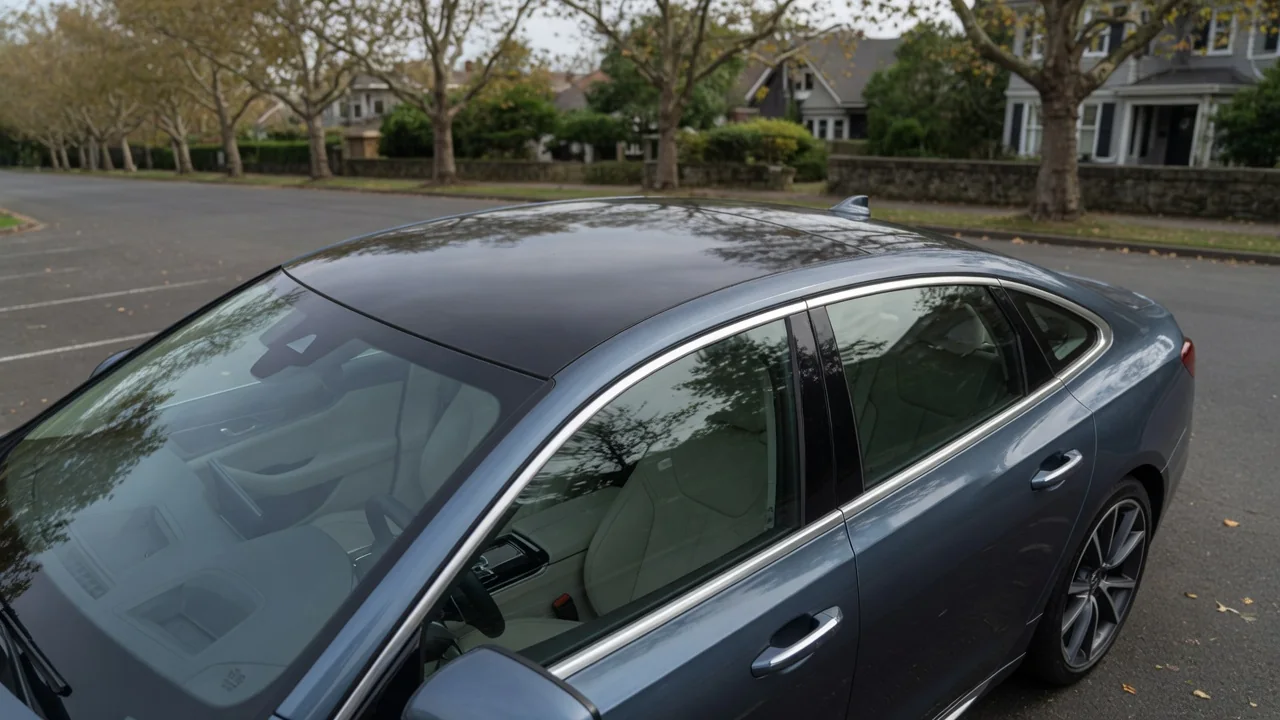
Look up through a panoramic roof, then out a front side window, and the difference is obvious: the roof glass is usually much darker. That is not a styling accident. Roof glass sits where the sun hits hardest, it is not needed for seeing the road, and it has to fit the look of the car. Dark panoramic roof glass is the result of balancing light, heat, and appearance, and each of these pushes the roof toward a deeper tint than the side windows can use.
Light control
The biggest reason is what each piece of glass is allowed to do. The driver relies on the windshield and the front side windows to see the road, so that glass must let through a high share of visible light. In the United States, federal safety standards set a minimum luminous transmittance for glass that is requisite for driving visibility, commonly cited as 70 percent. State laws add their own rules for aftermarket tint. A roof panel is not used for driving visibility, so it is not held to that requirement. That leaves engineers free to make it far darker than the front side glass.
Position also matters. Light coming through the roof falls straight onto occupants' heads and laps, the top of the dashboard, and display screens. With a side window, you can turn your head or lower a visor. Overhead glare is much harder to escape. A bright roof can wash out an infotainment screen, create hot spots on light-colored surfaces, and make passengers squint. Darker glass reduces that brightness to a softer, more diffuse level. The cabin still feels open without becoming a skylight on a summer afternoon.
The darkening usually comes from two sources. The glass can be body-tinted, meaning metal oxides added during manufacturing color it all the way through, similar to the privacy glass on many rear windows. Many roof panels are also laminated, with a plastic interlayer between two sheets of glass, and that interlayer can carry additional tint. Laminated construction also blocks most ultraviolet radiation, which helps protect skin and interior materials.
Cabin heat
Heat is the second reason, and geometry explains why it matters so much on the roof. Around midday the sun is high, so a horizontal roof panel faces it far more directly than vertical side glass does. On vehicles that have one, the glass roof is also often among the largest glass areas. More direct sun on more glass means more solar energy entering the cabin. That raises interior temperatures and adds load on the air conditioning.
Sunlight carries energy as visible light, infrared, and ultraviolet. Dark tint reduces the visible part and absorbs a share of the rest. Absorbed energy warms the glass, though, and some of that heat still reaches the cabin. For that reason, many roof systems combine tint with solar-control measures such as infrared-reflective coatings or interlayers designed to reject heat rather than absorb it. The goal is a cooler interior that still gets some daylight. In general, a roof that pairs tint with heat rejection performs better than tint alone, but the exact combination varies by manufacturer and trim.
Large glass roofs also lose heat in cold weather, because glass insulates poorly compared with an insulated metal roof and headliner. Some designs use low-emissivity coatings to reduce that loss, which can add to a darker or slightly reflective look. Whether a particular roof has such a coating depends on the vehicle, so check the vehicle's documentation for the details.
Appearance
Looks play a real role too. From outside, a dark roof panel reads as one continuous surface that blends with black roof trim, contrasting roof paint, or a two-tone body. Clear glass would show the headliner, sunshade mechanism, frame, wiring, and structural crossmembers underneath, which rarely looks tidy. Deep tint hides these parts and gives the roof a clean, finished appearance.
Roof glass often has a black band around its edge. This ceramic frit is fused onto the glass and does practical work. It hides the adhesive that bonds the panel to the body, and it shields that adhesive from ultraviolet light, which can degrade it over time. The darker the main glass, the less the edge of the frit stands out, so the whole panel looks like a single dark piece.
Privacy glass on the rear side windows and liftgate also influences the choice. Many vehicles use darker glass behind the front doors, while the front side windows stay lighter for visibility reasons. A dark roof ties into that rear glass so the upper body looks consistent. It also adds some privacy from people in taller vehicles looking down.
Practical implications and limits
For owners, the main takeaway is that darker does not automatically mean cooler. Two roofs with similar tint can behave differently, depending on whether they mostly absorb solar energy or include heat-rejecting layers. If the car has a sunshade, it remains one of the most effective ways to limit heat buildup when parked, because it blocks energy before it spreads through the cabin. With the shade open in strong sun, the interior will still warm up, and the glass itself can become hot to the touch.
Adding aftermarket film to a factory roof is possible in some cases, but it calls for caution. Film over glass that already absorbs a lot of solar energy can raise the glass temperature further, and some film products are not intended for certain coated or heavily tinted glass. Film can also complicate a later glass replacement, so check the vehicle's warranty terms first. An installer familiar with the specific glass type is best placed to say whether film is appropriate.
If a roof panel is ever replaced, matching the original specification matters. A panel with a different tint or no solar coating may look slightly off next to the surrounding glass and can change how warm the cabin gets. Not every glass roof is dark, either. Tint level varies by vehicle, market, and trim, and some designs use switchable glass that changes opacity electrically. Darker roof glass is a common pattern, not a universal rule.