Why Do Glass Roofs Look Dark From the Outside?
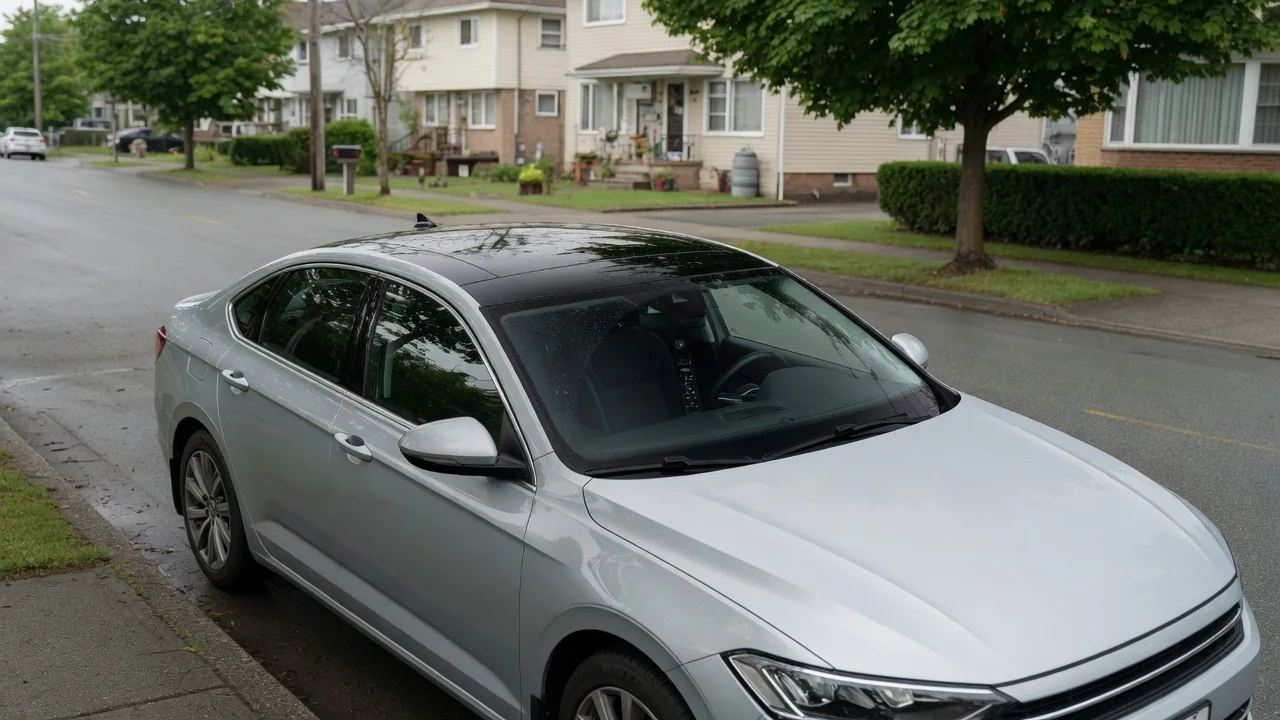
Stand beside almost any car with a panoramic roof and the panel overhead reads as a sheet of black, even though occupants inside can see sky through it. Anyone wondering why do glass roofs look dark from the outside is really asking about tinting, coatings, and the way light behaves when it passes between a bright world and a dim cabin.
Light transmission
Roof glass is usually made to pass far less visible light than a windshield or front door window. Manufacturers add pigment to the glass itself, tint the plastic interlayer in laminated panels, or both, so only a small share of daylight gets through. From outside, your eye receives whatever light enters the cabin, bounces off the interior, and makes it back out through the same panel. That light is filtered twice, so very little returns, and the roof appears nearly black.
Brightness contrast adds to the effect. Outdoors, your eyes are adjusted to sunlit paint, pavement, and sky, so the faint glow escaping from a shaded interior registers as darkness by comparison. The same glass looks far more transparent from the seats, because occupants are looking from a dim space toward a bright one. Actual transmission levels differ by vehicle and market, and regulations that govern windshields and front side glass typically allow much deeper tint overhead, which is why roofs can be darker than any window.
Cabin shading
What sits beneath the glass shapes its outside appearance as much as the glass does. A black or charcoal headliner, dark seats, and deep carpet absorb most of the light that enters, leaving almost nothing to reflect back upward. A cabin trimmed in pale leather or light fabric may show a faint hint of the interior through the roof in strong sun, yet it still reads as dark because the tint filters the returning light so heavily.
Many panoramic roofs also carry a retractable fabric shade or an opaque sliding panel, and closing it places a solid surface directly under the glass. Some vehicles use electrically dimmable glass that shifts between clearer and more opaque states instead of a fabric blind. Around the perimeter, a printed black ceramic band, often fading into a dot pattern, hides adhesive, frame members, and seals. That border makes the glazed area look like one continuous dark surface, even though the see-through opening is smaller than the panel.
Heat management
A roof faces the sun more directly than any other glass on the car, so controlling solar energy is a primary design goal. Deep tint absorbs part of the incoming radiation, while many panels add thin metallic or metal oxide layers that reflect infrared wavelengths before they reach the cabin. These coatings are engineered to work on heat you cannot see, yet they also alter how visible light reflects, which contributes to the dark, mirror-like finish noticeable from the curb.
Some roofs include a low-emissivity layer on the inner surface, intended to reduce how much warmth the hot glass radiates down onto occupants' heads. Laminated construction generally blocks most ultraviolet light as well, protecting trim and skin. None of this makes the panel a perfect barrier. Dark glass that absorbs energy grows warm to the touch on a sunny day, and how well a particular roof keeps the cabin comfortable depends on its specific glass makeup, the climate, and whether a shade is fitted.
Everyday Use and Observations
The appearance changes with conditions, which is a good clue that optics rather than paint is at work. In direct sun, a coated panel may show a blue, green, bronze, or purple cast when viewed at a shallow angle, because thin reflective layers favor certain colors. Under overcast skies the roof tends to look flat black. At night, with interior lamps switched on, the balance reverses and the cabin becomes visible from outside, while the view out turns into reflections.
Drivers often notice that the roof blends neatly with dark paint and stands out sharply against white or silver bodywork, giving a two-tone look that designers use deliberately. Clouds, trees, and buildings mirror clearly in the surface, much as they do in a still pond. Polarized sunglasses can reveal faint patterns or blotches in tempered panels, a normal result of the strengthening process. From inside, the sky may appear slightly cooler or warmer in color than it does through the side windows.
Limits and Next Steps
A dark exterior appearance says little about how a specific roof performs. Two panels that look identical from the sidewalk can differ in visible light transmission, infrared rejection, and construction, and none of those properties can be judged reliably by eye. The markings etched into a corner of the glass identify the manufacturer and glazing type, and the owner's manual or dealer can confirm whether the panel is laminated, coated, or equipped with dimming technology on a given model and trim level.
Owners considering extra film for more heat rejection should confirm compatibility first, since added film increases the heat the glass absorbs, and some manufacturers caution against it on certain panels. A qualified tint installer or the dealer can advise on what suits that roof. Changes worth having inspected include milky edges, bubbles, a patchy rainbow sheen that was not there before, or chips and cracks. Those can point to coating or interlayer deterioration or impact damage, though a glass specialist should examine the panel before any conclusion is drawn.