What Is a Floating Roof Design?
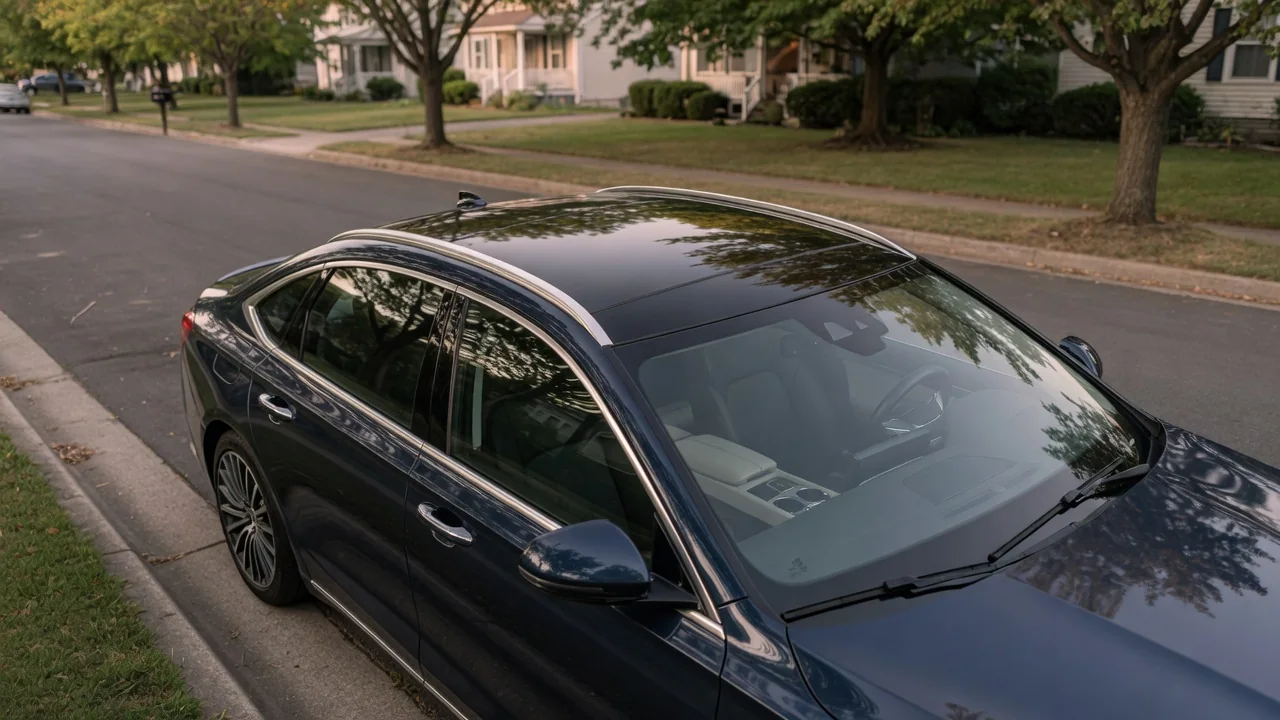
Anyone asking what is a floating roof design is usually looking at a car whose roof seems to hover above the body, with no visible support at the rear. The effect is a styling treatment, not a mechanical feature. Designers create it by disguising one or more roof pillars so the painted roof panel appears separated from the lower body by a continuous band of glass.
Pillar color and glass
The illusion depends on hiding the pillars that connect the roof to the body. Most often the rearmost pillar, called the C-pillar on sedans and the D-pillar on many SUVs and wagons, is finished in gloss black paint, black plastic trim or dark applique. Because tinted glass also reads as black from a distance, the eye blends the side windows, the blacked-out pillar and the rear window into one uninterrupted dark strip that wraps around the cabin.
Some vehicles black out only a section of the pillar, leaving a body-color wedge that rises from the rear fender and stops short of the roof. Others darken every pillar so the roof looks like a separate lid. A contrasting roof color, such as black or white over a different body shade, strengthens the separation. Look closely at any example and you can usually see the seam where real glass ends and painted or plastic trim begins, and that detail varies by model and trim level.
Sightlines
From outside, a floating roof suggests an airy, glass-wrapped cabin. From the driver's seat, the view can be quite different. The pillar is still there behind the dark finish, and it is often thick because of the rising beltline and tapering window shape that tend to accompany this styling. A rear quarter area that looks like glass from the curb may be an opaque panel when viewed from inside the car.
This matters most when checking over the shoulder before a lane change, reversing out of a parking space or watching for cyclists at an angled junction. Some designs include a small genuine quarter window that helps, while others offer none at all. Blind spot monitoring, rear cross traffic alerts and backup cameras can compensate where fitted, but their availability depends on the vehicle and its equipment. The exterior appearance is therefore a poor guide to how much the driver can actually see.
Design versus structure
Despite the name, nothing about the roof is detached or suspended. Beneath the black trim sits a conventional steel or aluminum pillar that ties the roof rails into the body shell, just as on a car with body-color pillars. Those pillars help carry roof loads, contribute to body stiffness and often house components such as side curtain airbags, seat belt anchor points and wiring. The floating look changes surface finish and graphics, not the underlying engineering.
For that reason, a floating roof by itself says nothing reliable about crash protection, rollover strength or cabin rigidity. Two vehicles with similar styling can have very different body structures, and a model with the treatment is not inherently weaker or stronger than one without it. The term is also unrelated to panoramic glass roofs or convertible tops, although a glass roof panel may be combined with blacked-out pillars on some vehicles to heighten the effect.
Everyday Use and Observations
Living with the design mostly comes down to caring for the dark trim. Gloss black pillar covers show fine scratches, swirl marks and water spots more readily than body-color paint, especially after automatic brush washes. Gentle washing with clean mitts and soft drying towels helps keep the finish consistent with the adjacent glass. If the trim dulls or hazes while the windows stay glossy, the illusion weakens and the pillar becomes obvious again.
Color choice changes how convincing the effect looks. On a black or very dark car, the pillars disappear into the paint and the roof may not appear to float at all, while a light body color makes the dark band stand out sharply. Two-tone roof options amplify it further. Viewing angle and lighting matter too, since bright sun can reveal the difference between glass reflections and painted trim that overcast conditions tend to hide.
Limits and Next Steps
The treatment has practical limits worth weighing. It adds no cabin space, light or performance, and it may coincide with smaller rear windows and a dimmer back seat. Damage to a blacked-out pillar panel or a contrast roof can make body repairs more involved, because matching gloss trim, separate roof paint and the masking lines between them takes additional care. How those parts are built and attached differs between manufacturers, so repair considerations should be confirmed for the specific vehicle.
Anyone shopping for a car with this styling should judge it from the inside as well as the outside. Sit in the driver's seat, adjust the mirrors, and check the over-the-shoulder view on both sides before deciding. Ask which driver assistance features are included on the trim being considered, and look at the car in more than one color if possible. Treated as a matter of taste and not a functional upgrade, a floating roof is easy to evaluate on its merits.