What Is a Floating Center Console?
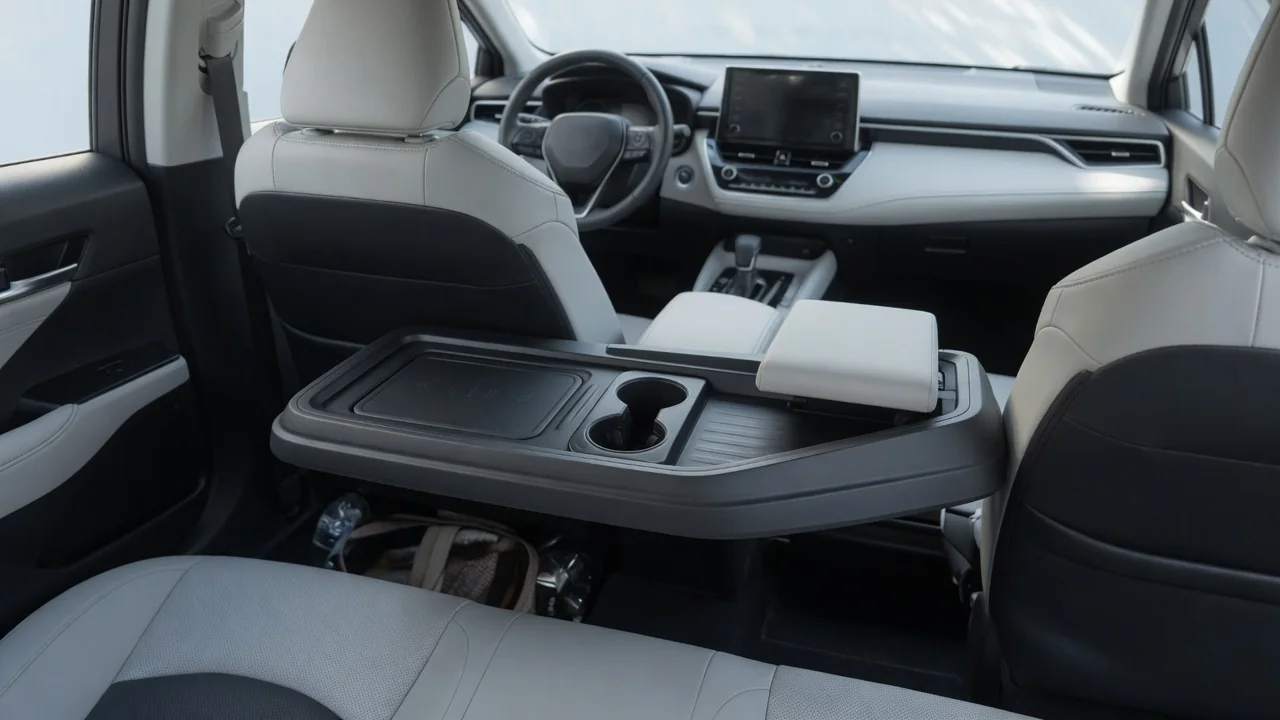
If you have wondered what is a floating center console, the short answer is a raised divider between the front seats that appears to hover above the floor rather than sitting on it as a solid block. The arrangement opens up an extra storage level below the upper deck and changes how the cabin looks, feels, and gets used every day.
Design layout
A traditional console rises from the floor tunnel as one continuous housing, filling the space between the seats from carpet to armrest. A floating design instead lifts the upper portion, usually the part carrying the shifter or drive selector, cupholders, and armrest, and supports it from the dashboard, the rear of the tunnel, or slim side pillars. The visible gap underneath creates the hovering effect. From the driver's seat, the top surface often looks like a bridge that flows down from the instrument panel toward the armrest.
This layout became more practical as mechanical shift linkages and cable-operated parking brakes gave way to electronic selectors and switch-operated brakes, which need far less room below the trim. Electric vehicles with flat floors often take the idea further, though plenty of combustion-powered crossovers and trucks use it as well. Details differ widely between models. Some bridges are tall and deeply sculpted, others are low with only a shallow opening, so the proportions you see in one cabin will not necessarily match another.
Under-console space
The open area below the raised deck is the main practical payoff. It usually forms a tray or shelf at floor level, reachable from either front seat, and sized for items that would crowd the upper bin. Handbags, tissue boxes, small tote bags, and water bottles are common occupants. Because the shelf sits low and partly hidden by the bridge above it, belongings stay out of direct sightlines from outside the vehicle, though they are not locked away or fully concealed from someone looking through a side window.
Manufacturers finish this space in different ways. Some line it with a rubber mat that keeps objects from sliding, while others add a raised lip, a power outlet, charging ports, or soft lighting. In certain cabins the lower shelf is open on both sides, and in others one side is partly closed by trim. Looking under the bridge in a showroom or in your own vehicle will tell you how deep the tray is, whether it has a retaining edge, and how easily a hand can reach the back.
Cleaning
An open lower shelf collects dust, grit from shoes, crumbs, and the occasional dropped coin more readily than a closed bin, simply because it sits near the floor and has no lid. The overhang of the upper deck also shades the area, so debris can go unnoticed for a while. A handheld vacuum with a narrow nozzle or a soft brush attachment generally reaches the corners. Where the mat is removable, lifting it out and rinsing it separately is easier than wiping around it in place.
The upper surfaces deserve different care, since they often combine glossy trim, soft-touch plastics, stitched padding, and switches. A slightly damp microfiber cloth suits most of these materials, and liquid should never be sprayed directly toward buttons, a wireless charging pad, or the selector. Gloss black panels scratch easily, so light pressure and a clean cloth matter. Because finishes vary by trim level, the owner's manual is the right place to confirm which cleaning products are approved for the specific materials in your cabin.
Everyday Use and Observations
In daily driving, the raised deck places frequently used controls closer to a resting hand. The selector, drive mode switches, and cupholders sit high, so the driver reaches less and looks away from the road for a shorter time. The trade-off is that the lower shelf requires leaning down, which makes it better suited to items you load before setting off than things you grab while moving. Anything stored there should be secured or soft enough that it cannot slide forward toward the pedals during hard braking.
Drivers and passengers also notice differences in knee and leg room. A bridge with open sides can feel airier than a solid console, yet its supports and outer edges may sit close to the inner knee, particularly for taller occupants. Sitting in the vehicle for several minutes reveals whether the edge is padded or hard, how the armrest height suits your posture, and whether cables routed from lower ports to a phone on the upper deck get in the way of the cupholders or selector.
Limits and Next Steps
A floating console does not automatically mean more total storage. The upper bin beneath the armrest is sometimes shallower than in a conventional design because the structure has to stay slim, and the open shelf cannot hold loose small items as securely as a lidded compartment. The bridge is also trim, not a load-bearing step or handhold, so leaning body weight on it or hanging heavy bags from it risks creaks, loosened clips, or cracked panels. Wiring and modules may run inside, which is another reason to avoid forcing anything apart.
If you are comparing vehicles, bring the items you normally carry and test where each one fits, then check that nothing interferes with the controls. For a vehicle you already own, organizers and liners shaped for the lower tray exist for many models, but fit depends on the exact year and trim, so confirm dimensions before buying. Rattles, loose trim, or inoperative ports in the console area are best assessed by a dealer or qualified technician, who can confirm what sits behind the panels on that particular model.