Why Do Some Cars Have a Wide Center Console?
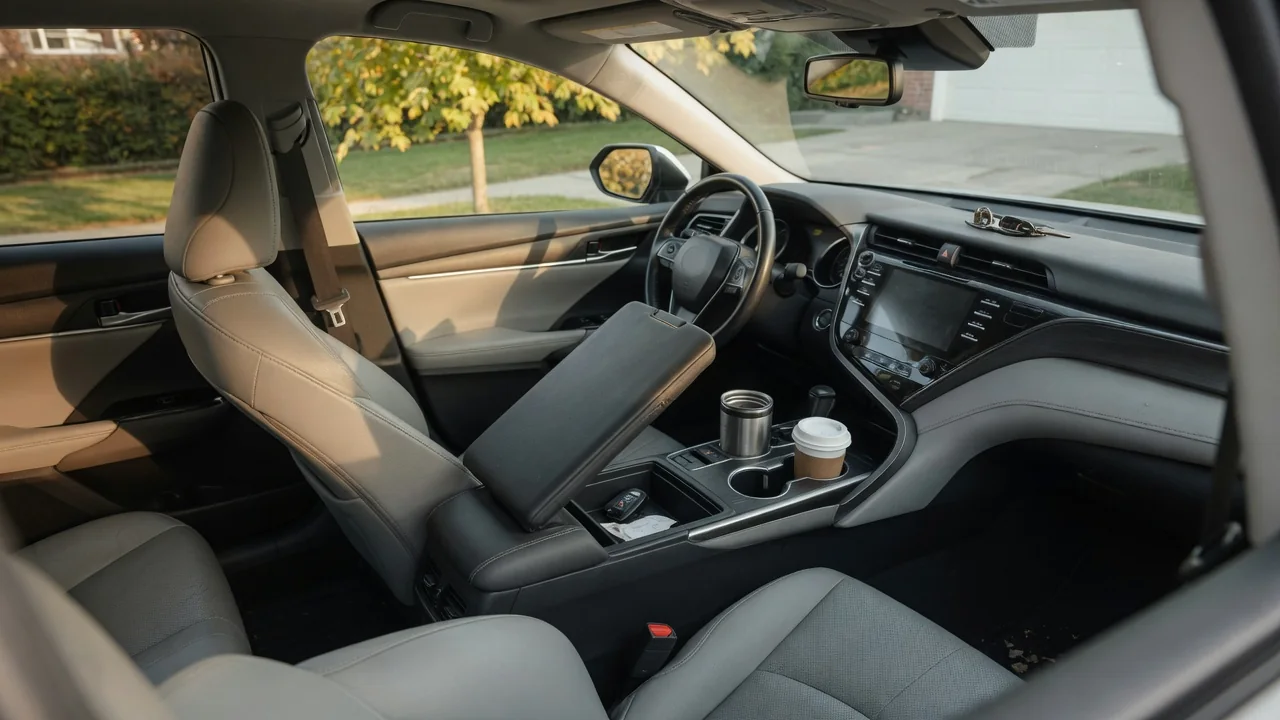
Drivers often ask why do some cars have a wide center console when older vehicles managed with a slim tunnel cover or a bench seat. The answer combines engineering and design: the console hides hardware, carries controls, provides storage and an armrest, and separates driver and passenger into distinct zones. How wide it becomes depends on the vehicle's layout and the maker's priorities.
Packaging
The space between the front seats is rarely empty beneath the trim. In many rear-wheel-drive and all-wheel-drive vehicles, a raised floor tunnel makes room for the transmission and driveshaft, and the console is the finished cover over that structure. Front-wheel-drive cars may route an exhaust pipe, wiring harnesses, heating ducts for rear passengers and structural reinforcement through the same corridor. A broad console is often simply the visible result of what has to fit underneath it.
Electric vehicles show that packaging is not the only reason. With no transmission tunnel required, some keep a flat floor and a floating or open console, while others still build a tall, wide divider because designers want a cockpit feel and a home for controls. Shifters, drive mode selectors, parking brake switches, infotainment controllers, cupholders and wireless charging pads all need a surface within easy reach. Looking under a console's lower edge or in the rear footwell often reveals whether a tunnel sits below.
Armrest and storage
A wide console gives both front occupants a place to rest an elbow without competing for the same narrow pad. Armrest height and length matter for comfort on long drives, because a supported forearm reduces shoulder tension and keeps the hand close to the shifter or control dial. Some vehicles use a single lid, others split lids that open toward each occupant, and some slide forward to suit shorter drivers. These details differ considerably between models and even trim levels.
Underneath the armrest, width translates directly into storage volume. A broad bin can hold a handbag, tablet or tissue box that would never fit in a narrow compartment, and it may include a removable tray, charging ports or, in some vehicles, a cooled section fed by the air conditioning. Ahead of it, side-by-side cupholders replace the fore-and-aft arrangement that forces one drink under an elbow. Trucks and large SUVs tend to exploit this most, since their cabins have the width to spare.
Passenger space
Every inch given to the console comes from somewhere, and usually it is taken from the space around the front occupants' knees and hips. A tall, wide divider can press against the driver's right leg, which some people find reassuring as a brace during cornering and others find confining. Taller or broader drivers notice this most. Seat width, door panel shape and steering column adjustment all influence whether the cabin feels snug in a sporty way or simply cramped.
The console also defines how separated the front occupants feel. A high divider creates two individual zones, a layout favored in sports cars and luxury sedans, while a low or open design makes the cabin feel airier and allows sliding across in a tight parking space. In the back, a console that extends rearward may carry vents and charging ports but limits foot room for a middle passenger. Some pickups offer a front bench with a folding center section instead, trading storage for an extra seat.
Everyday Use and Observations
In daily driving, the value of a wide console shows up in small moments: setting a phone on a charging pad without it sliding, reaching a volume knob without looking, or dropping keys and sunglasses into a tray rather than a door pocket. Physical controls grouped on a broad surface can be operated by feel, which helps keep eyes on the road. Vehicles that move most functions to a touchscreen may use the freed console area for open storage instead.
There are everyday drawbacks worth noticing too. Glossy trim around the shifter collects fingerprints, dust and scratches, deep bins swallow small items, and gaps beside the seats catch coins and phones. Cupholders placed near switches invite spills onto electronics, so wiping up liquid promptly is sensible. Sit in the vehicle and pay attention to where your elbow lands, whether your knee touches hard plastic, and whether the lid blocks the parking brake or rear passengers' vents when open.
Limits and Next Steps
A wide center console is not automatically a sign of a tunnel, a particular drivetrain or a higher quality interior; similar-looking designs can exist for quite different reasons. Storage capacity, armrest adjustment, cooled compartments and charging features vary by model, year and trim, so brochure photos of one version may not match another. Aftermarket organizers and armrest pads can improve usability, but fit depends on the exact vehicle and should be confirmed before buying.
The practical next step is a careful sit test rather than relying on dimensions alone. Adjust the seat to your normal driving position, try the armrest, open every lid, and place the items you carry daily where you would keep them. Have a passenger do the same, and check the rear middle seat if you use it. If something behind the console needs attention, such as a loose shifter trim or inoperative port, consult the owner's manual or a qualified technician rather than prying panels apart.