How to Keep a Car's Center Console Useful
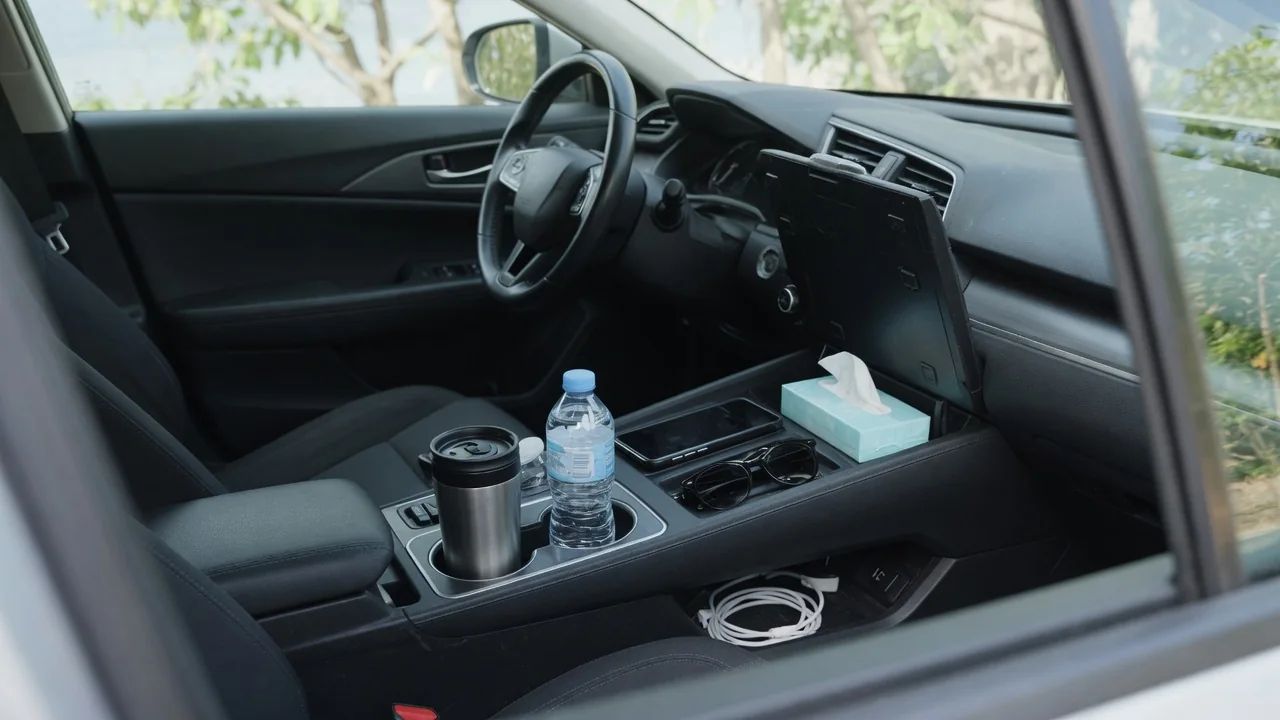
A center console earns its space only when the things inside it are the things you actually reach for. Learning how to keep a car's center console useful comes down to a few habits: clearing out what does not belong, giving small items a consistent home, and protecting access to the controls and ports around it. The details depend on your vehicle's layout.
Remove clutter
Start by emptying the console completely, including the upper tray, the deep bin under the armrest, and the cupholders. Most of what comes out will be things that drifted in rather than things you chose to store: old receipts, dried-out pens, expired coupons, loose coins, duplicate charging cables, and wrappers. Sorting it on the seat or a towel makes the split obvious. Anything you have not touched in a month of driving probably belongs in the glovebox, the trunk, the house, or the trash.
While the bin is empty, wipe out the dust, crumbs, and sticky residue that collect at the bottom, because grit scratches sunglasses and gums up coins and cable connectors. Check the cupholder inserts and any rubber mats too, since many lift out for washing. Console depth varies widely. A compact car may offer only a shallow tray, while a full-size truck or SUV can have a bin deep enough to swallow a tablet, and deeper bins hide clutter far longer before you notice it.
Group items
Once only the useful items remain, sort them by how and when you use them. Things you grab while getting in or out, such as a parking card, garage remote, or gate fob, belong together near the top. Charging gear forms a second group, ideally one cable per device type rather than a tangle of spares. Personal comfort items such as tissues, lip balm, hand sanitizer, and a glasses cloth make a third. Grouping this way means your hand goes to the same spot every time.
Deep single-compartment bins benefit most from dividers, because everything otherwise settles into one pile at the bottom. Some vehicles come with a removable upper tray, and aftermarket inserts are molded for many popular models, though fit should be confirmed for your specific vehicle and model year before buying. A small zip pouch or a short cable tie can do the same job cheaply. Keep heavier objects low and flat so they do not rattle or slide forward under braking, and so lighter items stay on top.
Keep controls accessible
The console is more than storage in most modern vehicles. Depending on the design, it may hold the gear selector, an electronic parking brake switch, drive mode buttons, an infotainment dial or touchpad, seat heater switches, and a wireless charging pad. Items stacked around these controls can block them, press them by accident, or slow you down when you need them quickly. A phone leaning against a shifter or a bag strap draped over a rotary selector is a common example worth correcting.
Ports and pads need the same clearance. A wireless charger typically works poorly, or not at all, when coins, keys, or cards sit between the phone and the pad, and metal objects left there can get warm. Route cables so they do not cross the shifter path or loop around the parking brake. Keep cupholders free for drinks rather than loose storage, since a bottle forced in beside other objects can tip into switchgear. Layouts differ considerably between a column-shift truck and a console-shift sedan.
Everyday Use and Observations
A good arrangement shows itself in ordinary driving. You should be able to reach your most-used item without looking away from the road for more than a glance, and ideally by feel alone. If you find yourself digging at a stoplight, lifting three things to reach a fourth, or hearing rattles over rough pavement, the layout needs adjusting. Notice which items migrate to the passenger seat or door pocket during the week, because that usually means their assigned spot is inconvenient.
Seasonal and situational changes matter as well. Summer heat in a parked car can soften lip balm, warp plastic cards, and degrade some batteries and medications, so heat-sensitive items are better carried with you. Winter may add gloves or an ice scraper that competes for space. Families, rideshare drivers, and commuters will each settle on different contents. A quick reset each time you fuel up or charge, tossing trash and returning strays to their groups, keeps the system from slowly unraveling.
Limits and Next Steps
A console cannot hold everything, and treating it as a catch-all is what makes it useless. Documents such as registration and insurance papers generally fit better in the glovebox, while tools, jumper cables, and emergency supplies belong in the cargo area. Valuables left in view through the windows invite break-ins, and a closed lid offers concealment rather than real security unless your vehicle has a lockable bin. Loose heavy objects anywhere in the cabin can also become projectiles in a hard stop.
If the built-in space still falls short after decluttering, look at what the vehicle already offers before adding accessories. Your owner's manual often shows removable trays, hidden lower compartments, sliding armrests, or configurable dividers that go unnoticed. Seat-gap fillers, door pocket organizers, and seatback pouches can take overflow, provided they do not interfere with seat adjustment, seat belt buckles, or airbag deployment areas. Revisit the arrangement after a few weeks and remove anything that has stayed untouched.