What Is a C-Pillar on a Car?
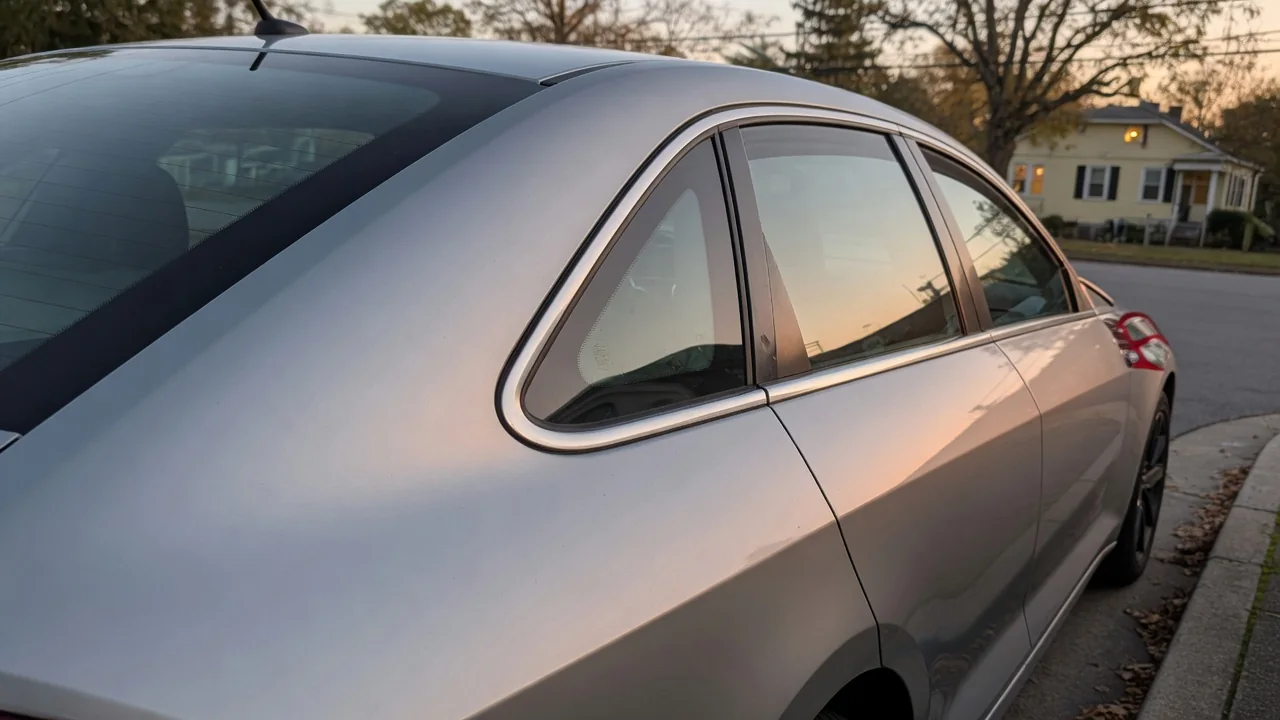
Anyone asking what is a C pillar on a car is really asking about the rearmost roof support on most sedans and hatchbacks. It is the structural post that connects the roof to the rear body, frames the back glass, and shapes much of a vehicle's profile. Understanding it helps explain rear visibility, body strength, and why different cars look the way they do.
Location
Roof pillars are named alphabetically from front to back. The A-pillars frame the windshield, the B-pillars sit between the front and rear doors, and the C-pillars come next, standing behind the rear door glass on a typical four-door sedan. On that kind of car they are the last pair of supports, running from the rear edge of the roof down to the body above the rear wheels. Each side of the car has one, so the term usually refers to a matched left and right pair.
From outside, you can find the C-pillar by following the roofline rearward until it turns downward beside the back window. From inside, it is the trimmed panel just behind a rear passenger's shoulder, between the side glass and the rear glass. Beneath the paint and interior trim is stamped and welded steel, or sometimes other materials, forming part of the body shell. The exact shape, thickness, and angle vary considerably between models, so two cars of similar size can have very different rear pillars.
Rear visibility
Because the C-pillar sits in the driver's rear three-quarter view, it has a direct effect on what can be seen when glancing over the shoulder. A wide, steeply raked pillar can hide a vehicle in the adjacent lane or a pedestrian approaching from behind and to the side while reversing out of a parking space. Slimmer pillars with more glass area generally open that view, although the difference a driver notices also depends on seat height, head restraint position, and the size of the rear window.
Designers balance that visibility against other demands. Thicker pillars can contribute to roof strength and body stiffness, and a sweeping roofline often requires a broader pillar base to look and perform as intended. Some vehicles add a small fixed window in or near the pillar to recover part of the lost view. Mirrors, backup cameras, and blind spot monitoring help where equipped, but these aids supplement rather than replace a careful look, and their availability depends on the specific vehicle and trim level.
Body styles
On a conventional sedan, the C-pillar is the final support and blends down into the rear fenders and trunk area. Coupes with two doors may have a long, flowing rear pillar that defines the whole side profile, while fastback designs stretch it into a gentle slope toward the tail. Hatchbacks often place the pillar close to the liftgate opening, where it frames the hatch rather than a fixed rear window. In each case the pillar's angle is one of the strongest visual signatures of the design.
Wagons, SUVs, and minivans extend the roof farther back, so the C-pillar typically lands behind the rear doors with a cargo-area window following it, and a fourth support, the D-pillar, finishes the body at the tailgate. Pickup trucks vary by cab configuration, and some crew cabs end the cab at what is effectively the rear pillar. Convertibles may have no fixed rear pillar at all. Styling treatments such as blacked-out trim can also disguise a pillar to create a floating roof appearance.
Everyday Use and Observations
In daily driving, the C-pillar shows up in small practical ways. Rear passengers may find it sits beside or just behind their heads, which affects how open or enclosed the back seat feels. The interior trim covering it can house items such as a coat hook, a seat belt guide, a speaker, or a vent, depending on the vehicle. Some cars with side curtain airbags route them along the roof rail near this area, which is one reason trim panels there are often marked and should not be modified casually.
Outside, the pillar is a common place for badges, vent outlets, or contrasting paint and trim. It is also a spot worth a look when evaluating a used car, since uneven paint texture, mismatched color, or irregular gaps around the rear glass and doors may hint at earlier body repair. Water stains on the interior trim or headliner near the pillar can suggest a leak from a window seal or roof seam. Such signs are prompts for closer inspection rather than proof of any particular problem.
Limits and Next Steps
Pillar naming is a convention rather than a strict rule, and it does not fit every vehicle neatly. Cars without a fixed post between the doors, extended cabs, and unusual roof designs can make the lettering less obvious, and manufacturers or body shops may describe the same area slightly differently. A visual check alone also cannot reveal what lies beneath the surface. The materials, reinforcements, and construction methods inside the pillar differ from one model to another and are not apparent from trim or paint.
Because the C-pillar is part of the body structure, damage there is a matter for a qualified collision repair facility working from the manufacturer's repair information, not a cosmetic fix. For anyone shopping, the most useful step is to sit in the driver's seat, adjust the mirrors, and check the over-the-shoulder view on both sides before deciding. Owners curious about features in the pillar area, such as airbags or trim attachments, can find vehicle-specific guidance in the owner's manual or from a dealer service department.