What Is a B-Pillar on a Car?
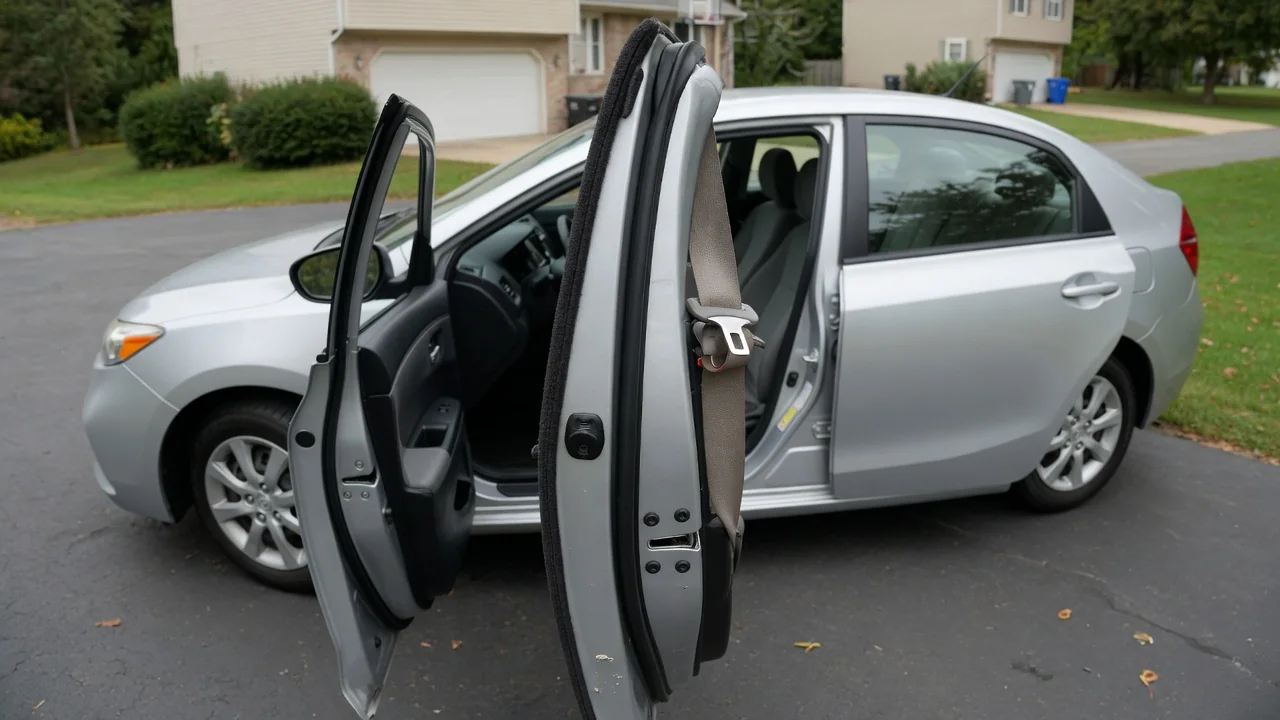
If you have ever wondered what is a B pillar on a car, the short answer is that it is the upright body post between the front and rear doors. This center pillar joins the floor to the roof, carries door hardware, and anchors safety equipment. Understanding it helps explain how doors seal, how belts mount, and why body repairs there demand care.
Location
Pillars are lettered from the front of the vehicle rearward. The A-pillars frame the windshield, and the B-pillar is the next upright behind them, standing roughly beside the front seatbacks on a typical four-door sedan, crossover, or pickup with a crew cab. It rises from the rocker panel, the sill running under the doors, and meets the roof rail above. With both side doors open, it is the painted column left standing between the two openings.
From outside, the pillar is often disguised. Many vehicles cover it with black trim or gloss appliqués so the side glass looks like one continuous band, while others leave it in body color. Layout varies by body style: two-door coupes place it behind a single long door, and some hardtop designs and certain vehicles with rear-hinged back doors omit a fixed center post altogether, building the strength into the doors, roof, and floor instead. Convertibles may have only a short stub or none.
Seat belt attachment
On most vehicles the front seat belts live in the B-pillar. The retractor, the spring-loaded reel that stores the webbing, is usually mounted low inside the pillar behind the plastic trim, and the belt runs up to a guide loop near shoulder height before crossing the occupant. The lower outboard anchor commonly bolts near the base of the pillar or to the floor beside the seat. These mounting points are reinforced because belt loads in a crash are fed directly into the body structure.
Readers can spot the upper guide loop easily, and on many models it slides on a height adjuster so the webbing crosses the collarbone rather than the neck. Arrangements differ, though. Some coupes, convertibles, and vehicles without a fixed center post use seat-integrated belts, where the retractor and shoulder anchor are built into the seat frame. Pretensioners, which tighten the belt during a collision, may also sit inside the pillar, which is one reason the trim panels there should not be pried off casually.
Body role
Structurally, the center pillar is one of the hardest-working parts of the body shell. It ties the floor and rocker to the roof, forming a ring around the cabin that resists crushing in a side impact and helps hold the roof up in a rollover. Automakers commonly build it from several layers of stamped steel, often including high-strength grades, with an inner reinforcement hidden between the outer skin and interior panel. The exact materials and construction depend on the manufacturer and model.
The pillar also does the packaging work for the doors. On conventional layouts, the striker that the front door latches onto is fastened to it, and the hinges for the rear door bolt on just behind. Weatherstrip seals run along both openings, and wiring for the rear door often passes through a rubber boot at the pillar. Side curtain airbags may deploy down along its upper trim, and some vehicles place impact sensors in or near it. All of that has to fit in a column slim enough to step past comfortably.
Everyday Use and Observations
In daily driving, the B-pillar is most noticeable as a blind spot. Glancing over the shoulder before a lane change, the driver looks past or around it, and a thick pillar or a seat positioned far rearward can hide a vehicle alongside. Properly adjusted mirrors and a deliberate head check help compensate. Getting in and out is affected too: taller drivers who sit well back may find themselves stepping around the pillar, and rear passengers judge foot room by the opening behind it.
Several useful things are mounted there. On many vehicles the driver's door opening carries labels on or near the pillar, commonly showing recommended tire pressures and vehicle identification details, though the precise location varies and the owner's manual confirms it. Some models place rear air vents, coat hooks, or grab handles on the pillar trim. A door that needs slamming, wind noise near the shoulder, or a belt that retracts slowly are everyday clues worth noting, since each involves hardware housed in this area.
Limits and Next Steps
Looking at the pillar tells you only so much. Trim and paint hide the reinforcements, welds, and adhesives underneath, so a clean surface does not prove the structure is undamaged after a side collision. On a used vehicle, uneven door gaps, mismatched paint texture, disturbed seam sealer, or a door that sits out of line can hint at earlier repair, but none of those signs is conclusive. A body shop with measuring equipment can compare the shell against the manufacturer's dimensions.
Repairs here belong with qualified professionals. High-strength steel can lose its properties if heated or straightened improperly, and automakers publish specific procedures stating where a pillar may be sectioned and how it must be joined. Seat belt and airbag components in the area add another reason to avoid do-it-yourself work. If a restraint warning light appears, a stored code points toward a circuit to test rather than proving a part has failed, so vehicle-specific diagnosis and the service information for that model are the sensible next steps.