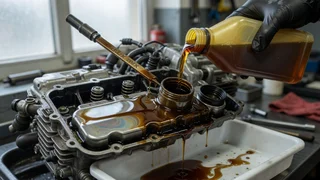
Too Much Oil in a 4-Stroke Engine: What It Means and What to Do
The short answer
Yes, too much oil can harm a four-stroke engine. Oil is meant to sit within the range marked on the dipstick or sight glass. Above that range, it can be churned, forced past seals or drawn into the intake. A reading just above the full mark is usually less urgent than a clearly overfilled crankcase. Either way, the fix is simple: drain oil until the level is back within the marked range before running the engine much further.
This applies to four-stroke engines in general, including cars, motorcycles, lawn mowers, generators and other small engines. The checking procedure and the tolerance for overfill vary by engine design and manufacturer. No model-specific specifications were supplied for this article, so the owner's manual or service documentation for your engine is the authority on correct capacity and checking method.
Why extra oil causes problems
Most four-stroke engines in cars, motorcycles and small equipment use a wet sump, meaning the oil is stored in a pan below the crankshaft. If the level rises far enough, the spinning crankshaft and connecting rods can strike the oil and whip air into it. This is called aeration, or foaming. Aerated oil does not keep a stable film between moving parts as well as liquid oil does, so lubrication can suffer even though there is more oil in the engine.
Excess oil also takes up space in the crankcase and can raise internal pressure. That pressure can push oil past gaskets and seals, causing leaks. It can also force oil through the crankcase breather or PCV (positive crankcase ventilation) system into the air intake, where it gets burned in the combustion chamber.
Common signs of an overfilled engine
Dipstick or sight-glass reading clearly above the maximum mark; Blue or white-blue exhaust smoke, from oil being burned; Oil around seals and gaskets, or new leaks after an oil change; Oil in the air filter housing or breather hose, especially on small engines; Rough running, hard starting or fouled spark plugs; A burning-oil smell
Several of these symptoms have other possible causes, such as worn piston rings or valve seals. If symptoms continue after the oil level is corrected, the overfill may not be the cause.
Possible longer-term effects
If an engine keeps running significantly overfilled, oil burned in the cylinders can leave deposits on spark plugs and valves. In vehicles with a catalytic converter, burned oil can contaminate the converter. Aerated oil can also reduce protection for bearings and other parts. How much overfill is needed to cause these effects, and how quickly, depends on the engine. No supplied data quantifies these thresholds.
How to check the level correctly
A wrong reading can make an engine look overfilled or underfilled. Manufacturers differ on the details, so follow your manual. These general points apply to most engines:
Park on level ground so the oil sits evenly in the sump. Follow the manual on whether to check hot or cold. Some engines specify a warm check after a short wait so oil can drain back. Wipe the dipstick, reinsert it fully, then withdraw it and read the level. On some small engines and motorcycles, the dipstick is read either screwed in or just resting on the threads. Using the wrong method changes the reading. Some motorcycles are checked upright rather than on the side stand. Dry-sump engines, which store oil in a separate tank, often have their own checking procedure. Use the manufacturer's method.
How to fix an overfill
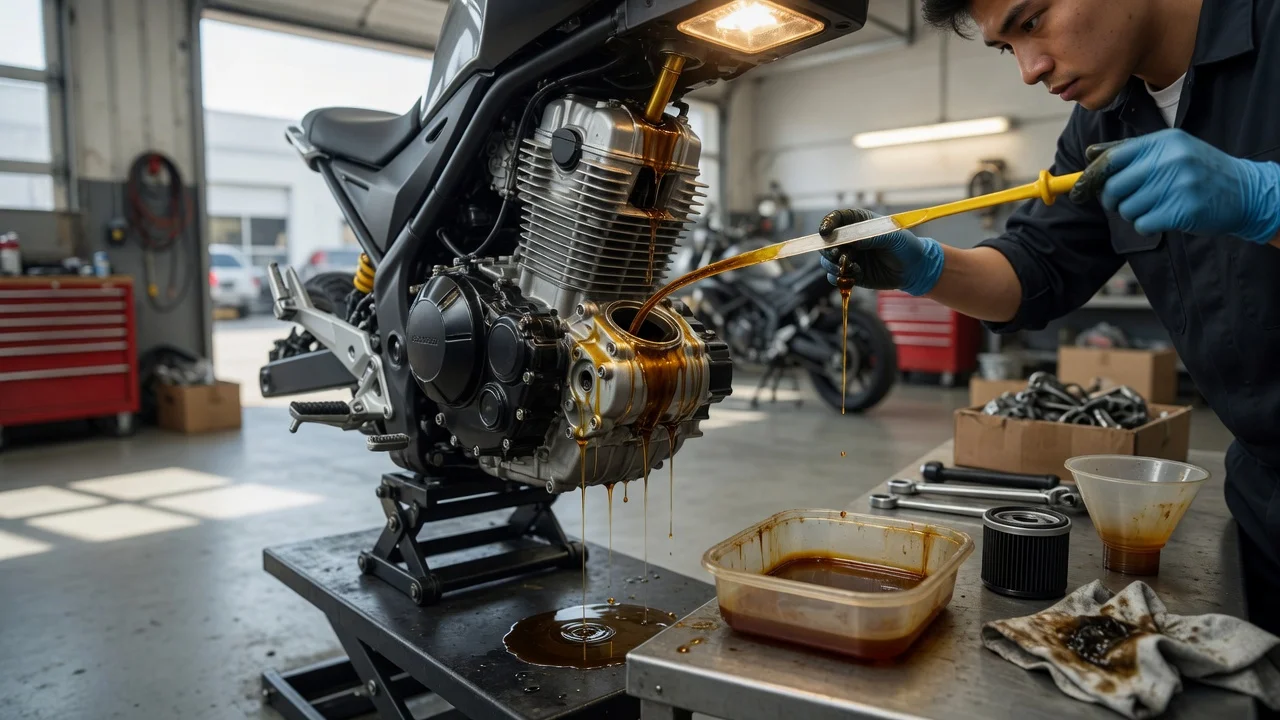
Remove the excess oil until the level sits within the marked range. On most engines, you can partly open the drain plug and catch a small amount at a time, rechecking as you go. An extraction pump through the dipstick tube also works on engines where the tube reaches the sump. On small engines, some owners tip the machine to pour oil from the fill opening. Check the manual first, because tipping the wrong way can send oil into the air filter or carburettor.
After correcting the level, check for oil in the air filter or breather and clean or replace parts as needed. If the engine smoked heavily, ran roughly or fouled a plug while overfilled, inspecting the spark plug is a reasonable next step.
Gaps in the available information
No engine-specific capacities, overfill tolerances or test measurements were supplied. This guide therefore does not state how many millilitres or what percentage above full counts as harmful. Those figures depend on sump design, crankshaft clearance and the manufacturer's specification. For an exact answer for your engine, consult its manual or a qualified technician.