Too much oil in a 4-stroke engine
The essential answer
Too much oil in a 4-stroke engine is a fault condition, not spare protection. A 4-stroke engine is designed to hold a specific volume of oil in the sump or dry-sump tank, with a marked full level on the dipstick, sight glass, or electronic oil-level display. Oil above that mark is overfill. Extra oil does not add lubrication margin; it can be whipped by the crankshaft, mixed with air, and forced out of the crankcase under pressure.
The correct fill is the manufacturer’s specified capacity, confirmed on a level surface with the engine off after oil has had time to drain back to the sump. How serious the overfill is depends on how far the level sits above the full mark, whether the engine has been run, and the engine layout (wet-sump car or motorcycle engine versus a dry-sump system). This guide covers 4-stroke engines in general. Exact capacities, dipstick markings, and service steps vary by model, year, and powertrain, and the vehicle’s owner’s manual or workshop data is the binding specification.
Why extra oil causes harm
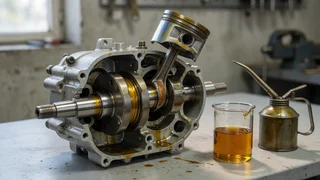
In a typical wet-sump 4-stroke, oil lives in the pan below the crankshaft. When the level is high enough for the rotating assembly to hit it, the crankshaft churns the oil into foam. Aerated oil compresses, does not form a reliable film on bearings and camshafts, and can starve the oil pump of a solid column of fluid. The same churning raises crankcase pressure. That pressure looks for a way out through seals, gaskets, the dipstick tube, and the crankcase ventilation path.
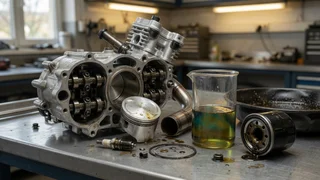
Oil pushed into the positive crankcase ventilation (PCV) or breather system can reach the intake tract and combustion chambers. Burning oil produces blue or grey smoke, can foul spark plugs, and can load a catalytic converter with oil ash. Extreme overfill can allow liquid oil into a cylinder, where it resists the piston on the compression stroke (hydrolock) and can bend a connecting rod. On many motorcycles with a wet clutch, surplus oil in the cases can also make the clutch plates slip.
Aerated oil and reduced bearing and valvetrain protection; Raised crankcase pressure and oil leaks at seals and gaskets; Oil in the intake, misfires, fouled plugs, and catalytic-converter damage; Hydrolock if a cylinder fills with oil; Wet-clutch slip on many motorcycle 4-strokes
How much is too much
Any reading clearly above the full or upper mark is too much. A trace of oil on the very top of a correctly seated dipstick after a recent fill can be oil clinging to the tube; a persistent level above the hatch or MAX line after the oil has settled is overfill. There is no universal “safe” extra quantity in litres or quarts that applies to every engine. A small overshoot on a large-capacity car engine may only wet the crank slightly; the same extra volume in a compact motorcycle or small-displacement engine can put the crank fully in the oil. Dry-sump engines store oil in a tank rather than a deep pan, so the tank marks, not a conventional dipstick in the block, define the limit.
Check the level with the vehicle on level ground, the engine stopped, and enough wait time for oil to return to the sump—commonly several minutes after shutdown, longer after a fill or filter change. Wipe the dipstick, reseat it fully, and read the second insertion. Some engines specify a hot check, a cold check, or both; follow the procedure for that model. Oil-level sensors and dash warnings are a backup, not a substitute for the marked range when a dipstick is provided.
What to do next
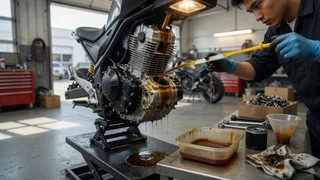
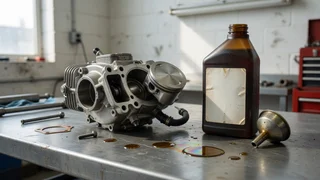
Do not run the engine hard, or at all if the overfill is large, until the level is brought back to the full mark. Drain oil from the sump drain plug in small amounts, or use a fluid extractor through the dipstick tube, and recheck until the level sits on the full mark—not below it. Catch the oil in a clean container if it may be reused only when it is new, uncontaminated, and of the correct grade. Dispose of used oil through an authorised collection point.
If the engine has already been started or driven while overfilled, bring the level right, then look for oil at the seals, under the engine, in the air filter or intake, and in the spark-plug wells. Note exhaust smoke, misfire, a rattling or knocking sound, a rising temperature gauge, or a low oil-pressure warning. Those signs mean the overfill may already have foamed the oil or forced it into the intake; stop driving and have the engine inspected. A catalytic converter that has ingested oil may need separate diagnosis. No model-specific overfill thresholds, oil-pressure figures, or test results are supplied here; treat those as workshop measurements for the engine in front of you.
What this does not cover
This answer is about liquid engine oil above the specified 4-stroke fill level. It does not cover two-stroke premix or oil-injection systems, automatic-transmission fluid, or gear oil in a separate gearbox. A rising oil level over time—rather than a one-time overfill at a service—can mean fuel or coolant is diluting the sump, which is a different fault and needs diagnosis rather than draining to the mark and continuing as normal.