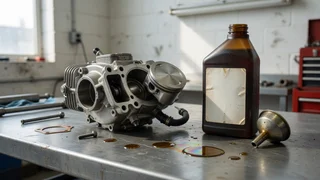
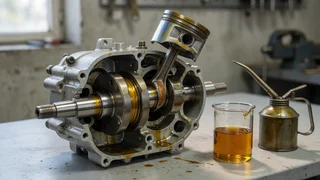
Using 2-Stroke Oil in a 4-Stroke Engine
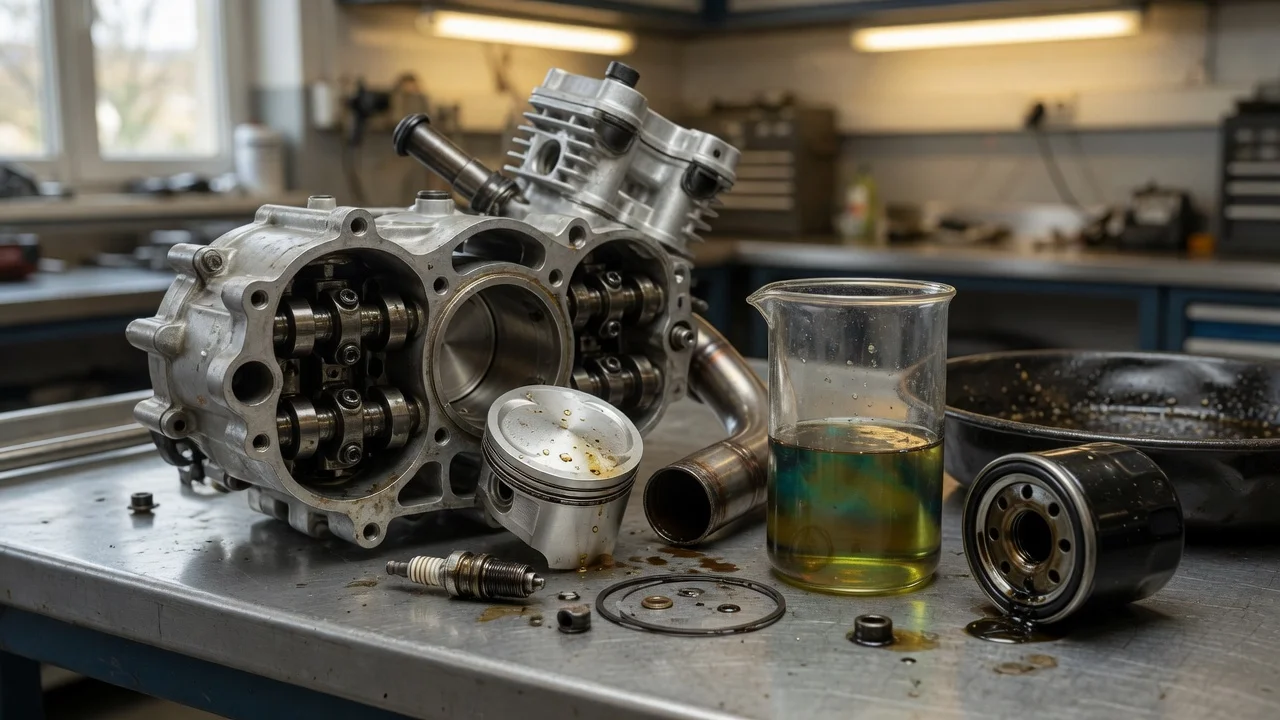
The short answer
Two-stroke oil should not be used as the engine oil in a four-stroke engine. Four-stroke engines are found in cars, motorcycles, lawn mowers and many other small engines. Two-stroke oil is designed for a different job. It does not provide the lasting protection a four-stroke crankcase needs. If it has gone into the crankcase by mistake, drain it and refill with the oil grade the manufacturer specifies before running the engine any further.
The answer depends on where the oil goes. Pouring two-stroke oil into the crankcase in place of motor oil is one question. Adding a small amount to the fuel tank is another. Both are covered below, but neither is a practice manufacturers generally recommend for four-stroke engines.
Why the two oils are not interchangeable
A two-stroke engine (also called a 2-cycle engine) usually has no separate oil sump. Its oil is either premixed with the fuel or injected into the intake. That oil lubricates the engine once on its way through and is then burned in the combustion chamber. Two-stroke oil is therefore formulated to mix readily with gasoline and to burn with minimal ash and deposits.
A four-stroke engine (or 4-cycle engine) keeps its oil in a crankcase or sump. A pump or splash system circulates that oil over and over between changes. The oil has to keep doing several jobs over many hours of running:
Keep a protective film on bearings, cam lobes and cylinder walls under heat and load; Hold soot and contaminants in suspension so they drain out at the next oil change; Resist breaking down and thinning with repeated heating and shearing; Carry anti-wear and anti-corrosion additives that work over the whole service interval
Four-stroke motor oils include additive packages for these jobs. Two-stroke oils are generally built around clean burning, not long-term recirculation. Used as crankcase oil, two-stroke oil can leave the engine with too little wear protection and poor control of sludge and deposits. The risk of damage grows the longer the engine runs on it.
If two-stroke oil went into the crankcase by mistake
If the engine has not been started: drain the oil completely and refill with the correct four-stroke oil. If the engine has run briefly: drain the oil, change the oil filter if the engine has one, and refill with the specified oil. If the engine ran for a long time or shows symptoms: unusual noise, low oil pressure warnings or smoke suggest it is worth having the engine inspected rather than just changing the oil.
How much harm a short run causes depends on the engine, its load and how long it ran. There is no single safe threshold to quote. For an engine under warranty, check the owner's manual or ask the dealer, since using a non-specified lubricant may affect coverage.
What about adding two-stroke oil to the fuel?
Some owners mix a small amount of two-stroke oil into a four-stroke engine's gasoline as an upper-cylinder lubricant. Four-stroke engines are not designed to need this, and vehicle manufacturers generally do not call for it. Burning oil with the fuel can add combustion deposits and may foul spark plugs. In vehicles with catalytic converters or oxygen sensors, oil residue in the exhaust is a further concern for emissions components. No test data supporting a benefit was supplied for this guide, so any such claim should be treated as unproven.
Accidentally filling a four-stroke engine's tank with premixed two-stroke fuel is different from putting the oil in the crankcase. A single tank of correctly mixed fuel is less likely to cause the same lubrication risk. Even so, the safest course is to drain the mix or dilute it with fresh fuel, following the manufacturer's guidance.
Gaps and how to confirm for your engine
This guide gives the general principle that applies across four-stroke engines. It does not include oil specifications, viscosity grades or manufacturer statements for particular makes, model years or engine types. Requirements differ between car engines, motorcycle engines with shared clutch lubrication, and small outdoor power equipment. Check the owner's manual, or the oil specification printed on the engine or fill cap, for the exact oil your engine needs.