Too Much Oil in a 2-Stroke Engine: What Happens and How to Fix It
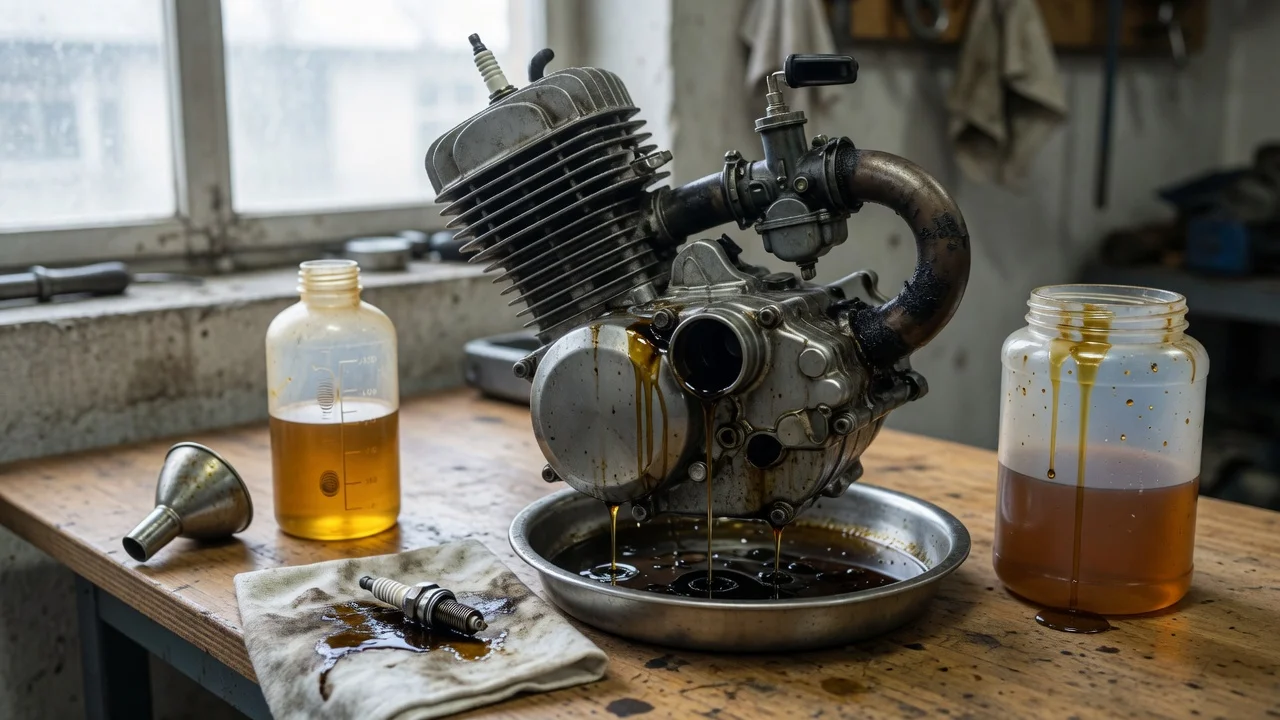
Direct Answer
Too much oil in a two-stroke engine means the fuel-to-oil ratio contains more lubricant than the engine manufacturer specifies. The immediate consequence is not usually instant mechanical failure, but a range of running problems: heavy smoke, fouled spark plugs, hard starting, poor throttle response, oily deposits around the exhaust, and eventually carbon buildup that can stick piston rings or clog the exhaust port. The correct response is to stop running the engine on the over-oiled mix, drain or use up the incorrect fuel safely, and refill with a properly measured ratio for that specific engine.
Scope and Qualification
This guidance applies to engines that require premixed fuel and oil, such as many handheld outdoor power tools, older motorcycles, outboard motors, and some small recreational vehicles. It does not apply to two-stroke engines with a separate oil injection system, where an oil pump meters lubricant independently. In an injected system, an over-oil condition usually indicates a pump calibration or adjustment problem rather than a bad manual fuel mix. Manufacturer specifications vary by model, displacement, cooling type, and intended duty cycle, so no single universal ratio is correct for every engine.
How Excess Oil Affects Combustion
A two-stroke engine relies on oil carried in the fuel to lubricate the crankshaft, connecting rod, piston, and cylinder wall. When the oil fraction is too high, the mixture becomes harder to vaporize and burn completely. Unburned oil exits through the exhaust port or remains as residue inside the combustion chamber. Because oil displaces a small portion of gasoline, an over-oiled mix also slightly reduces the amount of combustible fuel delivered per intake cycle. This can lean the effective air-fuel ratio in subtle ways while simultaneously creating rich, oily combustion byproducts.
Recognizable Symptoms
Excessive blue or white smoke, especially after startup; A heavy, unburned oil smell from the exhaust; Fouled or wet spark plug electrodes; Hard starting when cold or after sitting; Rough idle that clears only partially as the engine warms; Reduced throttle crispness and slower acceleration; Oily residue around the muffler outlet or exhaust flange; Increased carbon deposits visible through the exhaust port
Mechanical Risks of Prolonged Use
Continued operation on an over-oiled mixture creates deposits that can harden on the piston crown, ring grooves, and exhaust port walls. Carbon accumulation in the ring grooves may prevent the rings from sealing properly against the cylinder, which lowers compression and can allow combustion gases to blow by the piston. Heavy deposits can also narrow the exhaust port, raising exhaust gas temperature and reducing power. In severe cases, a spark plug can become wet enough to stop firing, leaving the operator stranded even though the engine itself has no major internal damage yet.
Is a Slightly Rich Oil Mix Ever Intentional?
Some builders and tuners add extra oil for high-rpm use, racing, or freshly rebuilt engines during break-in. That is a deliberate, qualified choice, not an error. However, even in those cases the increase is usually modest and matched to the application. A mix that is far too oily for everyday riding or cutting, such as accidentally doubling the oil volume, does not provide proportional protection and mainly creates the problems described above.
Correcting an Over-Oiled Premix
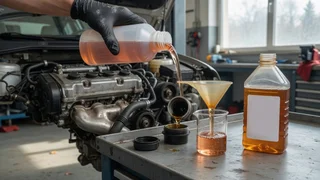
The cleanest correction is to drain the fuel tank completely and refill with a fresh, accurately measured batch. If draining is impractical, the over-oiled fuel can be diluted by adding straight gasoline in a calculated amount, but this requires knowing the current mixture and the exact tank volume. Approximate guesses can easily under-correct or over-correct the problem. Use a ratio cup or graduated mixing container, add the oil to the gasoline before filling the tank, and agitate the container thoroughly.
Dilution Calculation Example
Tank capacity: 5.0 liters; Current mixture: 20:1 (250 ml oil in 5.0 L fuel); Target mixture: 40:1 (125 ml oil in 5.0 L fuel); Excess oil to compensate: 125 ml; Extra gasoline needed to reach 40:1 with 250 ml oil: 250 ml x 40 = 10.0 L total fuel; 10.0 L - 5.0 L current fuel = 5.0 L extra gasoline; Drain enough space in the tank, then add 5.0 L plain gasoline.
This example assumes the current tank volume and mixture are known exactly. If the mixture is uncertain because fuel was topped up or oil was added without measuring, dilution becomes unreliable. In that situation, draining and starting over is the safer method.
Checking the Spark Plug After Correction
After the engine has run on a correct mixture for several minutes, remove the spark plug and inspect it. A plug that was blackened or wet from excessive oil may not clean itself adequately. Replace a heavily fouled plug rather than attempting to burn off the deposits. A fresh plug also makes it easier to judge whether the engine is now running on the corrected mixture, since subsequent plug color will reflect current conditions rather than the previous over-oiled state.
Oil Injection Systems
On engines with separate oil injection, excess oil consumption generally points to a different set of causes: an oil pump adjusted too rich at idle or partial throttle, a damaged pump seal, a stuck linkage, or the wrong oil viscosity. Do not attempt to correct an injection problem by diluting the gasoline. The gasoline in an injected engine normally contains no oil, so adding a different premix would worsen the situation. Check the pump setting and cable adjustment according to the service information for that exact model.
Safe Disposal of Incorrect Fuel
Over-oiled premix should not be poured onto the ground or into drains. Store it in an approved fuel container and dispose of it through a local hazardous household waste collection point. Some areas accept stale or contaminated gasoline at transfer stations or periodic collection events. Keep the container clearly labeled to avoid accidentally using the incorrect mix in another machine.
Summary of Next Actions
Stop running the engine until the fuel is corrected. Confirm the manufacturer-specified ratio for the exact model and use. Drain the over-oiled premix or calculate a precise dilution. Refill with freshly mixed fuel, measuring oil and gasoline accurately. Replace a fouled spark plug if present. Run the engine briefly and check for normal smoke and throttle response.