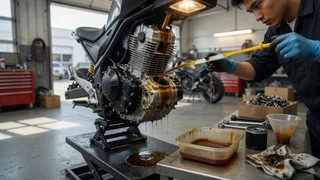
Too Much Oil in the Engine: What Happens and What to Do
What Is the Essential Answer to My Question?
A little too much oil in the engine usually means the oil level is above the maximum mark on the dipstick but not dramatically overfilled. In many cases, a small overfill of roughly half a quart or less will not cause immediate damage, especially if the vehicle is driven gently. However, the risk increases as the level rises and as engine speed rises. The primary concern is not the oil itself but what the spinning crankshaft can do to it.
The answer is qualified by how much oil is present and by the specific engine design. An overfill of a few millimeters above the full line may be tolerable for a short trip to a shop or for removing the excess at home. An overfill of a quart or more, or any overfill that produces visible symptoms, should be corrected before the vehicle is driven further. Because engine oil expands when hot, an overfilled engine that is cold may become more overfilled once the oil reaches operating temperature.
How to Check the Oil Level Accurately
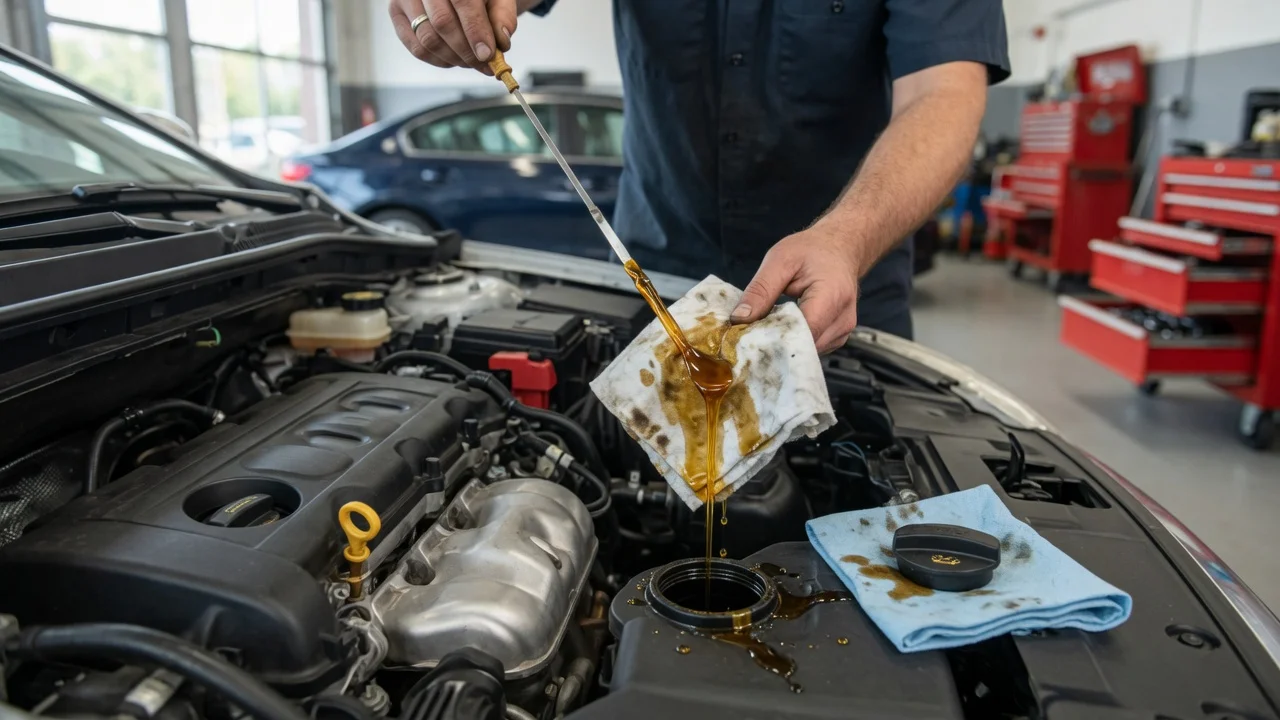
Because the question depends on precise measurement, start with a reliable reading. Park the vehicle on level ground and wait several minutes after shutting off a warm engine so oil can drain back into the oil pan. Pull the dipstick, wipe it clean, fully reinsert it, then withdraw it again and read both sides. The lower reading is usually the trustworthy one on vehicles where the dipstick enters the oil at an angle.
The difference between the minimum and maximum marks on most passenger-vehicle dipsticks represents roughly one quart or one liter of oil. If the oil film sits only a small amount above the maximum mark, the overfill is minor. If it sits significantly higher, the overfill is more serious. Some engines also have a wider safe range, so the visual distance above the full line matters more than the exact millimeter amount.
What Can Happen When the Oil Level Is Too High
The main risk is crankshaft contact. The crankshaft rotates at the bottom of the engine, and its counterweights sit just above the oil in the oil pan. When the oil level is too high, the crankshaft can strike the surface of the oil and whip air into it. Aerated oil is less effective as a lubricant because air bubbles collapse under pressure in the bearings, reducing the oil film strength that protects metal surfaces.
Aerated oil can also cause hydraulic lifters to become noisy or fail to maintain proper valve clearance, and it can reduce the ability of the oil pump to maintain stable oil pressure. In engines with variable valve timing, oil pressure is used as a control medium, and unstable pressure from foamy oil can cause rough running, poor idle quality, or diagnostic fault codes.
A second risk is oil foaming and leakage. Excessive oil can be pushed past the piston rings and enter the combustion chamber, where it may create blue-gray exhaust smoke, carbon deposits on spark plugs, and increased oil consumption. A severely overfilled engine can also force oil past crankshaft seals or the PCV system, creating leaks or contaminating the intake tract.
Symptoms That May Indicate the Level Is Too High
Blue or gray smoke from the exhaust, especially after deceleration; A burning oil smell from the engine bay or exhaust; Oil leaks appearing at the oil pan gasket, valve cover, or front and rear main seals; Noisy valve lifters or a tapping sound from the top of the engine; Unstable or fluctuating oil pressure readings; Rough idle, hesitation, or an illuminated check-engine light; Visible foam or tiny bubbles on the dipstick after the engine has run
These symptoms do not prove an overfill by themselves. They can also be caused by worn piston rings, a failed PCV valve, a clogged oil passage, or other engine problems. The dipstick reading must be combined with symptoms before concluding that the oil level is the cause.
How to Correct a Minor Overfill Safely
For a small overfill, the easiest method is to drain a controlled amount of oil from the oil pan. On many vehicles, the drain plug can be loosened slowly while a clean container is positioned underneath, allowing a small amount to escape before retightening the plug. This is messy and should only be done with the engine cool enough to avoid burns and on a level, stable surface.
A cleaner alternative is to use a fluid extraction pump with a thin tube inserted through the dipstick tube. This allows precise removal of a measured quantity, such as half a quart, without lifting the vehicle. After either method, recheck the dipstick several times after allowing the oil to settle, and add back a small amount if too much was removed.
Do not try to fix the level by letting oil burn away or by intentionally running the engine under heavy load. The potential harm to bearings, seals, and catalytic converters is not a safe substitute for draining the excess.
When to Avoid Driving and Seek Help
If the dipstick shows oil well above the maximum mark, or if the engine exhibits loud knocking from the lower end, heavy smoke, a strong burning smell, or a check-engine light with misfire codes, avoid driving. Towing the vehicle to a repair facility is safer than driving even a short distance. A severely overfilled engine can lose oil pressure under load without warning.
Vehicles with diesel engines and diesel particulate filters may be more sensitive to overfill because excess oil entering the combustion chamber can contribute to DPF clogging or even uncontrolled engine acceleration in rare failure scenarios. For those vehicles, correcting even a slight overfill promptly is more important.
A Grounded Next Step
The most defensible approach is to verify the level on level ground with a clean dipstick, interpret how far above the mark the oil sits, and correct a minor overfill by draining or extracting a small measured amount. If the level is substantially high, or if any symptom suggests the engine is already affected, stop driving and have the vehicle inspected. The correction is cheap and simple; the damage from ignoring a serious overfill is not.